

Advancing equitable healthcare system through technology
By Mhicole A. Moral, Jomarc Angelo M. Corpuz, and Krystal Anjela H. Gamboa, Special Features and Content Writers
Healthcare systems are adopting emerging technologies at a rapid pace as providers respond to rising demand for modernized services. Tools such as telehealth services, telemedicine platforms, artificial intelligence-supported diagnostics, and remote monitoring systems are becoming more common across clinical environments.
These technological developments formed part of the discussions at the BusinessWorld Insights forum held at Dusit Thani Manila on April 29.
Themed “Tech in Wellness: Shaping the Future of Health,” the event gathered industry leaders and health experts to explore the country’s progress in using technology for patient care.
The forum started with PharmaServ Express Medical Director Dr. Salvador Pedro G. Rebullida noting recent advances have widened the reach of healthcare.
“Digital revolution is quite deep-rooted in our current healthcare, and it’s been a struggle that our healthcare is taking a gap reaching the far-flung areas,” Dr. Rebullida said during the fireside chat. “Our government and our private institutions are reaching out and are able to bridge those gaps gradually and slowly, not only through physical means, but also through technology.”
The coronavirus disease 2019 (COVID-19) pandemic forced an abrupt change in how care was delivered, pushing both providers and patients toward online platforms.
“That period has actually transitioned our healthcare mainly because of the events that isolated each individual. It was really traumatic for a lot, not only for Filipinos but around the world. It was a really traumatic period, and it gave us a way to innovate; and that innovation led to our online technology and reachability,” he explained.
Technological expansion did not stop at telemedicine alone, as healthcare providers began using digital tools for follow-ups, monitoring, and coordination of treatment. However, Dr. Rebullida noted that gaps remain, especially in infrastructure and consistency of service.
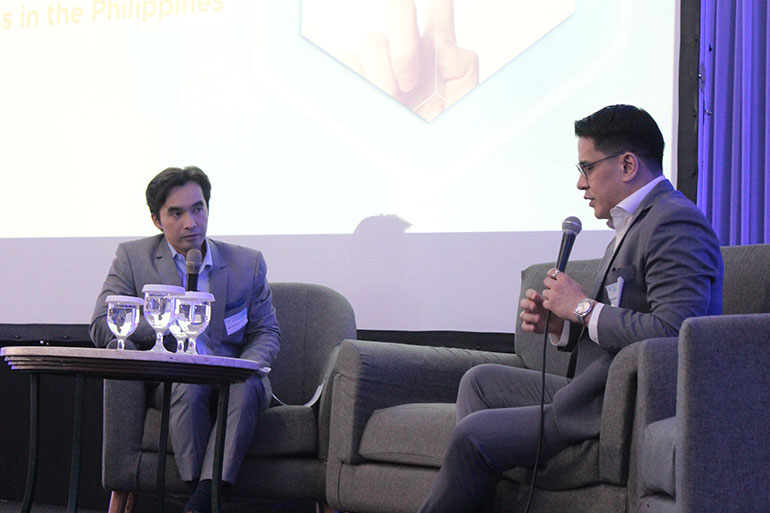 Fireside Chat (from left): News5 Anchor Jester delos Santos (host and moderator) and Dr. Salvador Pedro G. Rebullida of PharmaServ Express
Addressing gaps
Delivery of medicines, for instance, remains a major hurdle. Unlike standard consumer goods, medications require strict temperature control and handling protocols.
“Medications are not the same as products delivered in a normal courier,” he said. “We have to preserve the integrity of medications.”
He warned that improper handling during transport can affect drug quality, which may delay recovery or lead patients to question treatment outcomes. Delivery delays also remain a concern, particularly in areas with limited transport infrastructure.
For its part, Dr. Rebullida noted, PharmaServ Express has sought to address these gaps by focusing on specialized logistics. The company previously handled large-scale vaccine storage and distribution during the pandemic, including deliveries to geographically isolated areas using temperature-controlled containers.
Now, the company has introduced a mobile application that allows users to locate and order medications from nearby pharmacies at comparable prices. It also includes access to specialty drugs that may not be available in typical retail outlets.
“The dream of PharmaServ Express is to be able to give [medicines] to Filipinos in a day-to-day situation, wherein the medications that the patient needs are delivered to them, protected, preserved and quick, and they will be able to be treated better because they have the right medicine and the right preservation of these medications,” he explained.
Dr. Rebullida added that technology, logistics, and policy must align to improve healthcare access nationwide. While mobile apps and digital tools have expanded reach, he said they cannot fully address systemic gaps on their own.
“Tech alone is not the only way to solve our healthcare [system],” he said. “If patients are not getting the right medication regularly, they will end up spending more.”
Prerequisites
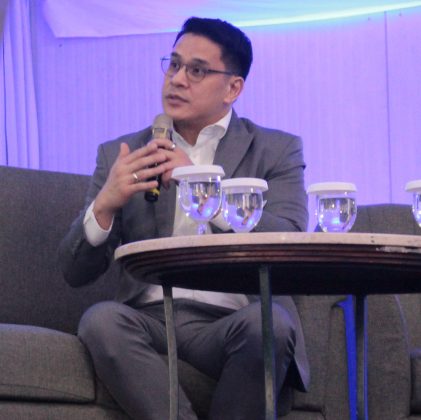
During the forum’s first panel discussion, Dr. Jaime Z. Galvez Tan, chairman of Health Futures Foundation and former Health secretary, bared his advocacies and work in fifth and sixth-class municipalities in Samar, South Cotabato, Palawan, and various areas in Luzon.
“When we say access, I always say equity and equality are the major key values that I emphasize. Because right now, even in healthcare, there’s a real divide, not of geography but between the poor and the rich. So, that’s why we have to continue to bridge this divide before we can go to the digital divide,” Dr. Galvez Tan said.
As for the most prominent evidence of a digital divide in his advocacy areas, he revealed that far-flung barangays are already equipped with some of the essentials, such as health equipment, cellphones, televisions, and proper infrastructure. Despite this, internet connectivity remains elusive.
“Where is the link with the internet connection? And even if there’s an internet connection, there’s still the irregularity of the internet connection. So, that’s one of the biggest challenges.” Dr. Galvez Tan said. “Now, let’s say we have installed it. Then, the problem now is internet subscriptions because they are in really poor barangays.”

Key people needed
Building on his earlier statements, Dr. Rebudilla emphasized the necessity of first establishing facilities, saying that these communities cannot be treated without proper facilities, help, or an identified community leader to head the betterment of the barangay.
He added that one of the things that can really help bridge healthcare access is artificial intelligence (AI). However, he also warned that since there are no laws in the Philippines governing AI management in delivering healthcare, dangerous outcomes might arise despite positive ones.
“AI is really generating [recommendations] on its own, and it’s the responsibility of the health leaders to say whether this recommendation is correct or not. So, AI has to be used responsibly; and at the end of the day, the physician or the local health leader has the responsibility to confirm whether this recommendation is applicable for that particular patient,” Dr. Rebullida explained.
As a way to aid in this, Dr. Galvez Tan suggested the creation of “digital health navigators” who could help guide the public in identifying credible sources of health information and digital healthcare services, particularly as technology becomes more integrated into healthcare delivery. This, he said, also shows the need for stronger institutional support and clearer regulatory standards from both government agencies and healthcare stakeholders.
“I think this is where all of us here have a role to play, and this is where the DoH, Philippine Health Insurance Corp. (PhilHealth), and the Department of Information and Communications Technology can very well include also as part of their standards, regulations, as well as putting it into good practice,” Dr. Galvez Tan said.
Beyond acceptance, empowerment
The panel also discussed the acceptance of healthcare that locals in far-flung areas are being given access to. In this regard, the panel agreed that while it is generally accepted in the medical field, there is some work to do for healthcare to be fully digitized in far-flung areas.
“While there is openness, what is important is that there is also empowerment and training. What we have seen is that even basic computer literacy and digital literacy are lacking. Therefore, we need to train all our community health workers and community leaders in the basics of how to start a computer, how to operate it, and how to be aware of the digital world today,” Dr. Galvez Tan.
“As I said, access is there, and openness is already there. The key is, again, empowering them well in the right way so that they are able to discern also part of that information, discerning the fake from the real,” he added.
Despite the challenges surrounding infrastructure, regulation, and digital literacy, the panel maintained that the continued integration of technology into healthcare systems presents significant opportunities to improve healthcare delivery and accessibility in underserved communities.
“So, I think the reconstruction and restructuring of the programs into the digital era has progressed these areas and municipalities to a better situation for their healthcare, for each individual,” Dr. Rebullida said.
Accessibility and integrity
For his final statement, Dr. Rebullida emphasized the need to further strengthen healthcare accessibility in the country, particularly through broader financial support and expanded healthcare coverage for Filipinos.
“My dream is the expansion of coverage of PhilHealth to cover what’s necessary for Filipinos, and that includes patient consultations and hospital coverage. Because right now, there’s limited coverage for the patient and outpatient consultation,” Dr. Rebullida said.
Meanwhile, Dr. Galvez Tan underscored that beyond expanding healthcare access and coverage, maintaining integrity and accountability in the management of digital health systems is equally essential as the country moves toward more technology-driven healthcare solutions.
“Aside from equity and equality, I’d like to add integrity. Integrity here is ensuring accountability in the information and in managing digital health and wellness, and, of course, anti-corruption measures. There’s no doubt about it. This is, let’s look at public goods versus private gain,” he concluded.
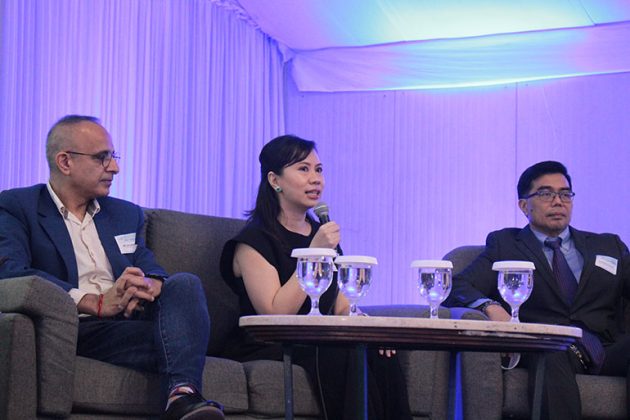
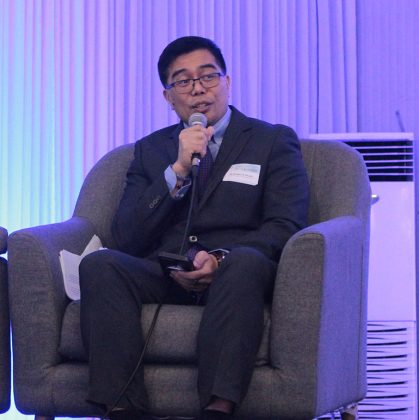
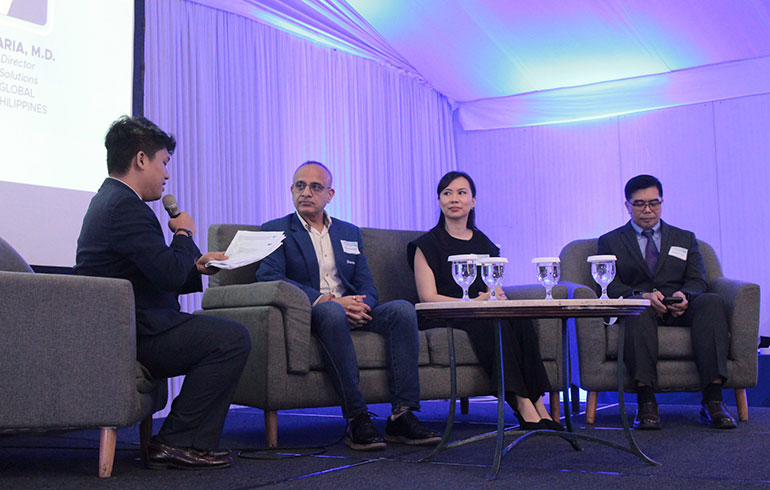 Panel Discussion 2 (from left): BusinessWorld Multimedia Reporter Edg Adrian A. Eva (moderator), Dr. Salin Kataria of Carelon Global Solutions Philippines, Dr. Kristine Nimo-Alfonso of Intellicare, and Dr. Reynold M. Sta. Ana of the Occupational Safety and Health Center
Wellness over treatment
Global healthcare has long operated primarily as a reactive system that springs into action only when symptoms manifest and pathology takes root. Now, the industry is pivoting toward a proactive and technology-driven model that prioritizes wellness over mere treatment, as the panelists in the second panel discussion highlighted.
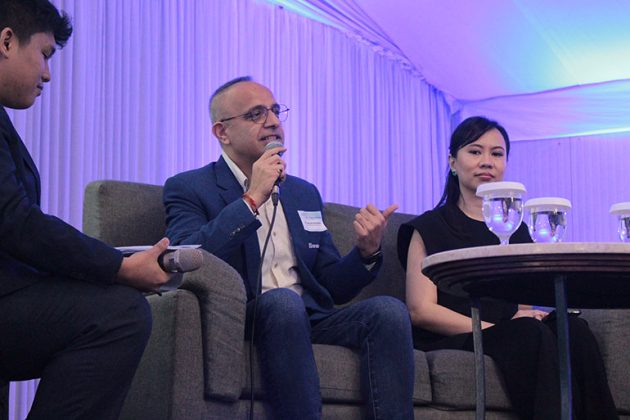
“Wellness is not the absence of a disease. It is when we are, predictably, in control of our health,” said Carelon Solution Philippines Managing Director for Clinical Solutions Dr. Salin Kataria.
He also noted that wellness is a broad spectrum of social determinants, such as income, quality of life, and access to care. It is an active pursuit involving mental health, social relationships, and environmental factors.
“We can obviously measure the physical parameters of health, but what’s more important is full health,” he added. “It’s all about all these components in the ecosystem that we look for to ensure we are well. The goal of being a truly well individual is how we improve those aspects of our lives, throughout our life.”
As the concept of wellness expands, so too does the approach to healthcare delivery. Historically, systems intervene only when symptoms appear or diseases progress. But nowadays, there is a growing emphasis on prevention, early intervention, and long-term health maintenance.
“We’re starting to appreciate wellness [and] mental health,” Intellicare Medical Group Officer Dr. Kristine Nimo-Alfonso said. “During previous times, none of these existed or we did not appreciate preventive methods.”
Dr. Nimo-Alfonso noted that 60% to 70% of expenses for health maintenance organizations (HMOs) are driven by inpatient and emergency room admissions. These are often the result of complications from chronic diseases that could have been managed, or prevented, much earlier.
This shift represents not only a change in practice but also a redefinition of healthcare’s primary objective. By investing in wellness, healthcare providers can reduce the portion of the budget consumed by late-stage interventions.
The urgency of integrating wellness into healthcare has been intensified by recent global events, particularly the COVID-19 pandemic. The crisis exposed systemic vulnerabilities and highlighted the importance of maintaining overall health.
“The pandemic challenged our traditional perceptions of health, bringing the critical need to prioritize a better quality of life and total well-being; there’s a sound state of both body, mind, and spirit as well,” said Dr. Reynold M. Sta. Ana, senior occupational health officer at the Occupational Safety and Health Center.
Wellness, in this context, has become essential to both individual resilience and the stability of healthcare systems.
Investing in wellness
Beyond its health implications, wellness integration is economically strategic. A large portion of healthcare spending is driven by hospital admissions and emergency care, often linked to advanced or poorly managed chronic conditions.
Preventive measures, such as regular screenings, lifestyle intervention, and health education, can significantly reduce these costs.
“Investing in wellness is not only altruistic, but also financially rational,” Dr. Nimo-Alfonso noted. “Integrating wellness into modern healthcare is about expanding the goal not only from treating a specific disease, but also optimizing the whole well-being of the person.”
By minimizing the progression of chronic diseases, healthcare systems can allocate resources more efficiently. Dr. Nimo-Alfonso explained that medicine, along with behavioral, social, and technological strategies, help people create a more proactive, personalized, and sustainable healthcare.
In addition, the integration of wellness is being accelerated by the “depersonalization” and subsequent “hyper-personalization” of healthcare through technology. People have moved into an era where real-time health data is not just available but actionable.
In revolutionizing wellness, the most significant platform is the workplace. Under the Department of Labor and Employment and Joint Administrative Order No. 001 S. 2023, workplaces are now required to implement wellness programs.
“We don’t want our workers to get sick because of the hazards present in their workplaces,” Dr. Sta. Ana said. “The shift from reactive, disease-centered healthcare model to a proactive, wellness-oriented approach is an urgent and necessary transformation.”
Organizations are also moving beyond mere compliance, as employers are increasingly investing in health programs that include regular assessments, chronic disease management, and targeted interventions for specific employee groups.
“A healthy individual has a better quality of life which can translate to better work, performance, and productivity,” Dr. Nimo-Alfonso said. “It is a simple idea — keeping people healthy is more cost effective than treating them when they already have complications.”
Hence, the integration of both technology and wellness into modern healthcare represent a big leap to make the current system efficient and equitable.
This BusinessWorld Insights forum was presented by BusinessWorld Publishing Corp., with the support of sponsors PharmaServ Express, Shinagawa Lasik and Aesthetics, and Cocolife; partners Asian Consulting Group, Asia Society of the Philippines, British Chamber of Commerce of the Philippines, French Chamber of Commerce and Industry Philippines, Management Association of the Philippines, Philippine Chamber of Commerce and Industry, Philippine Franchise Association, and Philippine Retailers Association; and official media partner The Philippine STAR.


You May Also Like

XRP Might Be Primed for Rapid Breakout

Luxor Ships Commander Software to Optimize Bitcoin Mining Fleet Profitability – News Bytes Bitcoin News




