CZ Sparks Bitcoin Shock With Satoshi Freeze Proposal
Satoshi Bitcoin Freeze Debate Intensifies as CZ Proposes Deadline for Dormant BTC
The future of millions of dormant Bitcoin has become the center of one of the cryptocurrency industry's most controversial discussions after Binance co-founder Changpeng "CZ" Zhao suggested that Bitcoin's oldest wallets, including those believed to belong to Satoshi Nakamoto, could eventually be frozen if they are not migrated to a future quantum-resistant network.
CZ's comments, made during the Galaxy Brains Podcast on June 18, 2026, have sparked widespread debate among developers, investors, miners, and Bitcoin advocates. While the proposal is still hypothetical and would require overwhelming community consensus to become reality, it has reopened long-standing questions about Bitcoin's governance, network security, and the balance between protecting users and preserving decentralization.
The discussion arrives as concerns surrounding quantum computing continue to grow, prompting developers across the crypto industry to examine whether existing cryptographic standards will remain secure over the coming decades.
CZ Suggests a Migration Deadline for Legacy Bitcoin Wallets
During the podcast, CZ emphasized that his comments were intended to encourage discussion rather than propose an immediate protocol change.
According to his outline, Bitcoin would first undergo a major technical upgrade to adopt quantum-resistant cryptographic signatures capable of defending against future quantum computer attacks.
 |
| Source: BSCN Official |
Once the upgraded network becomes available, owners of older Bitcoin addresses would be given a migration period lasting approximately six to twelve months. During this transition, users would simply transfer their holdings into newly generated wallets protected by stronger cryptographic algorithms.
However, wallets that remain inactive after the migration deadline—including the approximately 1.1 million BTC widely believed to belong to Bitcoin creator Satoshi Nakamoto—could eventually become permanently frozen through protocol consensus.
CZ noted that such an outcome would require either a soft fork or hard fork approved by the Bitcoin community rather than any decision made by Binance or a single organization.
His proposal was presented as a governance question for the broader Bitcoin ecosystem rather than an action currently under development.
Why Quantum Computing Is Driving the Conversation
The proposal is rooted in growing concerns over advances in quantum computing.
Today's Bitcoin network relies primarily on the Elliptic Curve Digital Signature Algorithm (ECDSA), a cryptographic system that has protected billions of dollars in digital assets for more than a decade.
Classical computers remain incapable of breaking ECDSA within any practical timeframe.
Quantum computers, however, represent an entirely different technological challenge.
Researchers believe that sufficiently powerful quantum machines could eventually solve mathematical problems that are effectively impossible for conventional computers, allowing attackers to derive private keys from exposed public keys.
Although experts generally agree that such machines are still years away from practical deployment, many believe preparations should begin well before the threat becomes reality.
Because blockchain transactions are permanent and cannot easily be reversed, developers argue that waiting until quantum computers become operational could leave insufficient time to upgrade the network safely.
Why Dormant Wallets Receive Special Attention
Satoshi Nakamoto's wallets are among the oldest on the Bitcoin blockchain.
Many of these addresses use earlier script formats such as Pay-to-Public-Key (P2PK), which expose public keys immediately after coins are received.
Unlike newer address formats, these legacy wallets may become more vulnerable if quantum computers eventually mature.
Security researchers estimate that between five million and seven million BTC currently remain stored in inactive or legacy-format addresses.
That represents nearly one-third of Bitcoin's total maximum supply.
If even a small portion of those coins were compromised through quantum attacks, the consequences could extend far beyond individual wallet owners.
Unexpected movement of millions of previously dormant Bitcoin could trigger severe market volatility, damage investor confidence, and create uncertainty across global cryptocurrency markets.
Bitcoin Developers Are Already Discussing Quantum Protection
CZ's remarks are not occurring in isolation.
Earlier this year, developers introduced discussions surrounding proposals designed to gradually phase out older cryptographic standards.
One proposal receiving attention is Bitcoin Improvement Proposal (BIP) 361, which outlines a long-term roadmap for replacing legacy signature systems with stronger alternatives capable of resisting future quantum attacks.
Several well-known Bitcoin developers have argued that proactive planning is preferable to emergency action once quantum technology reaches practical levels.
Their objective is not necessarily to freeze inactive wallets but to provide a secure migration path that minimizes disruption while preserving network stability.
Although these discussions remain in the proposal stage, they demonstrate that quantum resistance has become an increasingly important topic throughout the Bitcoin development community.
Critics Warn Against Violating Bitcoin's Core Principles
Despite growing security concerns, CZ's proposal has generated significant opposition.
Many Bitcoin supporters argue that freezing coins under any circumstances would violate the principles upon which Bitcoin was originally built.
Immutability—the idea that valid transactions and ownership records cannot be altered arbitrarily—remains one of Bitcoin's defining characteristics.
Critics believe that introducing protocol rules capable of freezing funds could establish a dangerous precedent.
If dormant coins can be frozen today for security reasons, opponents argue, future governance decisions might expand similar powers for political or regulatory purposes.
The long-standing phrase "Not your keys, not your coins" has resurfaced repeatedly throughout online discussions.
Many users insist that ownership rights should remain absolute regardless of how long assets remain untouched.
Some commentators have also questioned whether proposals from leaders of centralized exchanges should influence governance discussions surrounding Bitcoin, which was specifically designed to operate without centralized authority.
Alternative Solutions Continue to Gain Support
Not every developer believes freezing dormant wallets is necessary.
Several researchers have proposed alternative approaches that preserve Bitcoin's security while avoiding intervention in existing ownership rights.
Among the ideas receiving attention are zero-knowledge proof recovery systems, cryptographic proof-of-control mechanisms, and timestamp-based ownership verification models.
These concepts aim to allow legitimate owners to migrate assets securely while leaving dormant wallets unchanged unless they become demonstrably vulnerable.
Although many of these proposals remain theoretical, they illustrate that the Bitcoin community continues exploring multiple solutions rather than focusing exclusively on one approach.
Finding consensus will likely require years of technical discussion, testing, and community review.
Achieving Consensus Will Not Be Easy
Bitcoin's decentralized governance model intentionally makes major protocol changes difficult.
Unlike traditional software platforms controlled by a single company, Bitcoin requires broad agreement among developers, miners, node operators, exchanges, institutional participants, and individual users.
History demonstrates how challenging this process can become.
The Bitcoin block size debate several years ago ultimately resulted in network divisions and the creation of Bitcoin Cash after competing groups failed to reach consensus.
Any proposal involving dormant wallet freezes or mandatory migrations could generate similarly intense disagreements if introduced formally.
Because of Bitcoin's global importance, developers are expected to proceed cautiously before considering any proposal that affects ownership rights.
Could Satoshi Nakamoto End the Debate?
One possibility continues to capture public imagination.
If Satoshi Nakamoto still controls the original wallets, a single signed message or a small Bitcoin transaction from one of those addresses would immediately demonstrate continued ownership.
Such an action would eliminate speculation about abandoned coins and likely reshape discussions surrounding dormant wallet security.
However, Satoshi has remained completely silent for more than fifteen years.
No verified communication has emerged since Bitcoin's earliest development period.
Whether the anonymous creator still possesses the private keys—or even remains alive—continues to be one of cryptocurrency's greatest mysteries.
Until new evidence appears, debates surrounding the future of those coins are likely to continue.
What This Means for Bitcoin Investors
For everyday Bitcoin holders, there is currently no immediate action required.
No proposal to freeze dormant wallets has entered Bitcoin's formal governance process, and no migration timeline has been established.
Nevertheless, the discussion serves as an important reminder that cryptocurrency security continues evolving alongside advances in computing technology.
Developers, exchanges, custodians, and institutional investors are increasingly preparing for a future where quantum resistance may become an essential component of blockchain infrastructure.
Whether Bitcoin ultimately adopts mandatory migration rules or pursues less invasive alternatives, the conversation highlights the industry's growing focus on protecting digital assets against long-term technological risks.
Conclusion
CZ's proposal to establish a migration deadline for legacy Bitcoin wallets has reignited one of the most important debates in the cryptocurrency industry. While the suggestion remains purely hypothetical, it raises fundamental questions about how Bitcoin should defend itself against future quantum computing threats without compromising its foundational principles of decentralization, immutability, and censorship resistance.
With millions of dormant Bitcoin potentially vulnerable in the decades ahead, developers face the difficult challenge of balancing security with the values that have defined the world's largest cryptocurrency since its creation. Whether the network ultimately embraces protocol upgrades, voluntary migration, or entirely new cryptographic solutions, the discussion surrounding Satoshi Nakamoto's dormant Bitcoin is likely to remain at the forefront of Bitcoin's evolution for years to come.
hoka.news – Not Just Crypto News. It’s Crypto Culture.
Writer: Barland Vex
Crypto Market Analyst & Onchain Storyteller
Barland Vex is a veteran crypto writer who treats the chaos of digital markets as his playground. With a sharp instinct for reading Bitcoin's movements, DeFi waves, and the narratives that move millions of dollars in a matter of hours, Vex delivers analysis that's always one step ahead of the market itself.
Check out other news and articles on Google News
Disclaimer:
The articles published on hoka.news are intended to provide up-to-date information on various topics, including cryptocurrency and technology news. The content on our site is not intended as an invitation to buy, sell, or invest in any assets. We encourage readers to conduct their own research and evaluation before making any investment or financial decisions.
hoka.news is not responsible for any losses or damages that may arise from the use of information provided on this site. Investment decisions should be based on thorough research and advice from qualified financial advisors. Information on hoka.news may change without notice, and we do not guarantee the accuracy or completeness of the content published.
You May Also Like

SpaceX Set to Join Nasdaq-100 in One of the Fastest Index Additions Ever
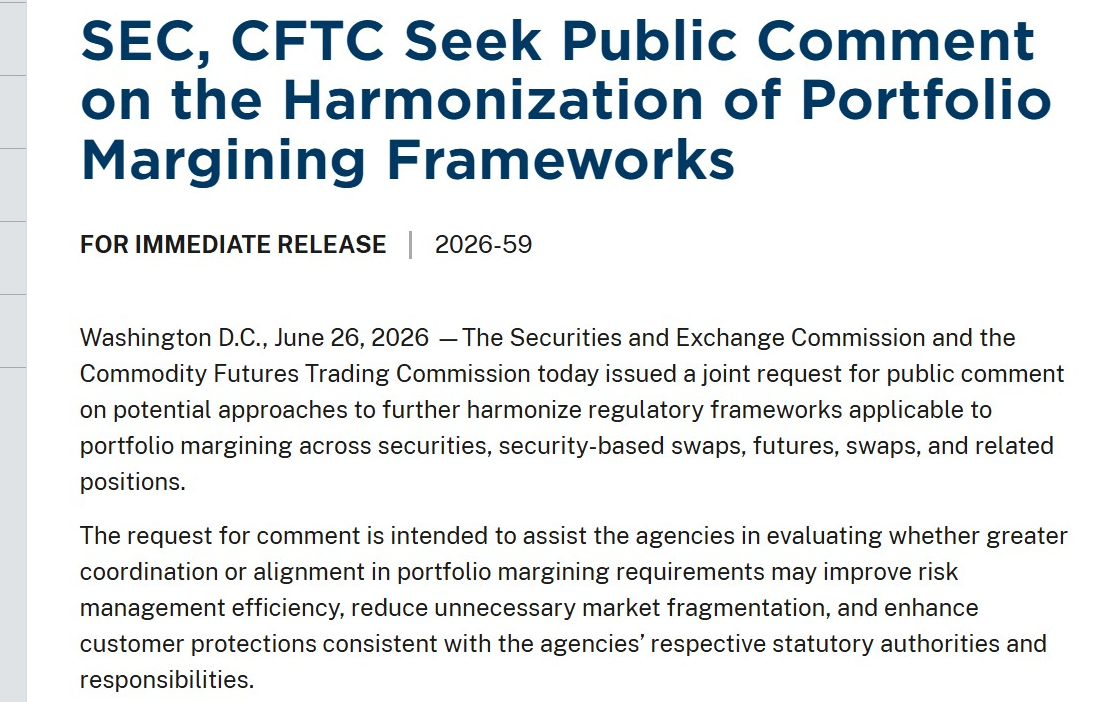
Crypto News: SEC and CFTC Seek Public Input on Crypto Derivatives Rules

Tesla (TSLA) Stock: China EV Sales Rise for Second Straight Quarter