

Must Read
TEDURAY. Jennevie Cornelio, a Teduray and member of the women's council of the Timuay Justice and Governance, puts on her traditional indigenous attire. CornelioTEDURAY. Jennevie Cornelio, a Teduray and member of the women's council of the Timuay Justice and Governance, puts on her traditional indigenous attire. Cornelio
Mock polls give Bangsamoro voters first look at elections, but awareness gaps remain
For feedback or concerns regarding this content, please contact us at crypto.news@mexc.com
COTABATO CITY, Philippines – Three months before the historic first regional parliamentary elections in the Bangsamoro Autonomous Region in Muslim Mindanao (BARMM), voters got their first look at the finalized layout of the ballots for the September 2026 polls during Rappler’s #AmbagNatin: Boto para sa Bangsamoro public forum last June 9 at Notre Dame University (NDU) in Cotabato City.
The Commission on Elections (Comelec), in partnership with Rappler, facilitated the mock election in NDU, which was attended by more than 100 Bangsamoro voters.
Prior to the mock election, Comelec Spokesperson John Rex Laudiangco oriented the Bangsamoro voters on their voting process – who they will be voting for, and how their vote works in the parliamentary government.
Participants then took part in a simulated election using sample ballots bearing fictitious candidates but following the same layout and design that will be used on election day.
 Bangsamoro voters cast shaded sample ballots in a mock election facilitated by the Commission on Elections (Comelec) during the #AmbagNatin roadshow in Cotabato City on June 9, 2026.
For many participants, the mock election provided a clearer understanding of how the region’s first parliamentary elections will unfold on election day.
“This forum also enlightened my mind on what [I should] look [for in the] upcoming elections, and [it] added confidence to the election process,” Apple Dadang, the host of the forum, said in the Bangsamoro Voices chat room of the Rappler app.
Meanwhile, for Bea Abelardo, another participant, the public forum encouraged her to become a more discerning voter by evaluating political parties based on their platforms and track records.
“This is our time to redirect our choices and our hearts toward achieving sustainable development, ensuring safe and resilient communities through the right choices of political leaders,” Abelardo said.
Challenges in getting the BARMM vote
Even with voter education initiatives in BARMM, discussions during the public forum highlighted continuing gaps in voter awareness across the region ahead of the September polls.
Laudiangco cited a survey saying 89.1% of the BARMM population are unaware of the voting process, particularly the parliamentary districts, and that 85.9% of the surveyed population did not know that they are not voting for a chief minister.
This finding has been consistently reiterated in panel discussions conducted before the mock election.
Saudii Daud, Mindanao desk editor of S’bang Ka Mindanao, a digital news platform covering Mindanao and Bangsamoro issues, said many voters still do not fully understand how the parliamentary election works in the BARMM.
“If you ask people in local communities, only a few truly know that we will not be voting directly for the chief minister. We are not voting for the chief minister but for political parties. Very few people really understand how the parliamentary voting system works. And that is one of the challenges we see,” Daud said in Filipino during the forum’s panel discussion with Pia Ranada.
“How can people vote when they do not know or even recognize the candidates or groups they are voting for?” Daud added.
Aside from voters’ lack of awareness of the election process, common themes like disinformation and access to information were raised as prominent challenges for this election.
“One of the major threats is disinformation and misinformation. Especially now that social media is widely used, people can easily be manipulated by false or misleading information, particularly if they are not well-informed and do not know how to cross-check, fact-check, or verify information,” Daud said.
Jennevie Paguilidan Cornelio, a member of Inged Fintailan, echoed the concern on access to proper and correct information, citing it is a challenge not only for the non-Moro indigenous peoples community, but for everyone, since this will be the first regional parliamentary election.
Inged Fintailan serves as the women’s commission and the indigenous women’s council of the Teduray and Lambangian tribes in the Philippines.
Public uncertainty
While many challenges were raised during the discussion, panelists emphasized the importance of pushing through with the parliamentary election in September. The election has already been postponed four times, having originally been scheduled for May 2022.
According to Notre Dame Broadcasting Corporation station manager Drema Quitayen-Bravo, the repeated postponements have fueled public uncertainty over whether the elections will actually push through, adding to growing trust issues among the voters.
The lack of public awareness of the parliamentary system is not unexpected, given that it is still new to many voters. The bigger issue, she said, is the public’s waning trust after years of delays.
“If the question is whether they are ready, their answer is, ‘Why? Is it pushing through?’” Quitayen-Bravo said.
Neil John Martin of iDEFEND Mindanaw echoed the same concern, warning that if the election keeps getting postponed, the voters might truly lose interest in the elections.
The Comelec, however, reassured the public that the September 2026 elections are highly likely to push through, noting that no bill seeking another postponement is currently pending in Congress.
Laudiangco also shared the commission’s preparations, saying that Comelec plans to deploy 6,440 automated counting machines across 5,212 voting precincts in the region, and will soon begin printing the 2.3 million ballots needed for the election.
With the elections moving forward as scheduled, panelists from the different sectors raised concerns and hopes for a peaceful and safe election.
“Considering that this is a hotspot area, we need a military presence. We need to ensure the security of voters if we truly want to protect the integrity of the election,” NDU faculty member Abdulnasser Bagundang said. – Rappler.com


Disclaimer: The articles reposted on this site are sourced from public platforms and are provided for informational purposes only. They do not necessarily reflect the views of MEXC. All rights remain with the original authors. If you believe any content infringes on third-party rights, please contact crypto.news@mexc.com for removal. MEXC makes no guarantees regarding the accuracy, completeness, or timeliness of the content and is not responsible for any actions taken based on the information provided. The content does not constitute financial, legal, or other professional advice, nor should it be considered a recommendation or endorsement by MEXC.
You May Also Like

US Dollar Slips as Markets Recalibrate Fed Rate Cut Expectations
BitcoinWorld US Dollar Slips as Markets Recalibrate Fed Rate Cut Expectations The US Dollar is trading on the back foot this week as currency markets undergo a
Share
bitcoinworld2026/07/04 03:05
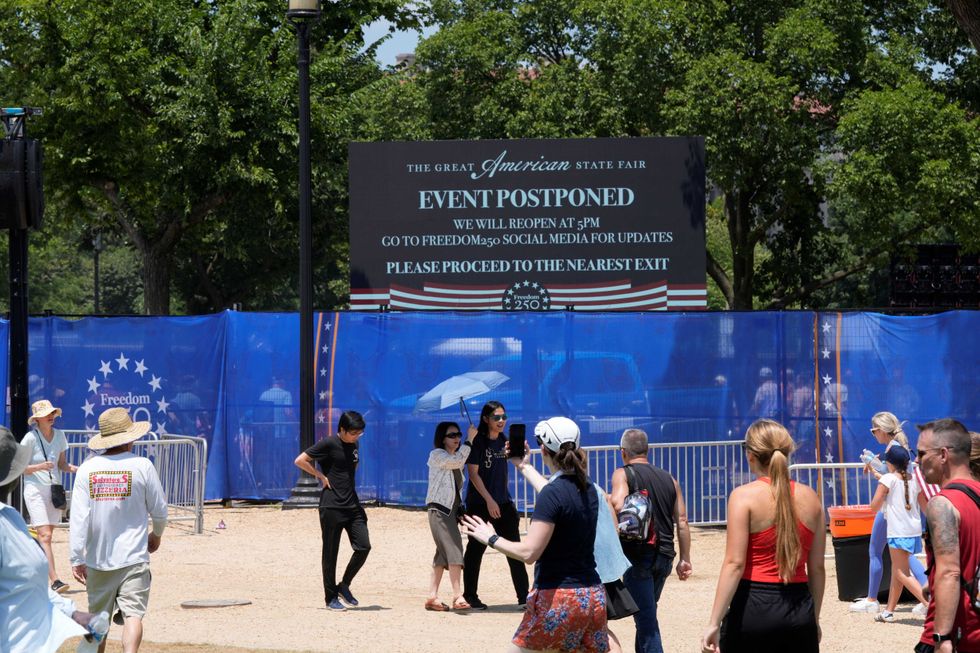
The spectacular implosion of Trump's big bash shows America is finished with this clown
If you’re feeling that the celebration of the 250th anniversary of the United States has been hijacked by a narcissistic, political hack, you’re not alone. Instead
Share
Rawstory2026/07/04 02:57

Aave Price Prediction: AAVE Dips After DeFi Wallet Surge While Pepeto's 150x Presale Window Draws Thousands Before Expected Listing
Aave Price Prediction: AAVE Dips After DeFi Wallet Surge While Pepeto's 150x Presale Window Draws Thousands Before Expected Listing Aave recording its strongest
Share
Coingabbar2026/07/04 02:30

