

Yes, senators had been arrested before within Senate premises
Senator Ronald “Bato” dela Rosa’s decision to end his months-long absence at the upper chamber was not just meant to back the Senate coup in favor of Duterte-allied senators. It was also meant to shield him from a possible International Criminal Court (ICC) arrest.
After all, the ICC itself confirmed on Monday, May 11, that it had indeed issued a warrant against Dela Rosa, the first Philippine National Police chief of Rodrigo Duterte, for the alleged killings in Duterte’s drug war supposedly carried out by the Davao Death Squad.
In 2025, Dela Rosa was named as indirect co-perpetrator in the former president’s crimes against humanity case.
Based on the Pre-Trial Chamber I’s arrest warrant, it found reasonable grounds to believe that Dela Rosa used his position as Davao City police chief under Duterte “to enable DDS killings and to conceive and implement a style of police operations referred to as ‘Tokhang’, in Davao City and later implemented these operations nationally.”
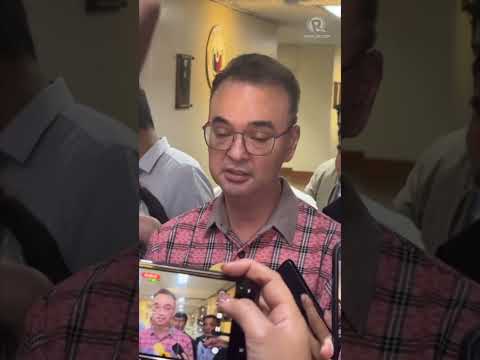
On Monday night, newly-elected Senate President and Dela Rosa ally Alan Peter Cayetano, said he will not allow the senator’s arrest unless a Philippine court issues a warrant.
But given the ICC warrant, can the so-called Senate privileges protect Dela Rosa from arrest?
A tradition that goes way back
It has been a practice of the Senate to disallow arrests inside their premises as a supposed sign of respect for the institution.
This privilege has been tested in the past, as in the cases of several former senators.
“A tradition started by Senate President Jovito Salonga when I, as justice secretary, tried to serve a warrant of arrest on Sen Juan Ponce Enrile for rebellion,” former senator Franklin Drilon told Rappler. Drilon served as justice secretary during Corazon Aquino’s presidency.
Salonga barred National Bureau of Investigation (NBI) agents from serving the warrant against Enrile and from entering the building while a Senate session was ongoing, according to an Inquirer report. Then NBI chief Alfredo Lim even went through Salonga’s office to show the warrant, but Salonga opposed implementation.
In a more recent case, in 2017, then-senator Leila de Lima remained within the Senate premises after learning of her impending arrest due to drug cases filed against her by the Duterte administration.
Then-Senate president Koko Pimentel said the upper chamber’s “rules” dictate that an arrest cannot be made within the Senate premises. He also said then that the primary concern of the Senate was De Lima’s security.
This tradition was tested again when the Duterte administration revoked Trillanes’ amnesty granted in 2010, and ordered his arrest in 2018. Then-Senate president Tito Sotto invoked the same practice to extend protection to Trillanes.
“I have given instructions to the sergeant-at-arms: Based on the tradition of the Senate and to preserve the dignity of the Senate, we cannot allow a senator to be arrested inside Senate premises. If it is considered that the Senate leadership [is] taking him into custody, it can be gleaned that way,” Sotto said at the time.
Not absolute
Drilon explained that the supposed policy regarding senators’ arrest is not a rule but a tradition. “The Senate president has discretion,” said the former Senate president.
In 2018, Sotto also said that this courtesy has “limitations.”
“The idea that senators cannot be arrested while inside the Senate is more of a non-binding tradition than a law or constitutional proscription. There is no provision in the Constitution or the laws that states a senator who is the subject of a valid warrant of arrest cannot within Senate premises,” De Lima told Rappler.
Both De Lima and former Far Eastern University law dean Mel Sta. Maria said that parliamentary immunity arrest also has limitations.
“A senator is only immune from arrest while the Senate is in session and if the penalty of the alleged crime is below six (6) years imprisonment. According to Republic Act No. 9851, crime against humanity where death occurred is punishable by reclusion perpetua (40 years),” Sta. Maria said.
Interior Secretary Juanito Victor “Jonvic” Remulla told Rappler on Monday that Dela Rosa was a subject of a crimes against humanity complaint locally based on the House quad committee’s recommendation.
But on top of these legal arguments, history would tell us that arrests had been made in Senate premises in the past.
After staying inside the Senate for a while, De Lima later surrendered to authorities and did not resist arrest. This happened in the Senate.
“I surrendered, thereafter formally served with the warrant of arrest inside Senate premises. I did not have any intention to evade arrest,” said De Lima.
In Trillanes’ case, the then-senator was served his rebellion warrant while the Senate was in session.

“The arresting PNP personnel read to me the Miranda rights while I was at the Executive Lounge beside the Senate Session Hall. Sumama ako sa mga pulis na nag-aresto sakin (I went with the police who arrested me),” Trillanes recalled. – Rappler.com


You May Also Like

Spot Bitcoin ETFs Return to Net Inflows After Two-Day Outflow Streak

Ripple Gets Major Boost For Prime Brokerage Growth: $200M Debt Facility Announced




