

I Have Enough to Retire at 55, So Why Can’t I Quit Working?
The post I Have Enough to Retire at 55, So Why Can’t I Quit Working? appeared first on 24/7 Wall St..
When you have spent your working life saving and investing toward a retirement number, actually pulling the plug can feel surprisingly difficult. That is the predicament facing one Reddit user in the fatFIRE community, and his experience will resonate with many high earners who have crossed the finish line only to keep running.
The original poster (OP) explained that he had always planned to retire at 55, saving and investing carefully to hit that goal. When the time came, he had double the amount he needed. Even so, his spending had grown considerably by that point, and the colleagues he worked with asked him to stay on.
He agreed to stick it out for another year in exchange for a promised $6 million payout. After taxes, he acknowledged that the after-tax amount felt immaterial to his situation. If he keeps going, he will retire at 57 instead, hardly an early exit after all the planning he put in. Now he is asking himself why it is so hard to walk away from something he spent his entire career trying to reach.
Giving up good earnings can be harder than you would think
While the OP’s problem is one that many people would love to have, it is a genuine dilemma. Many people who have worked diligently to save up millions of dollars to buy financial freedom and retire early face exactly this same wall. According to Pew Research Center data, only 17.1% of Americans between the ages of 55 and 64 are actually retired, suggesting that early exit remains far rarer in practice than in planning.
When you are earning large sums, it is hard to walk away knowing that a few extra months could translate into extra millions. Watching your net worth climb becomes deeply satisfying, especially for someone who was not born wealthy and who takes genuine pride in what they have built. This pattern is widely known as One More Year Syndrome (OMYS): the tendency to keep working even after reaching your financial goals, driven by fear of scarcity rather than any real financial need. That one extra year can silently expand into five or even ten more before you realize it has happened.
Behavioral economists link OMYS to loss aversion, the well-documented tendency for potential losses to loom larger in the mind than equivalent gains. There is also the compounding effect of lifestyle creep: as income rises, spending rises with it, and the number that once felt like “enough” starts to feel dangerously tight. The OP acknowledged this dynamic directly when he noted his spending had grown significantly by the time he hit his original target. Adding to the psychological pressure, Morningstar’s December 2025 retirement income research put the recommended starting safe withdrawal rate at 3.9% for a 30-year retirement, with a 90% probability of funds remaining. That figure is above last year’s 3.7% but still sits below the classic 4% rule that many high earners have long used as their planning benchmark.
Even with millions already saved, the pull of professional identity can be just as strong as any financial concern. Research published in 2023 found that retired older adults showed meaningfully lower sense of purpose than working adults of similar age, and that lower sense of purpose was directly associated with higher rates of depression and anxiety. For a high-achieving executive, the prospect of going from a corner office to an open calendar can feel more like a loss than a reward. The routines, responsibilities, and daily social contact that structured a working life simply vanish, and no account balance fills that void automatically.
What should you do if it is hard to give up work?
Nicoleta Ionescu / Shutterstock.comIf you are financially able to leave work but find yourself reluctant to do so, the most useful question to sit with is this: what would actually make you happy? Research consistently shows that people who retire toward something, a new purpose, a project, a community, report much higher wellbeing than those who retire simply away from a job. The destination matters as much as the departure.
Some people genuinely love what they do. If your work excites you, surrounds you with people you enjoy, and pays extremely well, there is no obligation to leave early. Plenty of wealthy individuals keep working into their 80s and beyond because their careers give their lives structure and meaning. If that describes your situation, staying is a completely legitimate choice, and the psychological research on purpose and longevity supports it. A 2025 study on retirement adjustment found that identity, social connection, and a sense of independence were the three strongest predictors of wellbeing after leaving work, and meaningful work can provide all three at once.
If you are hanging on mainly to accumulate more money, though, it is worth doing an honest accounting of what you are trading away. One practical approach is a trial sabbatical: take three months off without formally retiring, and pay close attention to how you actually feel without the structure, the status, and the daily rhythm of work. Many high earners discover in those months that they already have more wealth than any realistic spending plan will ever exhaust, and that their anxiety about “enough” does not survive contact with actual retirement. If travel, family time, or personal projects are calling, trading finite years for an incrementally larger portfolio is a difficult exchange to justify.
The OP needs to honestly assess which camp he is in. If he genuinely loves his work and thrives in the environment, staying makes sense. If he is grinding on mostly out of habit or because his colleagues are counting on him, it is time to recognize that he has already won, communicate that news to his team, and make a clean transition on his own terms.
Editor’s note: This article was updated to add Pew Research Center data showing only 17.1% of Americans aged 55 to 64 are retired, and to clarify that Morningstar’s current 3.9% safe withdrawal rate (from its December 2025 report) represents an improvement over the prior year’s 3.7% figure, not a reduction from it.
Don't wait: the analyst who called NVIDIA in 2010 just revealed his top 10 AI stocks. See the full list FREE now.
The post I Have Enough to Retire at 55, So Why Can’t I Quit Working? appeared first on 24/7 Wall St..


추천 콘텐츠

Q2 Market Insights: Bitcoin regains dominance in risk-averse environment, ETFs remain critical to market structure
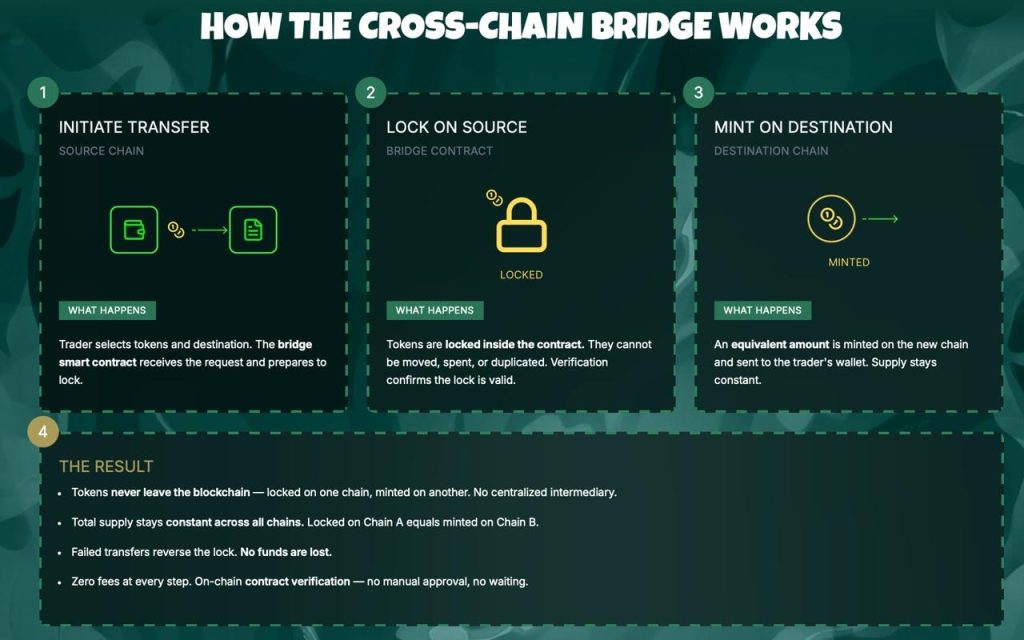
Hedera Price Prediction Holds Bullish as Iran Peace Deal Pushes Bitcoin Above $65,000 and Pepeto Presale Passes $10 Million
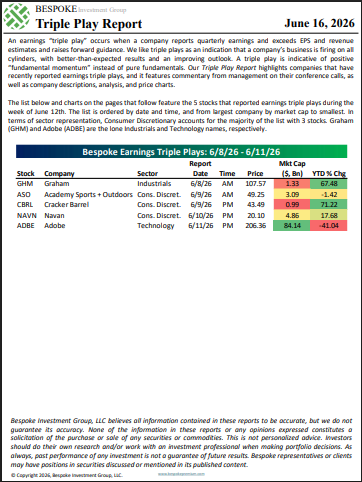
The Triple Play Report: 6/16/26


인기 뉴스
더보기
