When trading futures on MEXC or other major exchanges, your trading PNL is based on three components: Trading Fees: The cost incurred during the transaction. Funding Fees: Periodic settlements basedWhen trading futures on MEXC or other major exchanges, your trading PNL is based on three components: Trading Fees: The cost incurred during the transaction. Funding Fees: Periodic settlements based
Learn/Trading Guide/Futures/Calculation of Futures Yield and Trading Fees

Calculation of Futures Yield and Trading Fees

Sep 21, 2026MEXC
5 min


When trading futures on MEXC or other major exchanges, your trading PNL is based on three components:

  • Trading Fees: The cost incurred during the transaction.
  • Funding Fees: Periodic settlements based on the funding rate during the position holding period.
  • Realized PNL: The final profit or loss locked in after closing the position.

Understanding how these three are calculated helps traders accurately assess the true earnings of each trade, optimize strategies, reduce costs, and make rational decisions in different market conditions.

1. Trading Fees


In perpetual Futures trading, fees differ based on how the trade is executed:

Taker Fee: When you match directly with an order on the order book, you pay a higher rate.

Formula: Fee = Position Value × Taker Fee (0.040%)

Maker Fee: When you place a limit order on the order book and provide liquidity while waiting for it to be filled, the fee is usually lower, sometimes even zero.

Formula: Fee = Position Value × Maker Fee (0.010%)

Note: Rates are as of August 15, 2025. MEXC applies different fee standards for Futures and Spot trading, so it's recommended to check the latest rates before trading to choose the most cost-effective execution method.


2. Funding Fees


Funding fees are one of the main differences between perpetual and traditional futures contracts. They ensure that the price of a perpetual futures contract stays closely aligned with the underlying spot asset.

On MEXC, Perpetual Futures typically settle funding fees every 8 hours. Depending on whether the funding rate is positive or negative, and your position direction (long or short), you will either pay or receive funding fees.

If you hold a long position and the funding rate is positive, you will need to pay funding fees. If the funding rate is negative, you can receive funding fees. (Funding fees will be exchanged directly between users.)

Formula: Funding Fee = Funding Rate × Position Value (Contracts × Size × Fair Price at Settlement)

Tracking funding rate trends helps traders anticipate holding costs and plan their trading strategy more precisely.

3. PNL Calculation


PNL is divided into Unrealized PNL (floating) and Realized PNL (closed positions).

3.1 Unrealized PNL


USDT-M Futures
Long = (Fair Price – Entry Price) × Position Size
Short = (Entry Price – Fair Price) × Position Size

Coin-M Futures
Long = (1 / Entry Price – 1 / Fair Price) × Position Size
Short = (1 / Fair Price – 1 / Entry Price) × Position Size

3.2 Realized PNL


USDT-M Futures
Long = (Fair Price – Entry Price) × Position Size
Short = (Entry Price – Fair Price) × Position Size

Coin-M Futures
Long = (1 / Entry Price – 1 / Exit Price) × Position Size
Short = (1 / Exit Price – 1 / Entry Price) × Position Size

4. Example: PNL from Open to Close


A user takes a 0.1 BTC longposition in BTCUSDT Futures at 50,000 USDT as a Taker, using 500 USDT margin with 10× leverage.

In this example, the data selected is for demonstration purposes only: Taker Fee = 0.02%, Maker Fee = 0.00%, Funding Rate = -0.025%

The user needs to pay a fee of: 50,000 x 0.1 x 0.02% = 1 USDT

The funding rate is negative, so the user can obtain: -50,000 x 0.1 x (-0.025%) = 1.25 USDT Funding Fee

If a user sells their 0.1 BTC Futures position as a Maker when the BTC price is 60,000:

Then the realized PNL = (60,000 − 50,000) × 0.1 = 1,000 USDT

Closing fee = 60,000 × 0.1 × 0.00% = 0 USDT

Therefore, the user's total realized PNL = 1,000 − 1 + 1.25 − 0 = 1,000.25 USDT

Additionally, you can check your trade history to see the fees and funding rates charged for each transaction, as well as the PNL of every order.

5. Why You Should Master Futures PNL Calculations


  • Accurate Trade Evaluation: Understand the components of each trade's PNL, including trading fees, funding fees, and realized PNL, giving you a clear picture of your trading outcomes and helping avoid decisions based on rough estimates.
  • Optimized Trading Strategy: By analyzing PNL across different trading scenarios, you can identify which strategies are more effective and which steps incur unnecessary costs, allowing you to adjust your approach to improve efficiency and profitability.
  • Reduced Trading Costs: Knowing how trading fees and funding fees are calculated helps you choose the right role (Taker or Maker) and anticipate funding rate changes, enabling better cost management and avoiding unnecessary expenses.
  • Rational Investment Decisions: A comprehensive understanding of PNL calculations allows you to stay rational when trading, avoiding being misled by short-term market fluctuations, and preventing blind following or overtrading, making decisions aligned with your risk tolerance and investment goals.

6. Summary


Mastering the PNL calculation formulas for MEXC Futures helps you clearly assess trading results and risks, maintain strategic and rational decision-making, and develop more efficient and controllable trading plans across different market conditions. This enables you to avoid unnecessary costs and achieve long-term, steady profits.

You can log in directly to the MEXC website or App, click Futures on the top navigation bar, select USDT-M or Coin-M Futures, deposit or transfer assets into your Futures account, set your leverage and position direction (long/short), and start trading. For detailed step-by-step instructions, read: "MEXC Futures Trading Tutorial (App): How to Trade Futures on MEXC."


Recommended Reading:


Disclaimer: This information does not provide advice on investment, taxation, legal, financial, accounting, consultation, or any other related services, nor does it constitute advice to purchase, sell, or hold any assets. MEXC Learn provides information for reference purposes only and does not constitute investment advice. Please ensure you fully understand the risks involved and exercise caution when investing. MEXC is not responsible for users' investment decisions.

Market Opportunity
Lagrange Logo
Lagrange Price(LA)
$0.07388
$0.07388$0.07388
-0.59%
USD
Lagrange (LA) Live Price Chart

Popular Articles

View More
Oura Competitors: Samsung, Apple and the Smart Ring Market

Oura Competitors: Samsung, Apple and the Smart Ring Market

Oura's competitors fall into three groups, according to its IPO prospectus: smartwatch makers such as Apple, Google and Samsung; fitness wearables such as Garmin, Coros and Whoop; and software-only

Is Oura Profitable? Revenue, Business Model and Valuation

Is Oura Profitable? Revenue, Business Model and Valuation

Yes, Oura is profitable on a net income basis. Its IPO prospectus shows net income of $60.8 million on revenue of $1.21 billion in the nine months to June 30, 2026. The $924.3 million loss in some

Bitget Review 2026: 3.8 Out of 5, the Deepest Copy-Trading Shelf, and a Japan Exit With Three Dates You Need

Bitget Review 2026: 3.8 Out of 5, the Deepest Copy-Trading Shelf, and a Japan Exit With Three Dates You Need

Bitget scores 3.8 out of 5 on our six-dimension scorecard as of 25 September 2026, leading on derivatives, holding a provisional 3.5 on security after the hot-wallet incident of about $351.6 million
Oura IPO 2026: Date, Price, Valuation and How to Trade OURA

Oura IPO 2026: Date, Price, Valuation and How to Trade OURA

Oura, the company behind the Oura Ring, is expected to price its U.S. initial public offering during the week of September 28, 2026 and list on the Nasdaq Global Select Market under the ticker OURA.

Trending News

View More
Weak Jobs Report Eases Fed Fears, But AI Stocks Still Slide: What Traders Should Watch Next

Weak Jobs Report Eases Fed Fears, But AI Stocks Still Slide: What Traders Should Watch Next

The U.S. June jobs report signaled a clear economic slowdown, missing expectations and lowering Federal Reserve rate hike fears. Despite lower Treasury yields, AI and tech stocks slid, proving that ma

Stablecoin Adoption: Why Bank-Level Protection Matters

Stablecoin Adoption: Why Bank-Level Protection Matters

Stablecoin adoption may depend less on blockchain technology than on whether consumers receive protections they already associate with banks and card networks. Visa’s Money Travels 2026 research found

ZEC Price Breaks $1,650 as Zcash Rally Gains New Catalysts

ZEC Price Breaks $1,650 as Zcash Rally Gains New Catalysts

ZEC briefly broke above $1,650 as a new European ETP, short liquidations, NU7 expectations and stronger shielded activity supported demand.

How to Link a MEXC Card to TenPayGo

How to Link a MEXC Card to TenPayGo

Learn how to link a MEXC Card to TenPayGo, complete card verification, use Apple Pay as an alternative, and fix common binding errors.

Related Articles

View More
The Complete Guide to Coin-M Perpetual Futures on MEXC

The Complete Guide to Coin-M Perpetual Futures on MEXC

In cryptocurrency derivatives, Futures trading enables investors to apply leverage to increase potential returns and to take positions in both rising and falling markets. MEXC offers two primary types
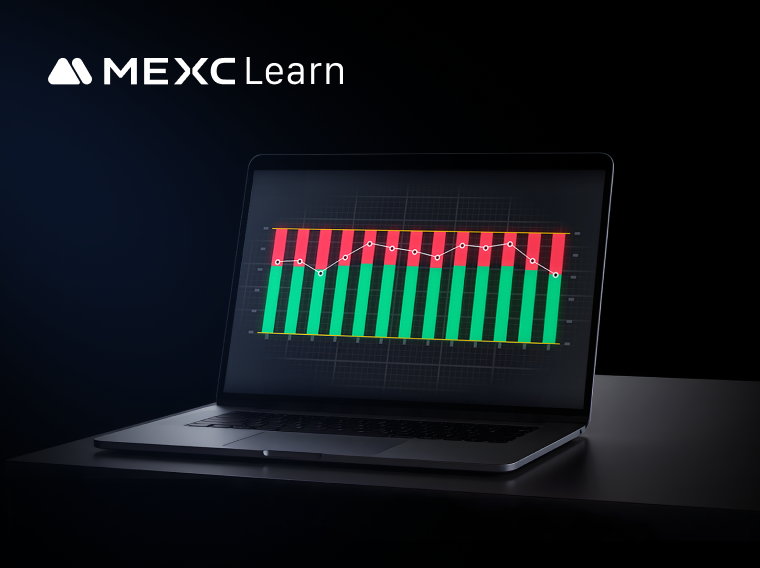
What Is the Long/Short Ratio? How to View Long/Short Ratio Data in Futures Trading?

What Is the Long/Short Ratio? How to View Long/Short Ratio Data in Futures Trading?

BSL refers to long/short closing data. Currently, on the MEXC platform, both candlestick charts and line charts in Futures trading support the display of historical order data for long/short ratios. I
Why Choose MEXC Futures?

Why Choose MEXC Futures?

Cryptocurrency futures trading has attracted countless investors with its promise of high leverage and high returns. Choosing the right exchange is the first step on the journey to successful futures

How to Trade Crypto-Forex Perpetual Futures on MEXC

How to Trade Crypto-Forex Perpetual Futures on MEXC

Crypto-Forex perpetual futures are financial derivatives that allow investors to speculate on the price movements of cryptocurrencies, both upward and downward, without actually owning or transferring

Sign Up on MEXC
Sign Up & Receive Up to 10,000 USDT Bonus
What's Your Wall Street DNA?
What's Your Wall Street DNA?What's Your Wall Street DNA?
6 personas. Everyone wins a share of $30K in NVDAX.

Join the MEXC Community

Get the latest listings, events, and updates in real time, straight from our official Telegram channel.

25k+ members