Recently, U.S. President Donald Trump officially signed the GENIUS Act at the White House. This historic piece of legislation not only signifies the formal inclusion of the stablecoin industry withinRecently, U.S. President Donald Trump officially signed the GENIUS Act at the White House. This historic piece of legislation not only signifies the formal inclusion of the stablecoin industry within
Learn/Featured Content/GENIUS Act Passed: Could This Mark a Turning Point for USDC to Surpass USDT?

GENIUS Act Passed: Could This Mark a Turning Point for USDC to Surpass USDT?

Sep 21, 2026MEXC
6 min

Recently, U.S. President Donald Trump officially signed the GENIUS Act at the White House. This historic piece of legislation not only signifies the formal inclusion of the stablecoin industry within the federal regulatory framework, but also lays the institutional groundwork for the next phase of global digital currency development.

As the first crypto asset–related bill signed by a U.S. President, the GENIUS Act resolves long-standing regulatory ambiguity by providing a clear, unified, and actionable framework for U.S. dollar–backed stablecoins. Its broad impact and deep significance merit close examination.


1. Core Provisions: Stablecoins Enter a Regulated Financial Framework


The GENIUS Act sets clear regulatory boundaries for U.S. dollar–backed stablecoins, marking the first time national legislation has imposed concrete requirements on their definition, operating mechanisms, issuance conditions, and risk controls. The core provisions include:

Regulatory Approval: Issuers must obtain authorization from federal or state financial regulators.
Reserve Requirements: Stablecoins must be backed 1:1 by U.S. dollars or equivalent U.S. Treasury securities. Structured financing and illiquid collateral are prohibited.
Operational Transparency: Monthly audit reports are mandatory, and issuers must be subject to regulatory oversight and enforcement authority.

This not only draws a clear line between compliant and non-compliant activities, but also provides institutional legitimacy for traditional financial institutions, payment companies, and major tech platforms to enter the stablecoin space.

2. Beyond Regulation: An On-Chain Extension of U.S. Dollar Hegemony


The act is not merely about “stablecoin oversight”; its deeper logic centers on reinforcing the U.S. financial system and extending its global influence.

The reserve mechanism effectively brings stablecoin issuers into the buyer pool of the U.S. short-term Treasury market. As stablecoin adoption grows, so does demand for T-bills, directly easing the Treasury Department’s funding pressures amid high national debt. In other words, the growth of on-chain dollars is feeding back into and strengthening the traditional U.S. dollar system. Moreover, as blockchain infrastructure increasingly becomes the foundation for cross-border payments, trade settlement, and financial services, the GENIUS Act accelerates the U.S. dollar’s transition from a sovereign currency to a network currency.

This represents a synthetic hegemonic structure, forged through regulation, market response, and sovereign expansion.

3. Restructuring the Stablecoin Industry: Leading Players Emerge


3.1 USDC: Primary Beneficiary of Regulatory Clarity


USDC, issued by Circle, has long adhered to a 1:1 backing with U.S. dollars and Treasury securities and undergoes regular audits—positioning it ahead in the compliance race. Circle’s CEO stated that the company intends to leverage the advantages of the GENIUS Act to continue its growth and further integrate into the mainstream financial system. Fundamentally, USDC is expected to become the preferred stablecoin for payments and transactions, with its market share projected to expand accordingly.

3.2 USDT: Market Leader Facing Heightened Compliance Pressure


Tether’s USDT continues to lead in scale and market depth but still falls short of the GENIUS Act’s standards in areas such as reserve structure and auditing practices. Tether CEO Paolo Ardoino has announced plans to complete compliance audits within three years to align with the new regulatory framework.

As the world’s largest stablecoin, failure to meet compliance deadlines could subject the company to regulatory pressure to exit key U.S. markets. USDT’s dominance is now facing a credible challenge.

3.3 Decentralized Stablecoins: Regulatory Headwinds and Structural Challenges


Decentralized stablecoins, such as USDS, emphasize censorship resistance and transparency in their design. However, their inability to provide off-chain dollar reserves, and their use of yield-bearing assets—may result in them being classified as securities, subject to stricter regulatory scrutiny. Their continued viability will depend on flexible adjustments to product positioning and alignment with evolving regulatory standards.

4. Structural Shifts in DeFi and the RWA Ecosystem


One of the GENIUS Act’s most significant implications is its impact on on-chain yield models. With stablecoins prohibited from generating interest, the foundational “deposit-and-earn” model in DeFi is likely to be compressed. DeFi protocols will need to pivot toward alternative yield mechanisms based on non-payment tokens or explore redesigned models anchored in real-world assets (RWAs).

Driven by regulatory clarity, the on-chain RWA sector is expected to enter a new phase of growth. Using stablecoins as a settlement medium, real-world financial instruments, such as bonds, accounts receivable, and commercial paper, can be issued, traded, and custodied on-chain. This transition marks a shift from blockchain as a “virtual asset system” to a “real-world financial infrastructure,” providing stronger value anchoring and improved capital efficiency.

5. Divergent Impacts of Global Monetary Policy Linkages


The GENIUS Act also places significant pressure on other countries.

The U.S. is leveraging “on-chain dollar compliance” to establish a new frontier of global financial influence. In contrast, China’s digital yuan system emphasizes central bank control and closed-loop usage, making it less compatible with cross-border or open systems. Meanwhile, the EU continues to advance its MiCA regulatory framework, but its technical implementation and market impact remain far behind the first-mover advantage of U.S. dollar–based stablecoins.

Against this backdrop, if U.S. stablecoins succeed in attracting global developers and capital inflows, a practical model of “networked dollarization” may emerge. Without complementary regulatory mechanisms, other nations risk passively accepting a digital financial order anchored to the U.S. dollar.

6. Turning Point or Instrument of Control?


The GENIUS Act is more than just a regulatory framework for stablecoins, it is a strategic declaration by the U.S. to establish dominance in the global digital financial order via on-chain dollars. By using compliance as a tool and network effects as leverage, the U.S. aims to ensure the entire blockchain ecosystem operates within the protective moat of the dollar. This is a modern financial contest shaped by the intersection of regulation and technology, sovereignty and capital.

For investors, this signals a potential revaluation of assets tied to compliant stablecoins. For entrepreneurs, it marks a critical opportunity to realign business models and capitalize on regulatory tailwinds. For observers, it is a declaration on the future distribution of financial sovereignty, an assertion from the U.S. that “the next financial battleground lies on-chain.”

In response to the diverging global monetary policy impacts, crypto asset exchanges must demonstrate heightened adaptability and foresight. As one of the world’s leading digital asset trading platforms, MEXC is empowering users to navigate policy shifts and capture emerging opportunities through its product strengths and strategic ecosystem layout.

Whether through its efficient token listing mechanism, allowing users to invest early in compliant projects and emerging narratives, or through low fees and deep liquidity that enhance trading efficiency and optimize cost structures, MEXC is actively building a new trading environment tailored for the regulatory era. Especially under this new market logic driven by sovereignty and audit-first principles, what platforms offer is no longer just tools—but a bridge to strategic direction.


Disclaimer: The information provided in this material does not constitute advice on investment, taxation, legal, financial, accounting, or any other related services, nor does it serve as a recommendation to purchase, sell, or hold any assets. MEXC Learn offers this information for reference purposes only and does not provide investment advice. Please ensure you fully understand the risks involved and exercise caution when investing. MEXC is not responsible for users' investment decisions.

Market Opportunity
Lagrange Logo
Lagrange Price(LA)
$0.07372
$0.07372$0.07372
-0.80%
USD
Lagrange (LA) Live Price Chart

Popular Articles

View More
Oura Competitors: Samsung, Apple and the Smart Ring Market

Oura Competitors: Samsung, Apple and the Smart Ring Market

Oura's competitors fall into three groups, according to its IPO prospectus: smartwatch makers such as Apple, Google and Samsung; fitness wearables such as Garmin, Coros and Whoop; and software-only

Is Oura Profitable? Revenue, Business Model and Valuation

Is Oura Profitable? Revenue, Business Model and Valuation

Yes, Oura is profitable on a net income basis. Its IPO prospectus shows net income of $60.8 million on revenue of $1.21 billion in the nine months to June 30, 2026. The $924.3 million loss in some

Bitget Review 2026: 3.8 Out of 5, the Deepest Copy-Trading Shelf, and a Japan Exit With Three Dates You Need

Bitget Review 2026: 3.8 Out of 5, the Deepest Copy-Trading Shelf, and a Japan Exit With Three Dates You Need

Bitget scores 3.8 out of 5 on our six-dimension scorecard as of 25 September 2026, leading on derivatives, holding a provisional 3.5 on security after the hot-wallet incident of about $351.6 million

Oura IPO 2026: Date, Price, Valuation and How to Trade OURA

Oura IPO 2026: Date, Price, Valuation and How to Trade OURA

Oura, the company behind the Oura Ring, is expected to price its U.S. initial public offering during the week of September 28, 2026 and list on the Nasdaq Global Select Market under the ticker OURA.

Hot Crypto Updates

View More
Red Sea Tensions Return as Houthi Threats Put Oil Shipping Costs at Risk

Red Sea Tensions Return as Houthi Threats Put Oil Shipping Costs at Risk

Overview Red Sea tensions have returned to the centre of global market attention because the risk is no longer confined to isolated attacks on individual vessels. Investors are now considering the

Circle Launches Arc Mainnet: From USDC to Building Onchain Financial Infrastructure

Circle Launches Arc Mainnet: From USDC to Building Onchain Financial Infrastructure

Circle officially launched the Arc public mainnet on September 16, 2026, marking a significant expansion from stablecoin issuance and payment infrastructure into operating a Layer 1 blockchain

Arc Mainnet Is Live: Why Does the Network Use USDC for Gasfee?

Arc Mainnet Is Live: Why Does the Network Use USDC for Gasfee?

Arc Mainnet opened to the public on September 16, 2026. Unlike most Layer 1 networks, Arc does not require users to hold a freely floating native token to pay transaction fees. Gas is paid in USDC, a

Sending Money Across Borders With Stablecoins: Is It Really Cheaper?

Sending Money Across Borders With Stablecoins: Is It Really Cheaper?

Stablecoins are often promoted as a cheaper way to send money across borders. Assets such as USDT and USDC can move through a blockchain around the clock without waiting for bank operating hours. On

Trending News

View More
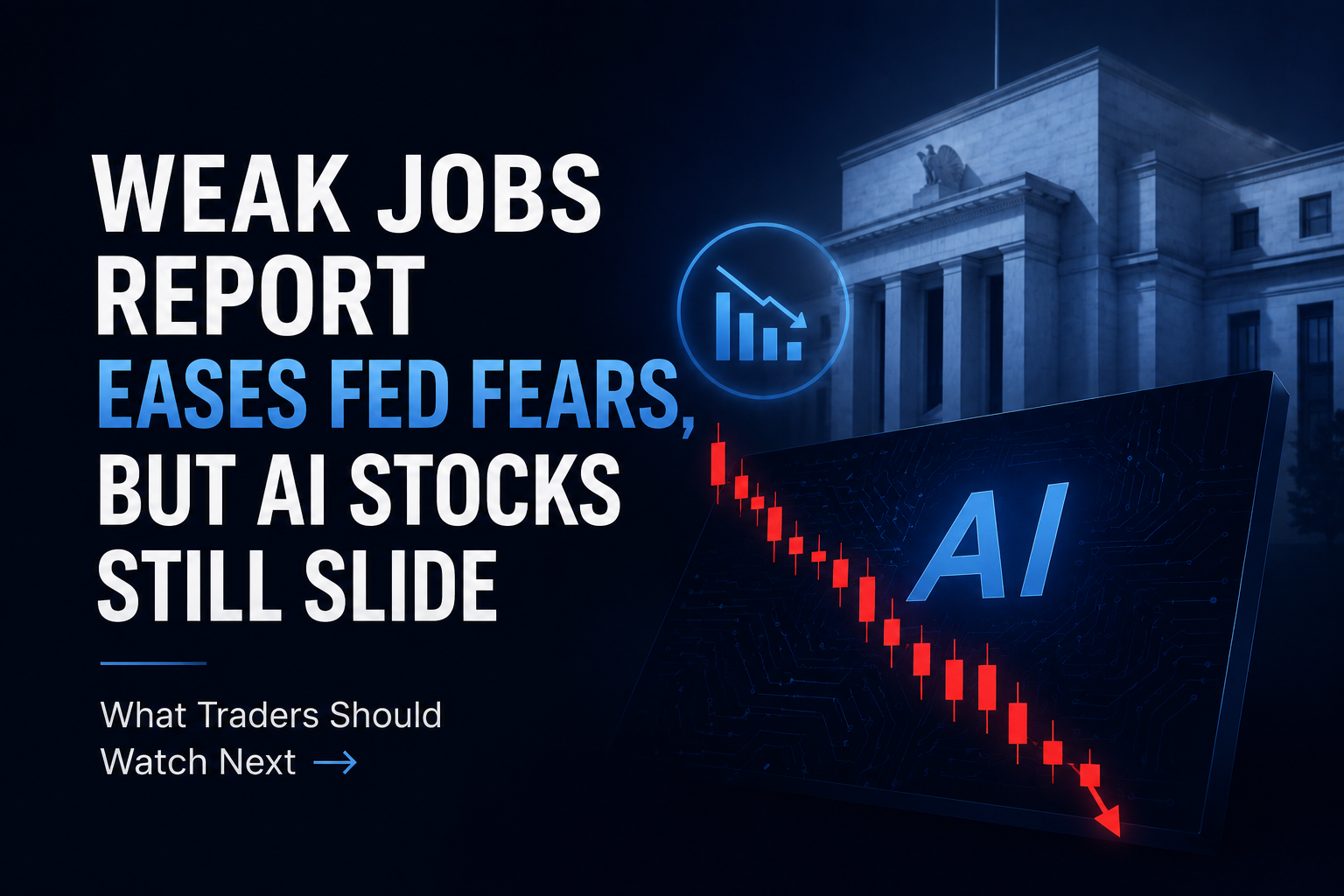
Weak Jobs Report Eases Fed Fears, But AI Stocks Still Slide: What Traders Should Watch Next

Weak Jobs Report Eases Fed Fears, But AI Stocks Still Slide: What Traders Should Watch Next

The U.S. June jobs report signaled a clear economic slowdown, missing expectations and lowering Federal Reserve rate hike fears. Despite lower Treasury yields, AI and tech stocks slid, proving that ma

Stablecoin Adoption: Why Bank-Level Protection Matters

Stablecoin Adoption: Why Bank-Level Protection Matters

Stablecoin adoption may depend less on blockchain technology than on whether consumers receive protections they already associate with banks and card networks. Visa’s Money Travels 2026 research found
ZEC Price Breaks $1,650 as Zcash Rally Gains New Catalysts

ZEC Price Breaks $1,650 as Zcash Rally Gains New Catalysts

ZEC briefly broke above $1,650 as a new European ETP, short liquidations, NU7 expectations and stronger shielded activity supported demand.

How to Link a MEXC Card to TenPayGo

How to Link a MEXC Card to TenPayGo

Learn how to link a MEXC Card to TenPayGo, complete card verification, use Apple Pay as an alternative, and fix common binding errors.

Related Articles

View More
MEXC On-Chain Daily Report: Robinhood Chain Stock Tokens Reach $10.4 Billion in DEX Trading Volume Over the Past 30 Days

MEXC On-Chain Daily Report: Robinhood Chain Stock Tokens Reach $10.4 Billion in DEX Trading Volume Over the Past 30 Days

Updated: September 24, 2026, 09:30 (UTC+8) | Author: MEXCHeadlines MoonPay acquires North Capital for over $60 million x402 incorporates Bitcoin Lightning Network payment specifications KB Securit

MEXC On-Chain Daily Report: SoFi Uses Stablecoin Settlement for Mastercard Transactions, Annualized Volume Expected to Exceed $25 Billion

MEXC On-Chain Daily Report: SoFi Uses Stablecoin Settlement for Mastercard Transactions, Annualized Volume Expected to Exceed $25 Billion

Updated: September 23, 2026, 09:30 (UTC+8) | Author: MEXCHeadlines Ondo Stocks launches on NEAR, with TVL exceeding $1 billion CFTC says markets must prepare for large-scale tokenization Circle’s

Revenue Is Growing—But Is the Business Actually Getting Better?

Revenue Is Growing—But Is the Business Actually Getting Better?

Revenue growth often receives the most attention in an earnings report. If a company sells more products, gains more customers, or expands into new markets, its business appears to be moving in the ri

A Great Company in a Bad Industry: Why Sector Trends Matter to Stock Investors

A Great Company in a Bad Industry: Why Sector Trends Matter to Stock Investors

A company does not operate in isolation. Its revenue, costs, profit margins, competitive position, and stock valuation are all influenced by the industry around it.This is why a well-managed company c

Sign Up on MEXC
Sign Up & Receive Up to 10,000 USDT Bonus
What's Your Wall Street DNA?
What's Your Wall Street DNA?What's Your Wall Street DNA?
6 personas. Everyone wins a share of $30K in NVDAX.

Join the MEXC Community

Get the latest listings, events, and updates in real time, straight from our official Telegram channel.

25k+ members