"Position" is a common term in financial trading, and it has different meanings in different contexts. In the futures contract trading market, a position specifically refers to the quantity of"Position" is a common term in financial trading, and it has different meanings in different contexts. In the futures contract trading market, a position specifically refers to the quantity of
Learn/Trading Guide/Futures/How to Calculate Futures Position Size

How to Calculate Futures Position Size

Sep 21, 2026MEXC
4 min


"Position" is a common term in financial trading, and it has different meanings in different contexts. In the futures contract trading market, a position specifically refers to the quantity of futures contracts bought or sold. For buyers going long, it is called holding a long position, and for sellers going short, it is called holding a short position. Before calculating the position size, we need to have a basic understanding of the concepts of long and short positions.

1. What Are Long and Short Positions?


Holding a long position refers to a situation where a trader believes that the market is likely to rise in the future. Consequently, they go long, purchasing a position (a specific quantity of futures contracts) known as a long position. After buying at a certain price, traders wait for the price to rise to their target level before selling the position to make a profit.

Holding a short position, on the other hand, occurs when a trader believes that the market is likely to fall in the future. In this case, they go short, selling a position (a specific quantity of futures contracts) known as a short position. After selling at a certain price, traders wait for the price to decrease to their desired target before buying back the position to realize a profit.

2. What is Risk Management?


Risk management involves preparing for the possibility of failure in any trade. For example, after holding a long position, if the market suddenly takes a downturn, you need to set an exit price. Exiting at this predetermined price, even if it means accepting a loss, defines the amount of money you are willing to risk – this is referred to as the risk amount. Incurring losses up to this risk amount is essential as it minimizes the risk, preventing your account from sustaining losses beyond what you can afford.

The setting of the exit price depends on individual trading principles and strategies, which can vary from person to person. It revolves around your trading methods and understanding of when the market has made a significant turn, prompting you to exit to cut your losses. It is crucial to note that the difference between the exit price and the entry price, as well as the absolute ratio between entry prices, are known as the stop-loss level.

Although trading methods differ among individuals, most traders set their risk levels between 0.5% to 2% of their account balance. This means that the risk amount for each trade is set between 0.5% to 2% of the total capital. By doing so, even in case of losses, there is a chance for recovery or subsequent profits.

In traditional financial trading markets, the 1% investment principle is commonly adopted, allowing a maximum risk of 1% for each trade. For instance, if your account size is $10,000, you can afford a risk amount of $100 per trade.

3. How to Calculate Position Size


The formula for calculating position size is as follows: Position Size = Risk Amount / Stop-Loss Level,
where Risk Amount = Position Size * Risk Level, and Stop-Loss Level = |(Entry Price - Exit Price)| / Entry Price.

Let's assume we have $10,000 in our account, and the risk level is 1%. So, the risk amount is $100.
Suppose we want to short Bitcoin at $26,000, setting our stop-loss exit price at $27,000, which represents a stop-loss level of 3.8%. In this scenario, the position size would be $100 / 0.038 = $2,631.
Similarly, if we were to go long at $26,000 with a stop-loss exit price at $25,000, also at a 3.8% stop-loss level, the position size would still be $2,631.

Therefore, our position size should be set at $2,631. If the price of Bitcoin reaches our short stop-loss price of $27,000 or our long stop-loss price of $25,000, we would incur a loss of $100.

Disclaimer: This information does not provide advice on investment, taxation, legal, financial, accounting, or any other related services, nor does it constitute advice to purchase, sell, or hold any assets. MEXC Learn provides information for reference purposes only and does not constitute investment advice. Please ensure you fully understand the risks involved and exercise caution when investing. The platform is not responsible for users' investment decisions.


Market Opportunity
ELYSIA Logo
ELYSIA Price(EL)
$0.001852
$0.001852$0.001852
+5.34%
USD
ELYSIA (EL) Live Price Chart

Popular Articles

View More
Oura Competitors: Samsung, Apple and the Smart Ring Market

Oura Competitors: Samsung, Apple and the Smart Ring Market

Oura's competitors fall into three groups, according to its IPO prospectus: smartwatch makers such as Apple, Google and Samsung; fitness wearables such as Garmin, Coros and Whoop; and software-only

Is Oura Profitable? Revenue, Business Model and Valuation

Is Oura Profitable? Revenue, Business Model and Valuation

Yes, Oura is profitable on a net income basis. Its IPO prospectus shows net income of $60.8 million on revenue of $1.21 billion in the nine months to June 30, 2026. The $924.3 million loss in some

Bitget Review 2026: 3.8 Out of 5, the Deepest Copy-Trading Shelf, and a Japan Exit With Three Dates You Need

Bitget Review 2026: 3.8 Out of 5, the Deepest Copy-Trading Shelf, and a Japan Exit With Three Dates You Need

Bitget scores 3.8 out of 5 on our six-dimension scorecard as of 25 September 2026, leading on derivatives, holding a provisional 3.5 on security after the hot-wallet incident of about $351.6 million
Oura IPO 2026: Date, Price, Valuation and How to Trade OURA

Oura IPO 2026: Date, Price, Valuation and How to Trade OURA

Oura, the company behind the Oura Ring, is expected to price its U.S. initial public offering during the week of September 28, 2026 and list on the Nasdaq Global Select Market under the ticker OURA.

Trending News

View More
Robinhood Stock Tokens Hit $10.4B: Is DeFi Repricing Equities?

Robinhood Stock Tokens Hit $10.4B: Is DeFi Repricing Equities?

Robinhood Stock Tokens have generated approximately $10.4 billion in spot DEX trading volume over the past 30 days, highlighting how quickly tokenized equity exposure is moving from brokerage-style ac

Stablecoin Adoption: Why Bank-Level Protection Matters

Stablecoin Adoption: Why Bank-Level Protection Matters

Stablecoin adoption may depend less on blockchain technology than on whether consumers receive protections they already associate with banks and card networks. Visa’s Money Travels 2026 research found

ZEC Price Breaks $1,650 as Zcash Rally Gains New Catalysts

ZEC Price Breaks $1,650 as Zcash Rally Gains New Catalysts

ZEC briefly broke above $1,650 as a new European ETP, short liquidations, NU7 expectations and stronger shielded activity supported demand.

How to Link a MEXC Card to TenPayGo

How to Link a MEXC Card to TenPayGo

Learn how to link a MEXC Card to TenPayGo, complete card verification, use Apple Pay as an alternative, and fix common binding errors.

Related Articles

View More
The Complete Guide to Coin-M Perpetual Futures on MEXC

The Complete Guide to Coin-M Perpetual Futures on MEXC

In cryptocurrency derivatives, Futures trading enables investors to apply leverage to increase potential returns and to take positions in both rising and falling markets. MEXC offers two primary types
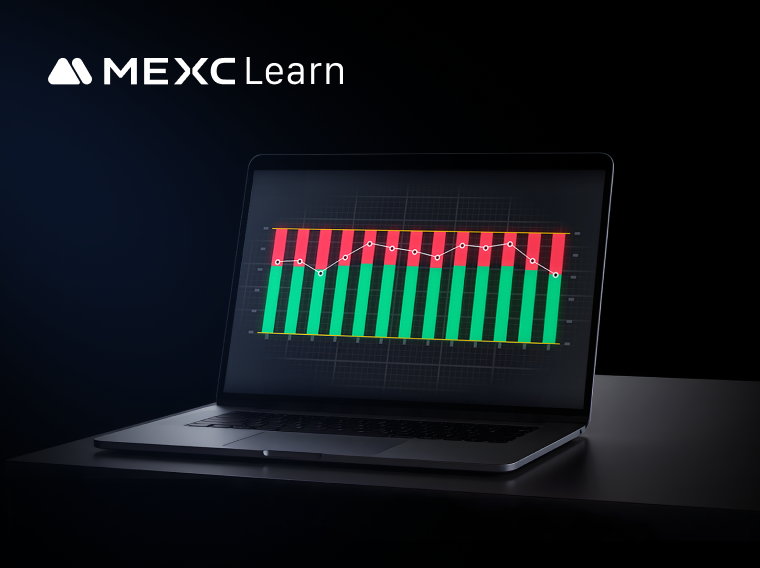
What Is the Long/Short Ratio? How to View Long/Short Ratio Data in Futures Trading?

What Is the Long/Short Ratio? How to View Long/Short Ratio Data in Futures Trading?

BSL refers to long/short closing data. Currently, on the MEXC platform, both candlestick charts and line charts in Futures trading support the display of historical order data for long/short ratios. I
Why Choose MEXC Futures?

Why Choose MEXC Futures?

Cryptocurrency futures trading has attracted countless investors with its promise of high leverage and high returns. Choosing the right exchange is the first step on the journey to successful futures

How to Trade Crypto-Forex Perpetual Futures on MEXC

How to Trade Crypto-Forex Perpetual Futures on MEXC

Crypto-Forex perpetual futures are financial derivatives that allow investors to speculate on the price movements of cryptocurrencies, both upward and downward, without actually owning or transferring

Sign Up on MEXC
Sign Up & Receive Up to 10,000 USDT Bonus
What's Your Wall Street DNA?
What's Your Wall Street DNA?What's Your Wall Street DNA?
6 personas. Everyone wins a share of $30K in NVDAX.

Join the MEXC Community

Get the latest listings, events, and updates in real time, straight from our official Telegram channel.

25k+ members