MEXC Operations Weekly Report (March 25–31, 2026)
New Listings · Top Gainers · Spot & Futures Trading Data Overview
Statistical Period: March 25 – March 31, 2026
Release Schedule: Every Thursday
Data Source: MEXC Platform, CoinGecko
Last week, the crypto market remained under pressure. MEXC listed 39 new tokens, with ASTRAI gaining over 2,118%. Spot and futures trading stayed active, while multiple trading campaigns progressed steadily.
BTC and ETH both moved lower, ETF flows remained negative, and market sentiment fell into Extreme Fear. Meanwhile, the market cap of tokenized equities surpassed $4 billion, suggesting a gradual shift of capital toward on-chain real-world assets. Precious metals fell first and then rebounded sharply at month-end, while crude oil stayed elevated in a range-bound market.I. Market and Platform Overview
This week, the macro backdrop continued to center on persistent inflation and delayed rate cut expectations. The U.S. manufacturing PMI for March reached a two-month high, reinforcing expectations that the Federal Reserve may keep interest rates higher for longer. As a result, the 10-year U.S. Treasury yield remained in the upper range seen since mid-2025. At the same time, geopolitical tensions in the Middle East continued to escalate. Rising risks around the Strait of Hormuz pushed up energy costs and further intensified global inflation concerns. Against this backdrop, overall market risk appetite remained constrained, and major asset classes continued to diverge.
The crypto market remained weak this week, with total market capitalization down 2.5%. BTC fell 2.7%, dropping below $70,000, while ETH declined 3.4%. Spot ETF flows also reversed sharply, with Bitcoin ETFs recording net outflows of about $296 million and Ethereum ETFs seeing net outflows of about $207 million, suggesting a short-term pullback in institutional capital. Market sentiment dropped into Extreme Fear. Despite broad weakness across major assets, Bittensor (TAO) rose 20.8% against the trend. The move was mainly driven by the successful training of a decentralized large language model on its subnet, while a public comparison made by NVIDIA's CEO added further momentum to the AI + Crypto narrative. From the perspective of smart money flows, institutional capital showed a clear preference for rotating out of crowded assets and toward real-world assets. The total market cap of tokenized stocks has now surpassed $4 billion, suggesting that some capital is shifting from purely narrative-driven crypto assets to on-chain real-world assets.
In precious metals, London spot gold fell 10.71%, while silver dropped 19.00%. The pullback was mainly driven by two factors. First, market expectations around the Federal Reserve turned more hawkish. With inflation proving sticky, discussions around further rate hikes resurfaced, weakening the appeal of gold as a non-yielding asset. Second, some central banks, including Turkey's, sold gold reserves to ease liquidity pressure. At the same time, safe-haven sentiment remained volatile amid ongoing geopolitical tensions, limiting sustained support for gold prices. On March 31, however, both gold and silver rebounded sharply. Spot gold briefly rose above $4,600 per ounce, with intraday gains of more than 2%, while spot silver also jumped more than 7% at one point, reaching a high of $75.11 per ounce.
In crude oil, prices saw sharp swings at elevated levels this week as tensions around the Strait of Hormuz continued to drive volatility. Any news related to a possible blockade or attack triggered significant price moves, although supply-side uncertainty continued to provide downside support. According to Xinhua, citing The Wall Street Journal, U.S. President Donald Trump told aides that he would be willing to end U.S. military action against Iran even if the Strait of Hormuz remained closed. The remark added fresh uncertainty to the outlook for the oil market.
In tokenized U.S. equities, momentum continued this week after the SEC approved Nasdaq to allow tokenized trading of Russell 1000 constituents and certain major ETFs. The total market cap of tokenized stocks has now surpassed $4 billion. These tokenized securities are fully interchangeable with traditional equities, while investors still retain voting rights and dividend rights. Settlement follows a T+1 standard. This development significantly improves asset programmability and trading efficiency, signaling that the tokenization of traditional finance is moving from concept to scale and may attract more institutional capital to access traditional assets through blockchain channels.
Looking ahead, the market will watch the upcoming U.S. nonfarm payrolls report for March. A stronger-than-expected reading could further support expectations of prolonged Fed tightening and keep pressure on risk assets. Meanwhile, developments around the Strait of Hormuz will remain a key driver of crude oil prices and inflation expectations. In crypto, the expansion of tokenized real-world assets may continue to emerge as a new direction for capital flows.
- 24/7 non-stop trading
- Superior liquidity
- Up to 200x leverage
- Copy trading, grid trading, and cross margin mode support
- New listings: 39
- Top weekly performer: ATLBRY (peak gain +379.43%)
- Spot trading volume: 16.9 billion USDT
- Futures trading volume: 87 billion USDT
- Platform activities: 279
2. Last Week's New Listings Overview
Cryptocurrency | Trading Pair | Sector | Listing Date |
ASTRAI | AI | 03/25 | |
META | 03/28 | ||
PRL | AI | 03/25 | |
扭羊歌 | 03/29 | ||
CAPTCHA | AI Agent | 03/25 |
- ASTRAI: ASTRAI is a Web3-native AI infrastructure project focused on advancing the adoption of AI through decentralization. By combining AI with blockchain, it provides an open and transparent ecosystem for developers, data providers, and AI users. The project uses distributed computing and decentralized data storage to support the training, deployment, and use of AI models, with the aim of improving data privacy, optimizing resource allocation, and reducing development costs.
- META: MetaType is a digital identity project focused on delivering secure, decentralized, and user-centric identity management solutions. Built on blockchain technology, it aims to reduce reliance on centralized institutions and give users greater control over their personal data. The project also emphasizes privacy, security, interoperability, and scalability, allowing users to manage digital identities across different platforms and services in a more unified way.
- PRL:Perle Labs is a project building a sovereign intelligence data layer for AI. It is designed to provide trusted data infrastructure for governments, enterprises, and advanced AI labs, addressing challenges around data transparency and reliability in existing AI models. The platform focuses on expert-verified, human-reviewed, and on-chain auditable data, helping ensure that training and evaluation data used in high-stakes sectors such as healthcare, robotics, transportation, and defense can be traced back to trusted human judgment.
3. Top 5 Gainers
Rank | Crypto | Peak Gain |
1 | +379.43% | |
2 | +377.67% | |
3 | +143.08% | |
4 | +73.65% | |
5 | +32.71% |
4. Platform Trading Data Performance
1️⃣ Spot Trading Data
- Total spot trading volume last week: 16.9 billion USDT
- Top 3 cryptocurrencies by spot trading volume:
2️⃣ Futures Trading Data
- Total futures trading volume last week: 87 billion USDT
- Top 5 most-traded futures pairs:
5. Platform Events Review
- 🎯 【Perle (PRL)】
- Event Period: March 25 - April 14, 2026
- Key Highlights:
- Extended Duration: From 7 to 20 days
- Enhanced New User Rewards: Doubled from 15 USDT to 30 USDT per user
- Significantly lowered participation threshold
- Rewards paid in equivalent value of trending cryptocurrencies
- Event Period: March 24 - April 8, 2026
- Key Highlights:
- EDGE Hot Topic: Bridging two critical milestones: Pre-TGE and TGE
- Exclusive New User Benefits: Deposit now to unlock $200 airdrop allocation and lottery entry
- Trade to Win Big: Complete spot or futures tasks to earn EDGE, BTC, USDT, and more from a $200,000 prize pool
6. Key Focus for Next Week
- 18 new projects launching soon across trending sectors including AI, Meme, and DeFi. Stay updated with the latest listings at New Listing
- Active trading activities and exclusive benefits: 0 Fee Trading, Kickstarter, Launchpad, Launchpool
- 100 Profit Hunting Season 1: Capture 100x return opportunities and share in a 50,000 USDT prize pool
- Stake SOEX: Earn annual yields up to 400%
- Discover more market opportunities by following MEXC's official channels
7. Conclusion
8. Recommended Reading
Popular Articles
View More
Oura Competitors: Samsung, Apple and the Smart Ring Market
Oura's competitors fall into three groups, according to its IPO prospectus: smartwatch makers such as Apple, Google and Samsung; fitness wearables such as Garmin, Coros and Whoop; and software-only

Is Oura Profitable? Revenue, Business Model and Valuation
Yes, Oura is profitable on a net income basis. Its IPO prospectus shows net income of $60.8 million on revenue of $1.21 billion in the nine months to June 30, 2026. The $924.3 million loss in some

Bitget Review 2026: 3.8 Out of 5, the Deepest Copy-Trading Shelf, and a Japan Exit With Three Dates You Need
Bitget scores 3.8 out of 5 on our six-dimension scorecard as of 25 September 2026, leading on derivatives, holding a provisional 3.5 on security after the hot-wallet incident of about $351.6 million

Hot Crypto Updates
View More
Optimism Reallocates 546.9 Million OP Away From Airdrops: From “Distributing Tokens to Users” to an Enterprise Growth Strategy
Optimism is making a notable change in how it uses the OP token by deciding to reallocate 546.9 million unused OP from the User Airdrop Allocation to the Strategic Ecosystem Fund. These tokens were

INTER vs OP: Investment Analysis and Market Comparison
INTER (Inter Milan Fan Token) and OP (Optimism) represent two very different investment propositions: INTER is a sports fan-engagement token tied to a single club's ecosystem and community dynamics,

Bitget Hit by a US$351.6 Million Hack: What Happened?
Bitget has confirmed unauthorized transfers involving some of its hot and warm wallets. The platform said its security system detected suspicious activity at 02:31:11 UTC+8 on September 25, 2026,

Trending News
View More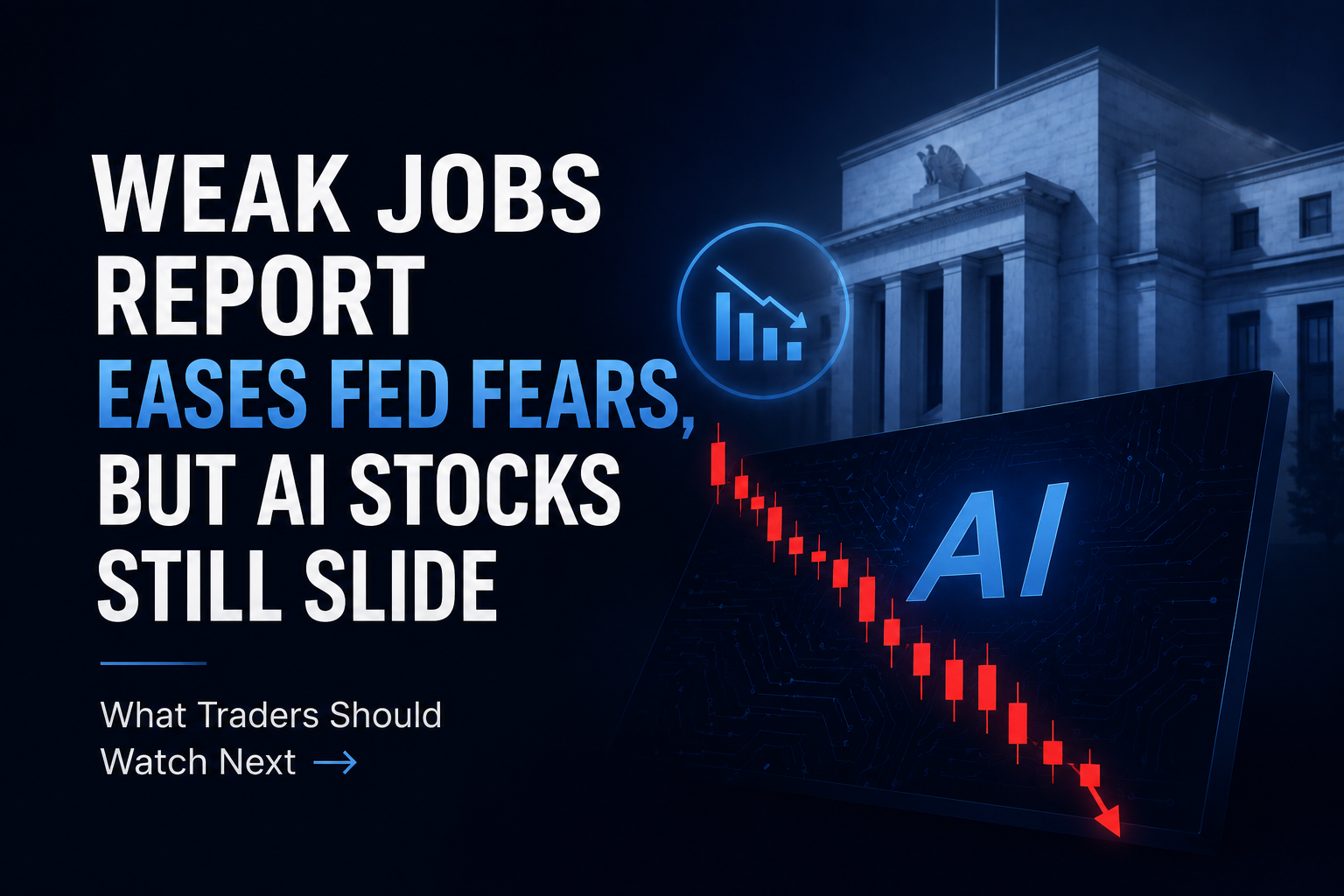
Weak Jobs Report Eases Fed Fears, But AI Stocks Still Slide: What Traders Should Watch Next
The U.S. June jobs report signaled a clear economic slowdown, missing expectations and lowering Federal Reserve rate hike fears. Despite lower Treasury yields, AI and tech stocks slid, proving that ma

Stablecoin Adoption: Why Bank-Level Protection Matters
Stablecoin adoption may depend less on blockchain technology than on whether consumers receive protections they already associate with banks and card networks. Visa’s Money Travels 2026 research found

Related Articles
View More
Rate Hike Lands, BTC Hits 8-Month High — Bad News Priced In or a Short-Squeeze Rally? | MEXC Alpha Trader Weekly Research
Week 3 of September 2026Statistics Period: September 16 – September 22, 2026Data Cutoff: September 22, 2026Core NarrativeOver the past week, crypto markets moved through a full cycle of pre-decision p

How Deep Is MEXC's Liquidity? Order Book Depth, Slippage, and What Third-Party Reports Show
Liquidity is the difference between the price you clicked and the price you got.This page tracks MEXC liquidity the way third-party researchers measure it: order book depth in tight bands around the m

CPI Surges, Stoking Rate Hike Fears; U.S. Treasury Yields Breach 5% to Reach 19-Year High: What’s the Market Pricing In? | MEXC Alpha Trader Research Weekly
September 2026, Week 2Reporting Period: September 9 – September 15, 2026Data Cutoff: September 15, 2026Market OverviewLast week, the crypto market faced sustained pressure driven by a confluence of be