If you've ever looked up SOL on CoinMarketCap or CoinGecko and wondered what "circulating supply" actually means — you're not alone. Understanding the Solana circulating supply is one of the mostIf you've ever looked up SOL on CoinMarketCap or CoinGecko and wondered what "circulating supply" actually means — you're not alone. Understanding the Solana circulating supply is one of the most
Learn/Cryptocurrency Knowledge/Hot Concepts/Solana Circulating Supply Explained: What Every SOL Investor Should Know

Solana Circulating Supply Explained: What Every SOL Investor Should Know

Intermediate
Sep 21, 2026Emma Williams
6 min
If you've ever looked up SOL on CoinMarketCap or CoinGecko and wondered what "circulating supply" actually means — you're not alone.
Understanding the Solana circulating supply is one of the most practical ways to evaluate whether SOL is fairly priced, how much dilution risk you're taking on, and why the market cap number looks the way it does.
This guide breaks it all down in plain English.

Key Takeaways
  • Solana's circulating supply — currently around 575–580 million SOL — is the number that actually drives its market cap calculation, not the total supply.
  • Solana has no hard supply cap; instead, it uses a disinflationary model where annual inflation starts at 8% and decreases by 15% each year until it stabilizes at 1.5%.
  • Every transaction on Solana burns 50% of the base fee, creating a built-in deflationary force that partially offsets new token issuance.
  • A large share of the circulating supply is currently staked, meaning the amount of SOL freely available on exchanges is smaller than the headline number suggests.
  • Staking SOL is the most direct way to offset inflation dilution, as staking rewards roughly match the rate at which new tokens are issued to non-stakers.
  • Scheduled token unlocks — including those tied to the FTX bankruptcy estate — remain a factor worth monitoring, as large release events can add short-term sell pressure.

What Is Solana Circulating Supply — And Why Does It Matter to SOL Investors?

The Solana circulating supply refers to the number of SOL tokens that are actively available for trading and use in the market right now.
It does not include tokens that are locked, reserved by the Solana Foundation, or still under vesting schedules.
This number matters because market cap — the figure most investors use to compare cryptocurrencies — is calculated by multiplying the current SOL price by the circulating supply, not the total supply.
So if you're comparing two tokens with the same price, the one with a much larger circulating supply will have a significantly higher market cap and will generally behave differently in terms of price volatility.
The Solana total supply vs. circulating supply split also tells you how much hidden selling pressure might exist in the future, as locked tokens gradually enter the market.
In short, the circulating supply of Solana is the number you actually need to watch — not just the price.


How Solana's Inflation Rate and Burn Model Shape the SOL Circulating Supply

Unlike Bitcoin, Solana does not have a hard cap on its maximum supply.
Instead, it runs on a disinflationary model — new SOL tokens are minted and distributed to validators and stakers as rewards, but the inflation rate decreases by approximately 15% every year.
This means the Solana SOL circulating supply grows over time, but at a progressively slower pace.
What helps offset this inflation is Solana's built-in burn mechanism: 50% of every transaction fee collected on the network is permanently destroyed.
As network activity increases — more DeFi trades, NFT mints, token launches — more SOL gets burned, creating real deflationary pressure that works against the inflation side of the equation.
The balance between these two forces — new issuance and fee burning — is what determines the net change in the Solana total supply and circulating supply over time.


Solana Circulating Supply and Market Cap: Current Numbers You Should Know

According to CoinMarketCap and CoinGecko, the current circulating supply of Solana is approximately 575‒580 million SOL — though this figure updates daily as new tokens are issued through staking rewards. Always check live data before making decisions.
The Solana total supply — which includes all minted tokens — is approximately 624 million SOL as of this writing, with no defined maximum cap; this number increases over time as new tokens are issued.
At a price near $87, that puts Solana's market cap at roughly $50 billion USD, ranking it #7 among all cryptocurrencies globally.
One thing worth knowing: a large portion of the circulating supply is currently staked, meaning it is technically counted as circulating but is temporarily illiquid.
This matters because the actual amount of SOL freely available on exchanges is smaller than the headline circulating supply figure suggests — which can amplify price movements during periods of high demand.
For real-time tracking, you can verify the Solana circulating supply on CoinMarketCap or CoinGecko at any time, as both platforms update these figures continuously.
You can also trade SOL directly on MEXC, which provides live market data alongside spot and futures access.


What Solana's Circulating Supply and Total Supply Mean for Your Investment

Supply data doesn't tell you whether to buy or sell SOL — but it does give you context that most casual investors skip entirely.
Here are the key takeaways for anyone evaluating SOL in 2026:
  • Inflation dilution is real but manageable. With an annual inflation rate now below 4% and declining, SOL holders face a moderate level of token dilution each year — less than many competing Layer 1 networks.
  • Staking is the most direct hedge. If you hold SOL and stake it, you receive staking rewards that roughly offset the dilution from inflation, which means non-stakers effectively subsidize stakers over time.
  • Unlock pressure from FTX estate tokens still exists. The FTX bankruptcy estate has held significant amounts of SOL subject to scheduled release events — a factor worth monitoring, as large token unlocks can introduce additional sell-side pressure into the market.
  • High staking participation tightens liquid supply. When a larger share of the circulating supply is staked, fewer tokens sit on exchanges, which can amplify price swings in either direction during periods of heavy trading.
Watching the Solana circulating supply chart over time — not just the price — gives you a more complete picture of what's actually happening to the token's economics.


FAQ

Does Solana have a maximum supply?
No — Solana does not have a hard cap, and its total supply grows over time through validator staking rewards, though inflation slows every year by 15%.


What is the difference between Solana total supply vs. circulating supply?
Total supply includes all minted SOL (including locked and vesting tokens), while circulating supply reflects only what is actively tradable in the market.


What percentage of Solana's total supply is currently circulating?
Based on CoinMarketCap data, the vast majority of Solana's total minted supply is already in circulation — you can find the exact current percentage on their SOL page at any time.


Where can I check Solana's circulating supply history?
Both CoinMarketCap and CoinGecko maintain historical supply data going back to Solana's 2020 launch, with monthly breakdowns available.


Does staked SOL count as part of the circulating supply?
Yes — staked SOL is still counted as circulating, but it is temporarily illiquid and cannot be sold until the unstaking cool-down period (typically 2–3 days) completes.


How does Solana's circulating supply compare to Bitcoin?
Bitcoin has a hard-capped supply of 21 million BTC, making it strictly deflationary, while Solana's supply gradually grows — though at a decreasing rate — under its disinflationary model.


Conclusion

The current Solana circulating supply of approximately 575–580 million SOL, combined with a market cap near $50 billion, tells a story of a maturing blockchain network — not a speculative moonshot, but not a finished one either.
Solana's disinflationary model, fee burn mechanism, and high staking participation all work together to moderate supply growth over time.
If you're actively tracking SOL, keeping an eye on the Solana circulating supply and market cap alongside price is one of the most underrated habits a crypto investor can develop.
Ready to trade SOL? You can access real-time data and spot markets on MEXC.
Market Opportunity
Lagrange Logo
Lagrange Price(LA)
$0.07277
$0.07277$0.07277
-2.08%
USD
Lagrange (LA) Live Price Chart

Popular Articles

View More
Oura Competitors: Samsung, Apple and the Smart Ring Market

Oura Competitors: Samsung, Apple and the Smart Ring Market

Oura's competitors fall into three groups, according to its IPO prospectus: smartwatch makers such as Apple, Google and Samsung; fitness wearables such as Garmin, Coros and Whoop; and software-only

Is Oura Profitable? Revenue, Business Model and Valuation

Is Oura Profitable? Revenue, Business Model and Valuation

Yes, Oura is profitable on a net income basis. Its IPO prospectus shows net income of $60.8 million on revenue of $1.21 billion in the nine months to June 30, 2026. The $924.3 million loss in some
Bitget Review 2026: 3.8 Out of 5, the Deepest Copy-Trading Shelf, and a Japan Exit With Three Dates You Need

Bitget Review 2026: 3.8 Out of 5, the Deepest Copy-Trading Shelf, and a Japan Exit With Three Dates You Need

Bitget scores 3.8 out of 5 on our six-dimension scorecard as of 25 September 2026, leading on derivatives, holding a provisional 3.5 on security after the hot-wallet incident of about $351.6 million

Oura IPO 2026: Date, Price, Valuation and How to Trade OURA

Oura IPO 2026: Date, Price, Valuation and How to Trade OURA

Oura, the company behind the Oura Ring, is expected to price its U.S. initial public offering during the week of September 28, 2026 and list on the Nasdaq Global Select Market under the ticker OURA.

Hot Crypto Updates

View More
Solana Activates Transaction V1: What Does It Mean for SOL?

Solana Activates Transaction V1: What Does It Mean for SOL?

Solana activated Transaction V1 on mainnet at the start of epoch 1035, around 01:00 UTC on 15 September 2026. For Indonesian readers, that activation occurred at approximately 08:00 WIB. The upgrade

BTC Spot ETFs Record $1 Billion in Single-Day Net Inflows【MEXC Alpha Trader – Daily Market Brief (September 24, 2026)】

BTC Spot ETFs Record $1 Billion in Single-Day Net Inflows【MEXC Alpha Trader – Daily Market Brief (September 24, 2026)】

I. Macro & Market Sentiment · Market Data: BTC $83,800 (-3.89%) | ETH $2,674 (-3.94%) | SOL $114.84 (-3.98%) · Market Sentiment: Funding Rate +0.0049% | Fear & Greed Index 71 (Greed) · Tightening

BTC Open Interest Rises by Approximately $2 Billion Following Breakout【MEXC Alpha Trader – Daily Market Brief (September 22, 2026)】

BTC Open Interest Rises by Approximately $2 Billion Following Breakout【MEXC Alpha Trader – Daily Market Brief (September 22, 2026)】

I. Macro & Market Sentiment Market Data: BTC $85,646.00 (+5.21%) | ETH $2,738.99 (+2.76%) | SOL $116.80 (+4.71%) Market Sentiment: Funding Rate +0.0100% | Fear & Greed Index 78 (Extreme Greed) Rate

US 10-Year Treasury Yield Breaks 5%, Hitting 18-Year High【MEXC Alpha Trader – Daily Market Brief (September 16, 2026)】

US 10-Year Treasury Yield Breaks 5%, Hitting 18-Year High【MEXC Alpha Trader – Daily Market Brief (September 16, 2026)】

I. Macro & Market Sentiment Market Data: BTC $75,432 (-3.19%) | ETH $2,389 (-5.00%) | SOL $96.37 (-5.76%) Market Sentiment: Funding Rate +0.0042% | Fear & Greed Index 51 (Neutral) Bond Market Signal:

Trending News

View More
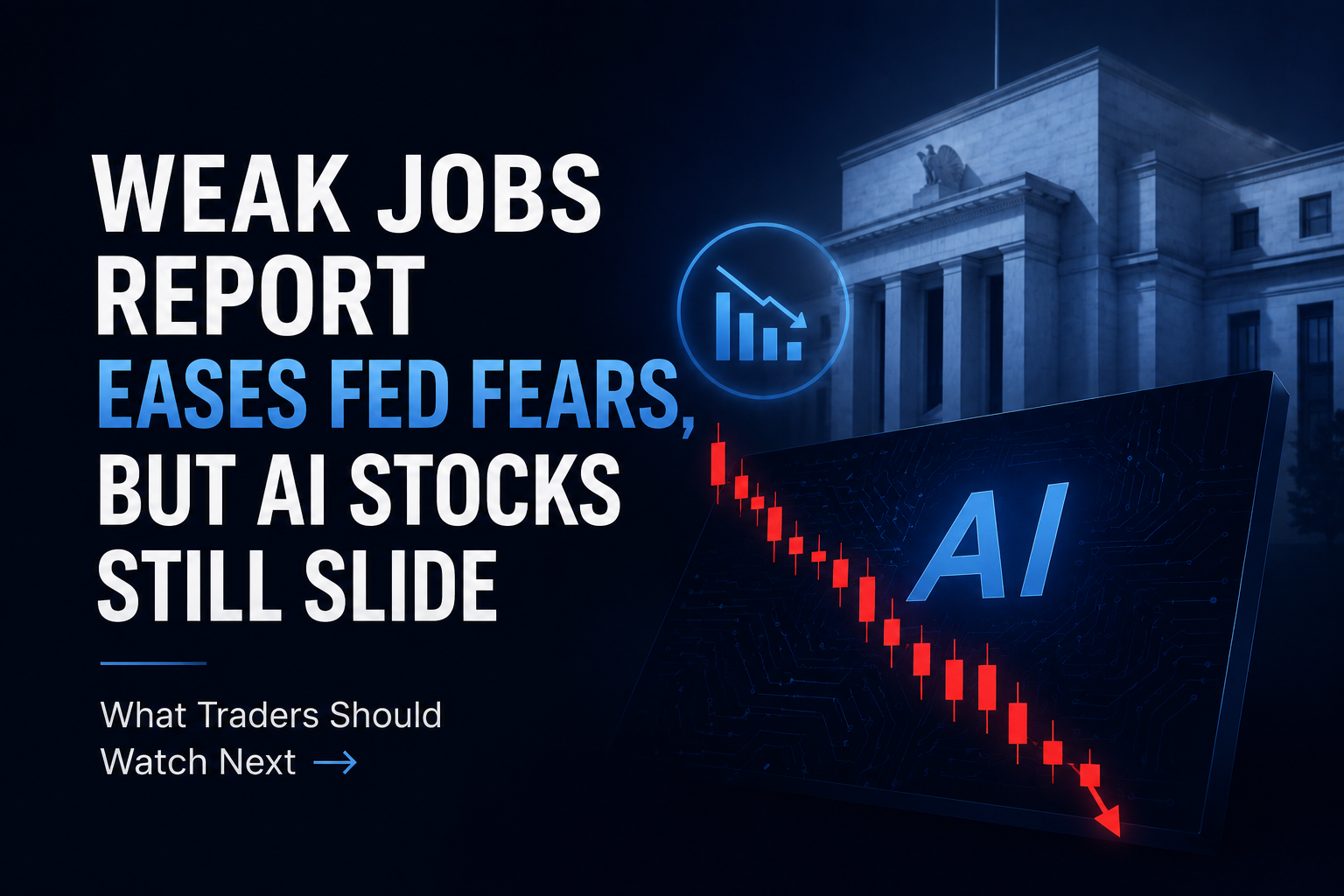
Weak Jobs Report Eases Fed Fears, But AI Stocks Still Slide: What Traders Should Watch Next

Weak Jobs Report Eases Fed Fears, But AI Stocks Still Slide: What Traders Should Watch Next

The U.S. June jobs report signaled a clear economic slowdown, missing expectations and lowering Federal Reserve rate hike fears. Despite lower Treasury yields, AI and tech stocks slid, proving that ma

Stablecoin Adoption: Why Bank-Level Protection Matters

Stablecoin Adoption: Why Bank-Level Protection Matters

Stablecoin adoption may depend less on blockchain technology than on whether consumers receive protections they already associate with banks and card networks. Visa’s Money Travels 2026 research found
ZEC Price Breaks $1,650 as Zcash Rally Gains New Catalysts

ZEC Price Breaks $1,650 as Zcash Rally Gains New Catalysts

ZEC briefly broke above $1,650 as a new European ETP, short liquidations, NU7 expectations and stronger shielded activity supported demand.

How to Link a MEXC Card to TenPayGo

How to Link a MEXC Card to TenPayGo

Learn how to link a MEXC Card to TenPayGo, complete card verification, use Apple Pay as an alternative, and fix common binding errors.

Related Articles

View More
Dogecoin Marketcap Explained: What It Means and How It Shapes DOGE's Value

Dogecoin Marketcap Explained: What It Means and How It Shapes DOGE's Value

Key TakeawaysMarket capitalization (market cap) measures the total dollar value of Dogecoin (DOGE), calculated as current price × circulating supply.As of December 2025, Dogecoin's market cap stands a

How Tether Maintains Its 1:1 Peg: Mechanics of USDT Reserves

How Tether Maintains Its 1:1 Peg: Mechanics of USDT Reserves

Tether (USDT) is a stablecoin pegged 1:1 to the US Dollar, meaning each USDT is backed by an equivalent amount of reserves. Tether maintains its peg by holding a mix of fiat assets, cash equivalents,

Dogecoin Security Basics: Common Scams Targeting DOGE Holders and How to Avoid Them

Dogecoin Security Basics: Common Scams Targeting DOGE Holders and How to Avoid Them

Dogecoin (DOGE) has transformed from an internet meme into a legitimate financial asset. However, its mainstream visibility is a double-edged sword: while it drives adoption, it also attracts sophisti


Can XRP Reach $1,000? The Math Says No, Here's Why

Can XRP Reach $1,000? The Math Says No, Here's Why

Every crypto rally brings the same question back: can XRP reach $1,000?It is one of the most-searched price targets in all of crypto, and the short answer is no — not at anything close to XRP's curren

Sign Up on MEXC
Sign Up & Receive Up to 10,000 USDT Bonus
What's Your Wall Street DNA?
What's Your Wall Street DNA?What's Your Wall Street DNA?
6 personas. Everyone wins a share of $30K in NVDAX.

Join the MEXC Community

Get the latest listings, events, and updates in real time, straight from our official Telegram channel.

25k+ members










