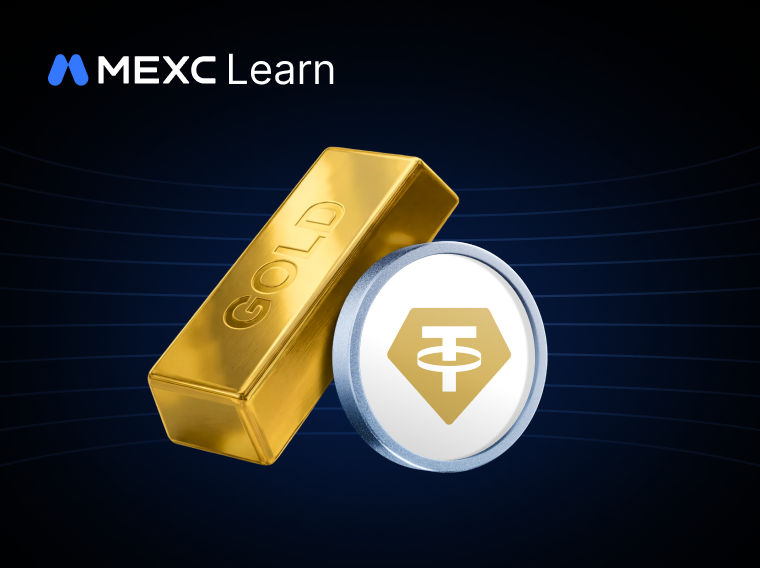
Tokenized Gold vs. Physical Gold: A Deep Dive into RWA Mechanics
In the Web3 era where everything can be brought on-chain, Gold—humanity's oldest consensus asset—is undergoing a structural revolution driven by RWA (Real World Asset) tokenization.
The market capitalization of mainstream tokenized gold projects, such as PAX Gold (PAXG) and Tether Gold (XAUT), has reached significant scale. But is it really as simple as "turning physical metal into digital code"?
For advanced investors, understanding the difference between the two goes far beyond their physical forms. The true divergence lies in asset sovereignty, liquidity premiums, capital composability, and tail risks. Here is a hardcore breakdown of Tokenized Gold versus Physical Gold.
1. Asset Sovereignty and Trust Mechanics: Trustless vs. Trust-Minimized
Gold is often called the "ultimate asset" because, in its purest form, it carries zero counterparty risk.
Physical Gold (Absolute Sovereignty):
When you lock a 1-ounce gold bar in your home safe, you achieve 100% trustlessness. Its value does not depend on the survival of any government, bank, or tech company. The Trade-off: You must bear the high costs of physical security and insurance, and you completely sacrifice asset liquidity.
Tokenized Gold (Trust-Minimized & Legal Architecture):
Tokenized gold is essentially a "Trust Receipt." For example, every PAXG token legally represents one troy ounce of a specific London Good Delivery gold bar stored in Brink's vaults in London.
Bankruptcy Remote: Even if the issuer (Paxos) goes bankrupt, the physical gold in the vault legally belongs to the token holders, shielding it from corporate liquidation.
Centralization Risk (The Blacklist): Although the tokens run on public ledgers like Ethereum, the issuers' smart contracts typically include a "Freeze/Blacklist" function to comply with AML/KYC regulations. This means your tokenized gold can be unilaterally frozen if flagged by regulators—a censorship risk that physical gold will never face.
2. Capital Efficiency and DeFi Composability
This is where tokenized gold completely disrupts traditional physical gold. Physical bullion is a "dead asset"—it naturally generates no cash flow (0% APY) and relies purely on price appreciation.
Activating Yield-Bearing Gold:
Because tokenized gold adheres to standards like ERC-20, it plugs seamlessly into DeFi (Decentralized Finance) "money legos."
Lending and Yield: You can deposit XAUT or PAXG into lending pools like Aave or Curve to provide liquidity. This allows you to earn an Annual Percentage Yield (APY) on top of the underlying gold's price appreciation.
Ultimate Collateral: On many Centralized Exchanges (CEXs) and on-chain derivative platforms, tokenized gold can be used as pristine margin. This means you can hold gold to hedge against inflation while simultaneously using it as collateral to long or short other crypto assets or stock futures, pushing your capital efficiency to the absolute limit.
3. Pricing Mechanics, Friction Costs, and Arbitrage
Physical and tokenized gold operate in completely different dimensions when it comes to trading friction and pricing efficiency.
Physical Gold (High Friction & Retail Premiums):
Buying and selling physical bars or coins involves massive friction. When buying from a dealer, you typically pay a Premium of 3% to 10% over the spot price (covering minting, shipping, and retail markup). When selling, dealers will often buy it back at a discount. You need a significant market rally just to break even on the bid/ask spread.
Tokenized Gold (Oracle Pricing & Arbitrage):
Tokenized gold provides deep, 24/7 global liquidity on CEXs and DEXs with microscopic bid/ask spreads (often within a few basis points).
The Arbitrage Loop: Token prices are fed by oracles like Chainlink. If PAXG trades higher than physical spot gold on an exchange, market makers will buy physical gold with fiat, mint new PAXG via Paxos, and sell it on the secondary market to capture the spread, rapidly snapping the peg back to parity.
Extreme Discount Events: During moments of extreme crypto market panic (liquidity vacuums), tokenized gold can briefly de-peg, trading at a discount to physical gold. This provides a lucrative, risk-free arbitrage window for sharp traders.
4. The Illusion of Ultimate Redemption Rights
Tokenized gold derives its value from the promise that it can be redeemed for physical metal. However, in practice, there are massive hidden barriers.
While you can burn your PAXG or XAUT to take delivery of physical gold from the issuer, doing so requires passing strict hurdles.
The Institutional Barrier: Issuers usually demand incredibly high minimum redemption amounts. For instance, XAUT requires a minimum redemption of 430 troy ounces (a full London Good Delivery bar, worth over $1 million), plus hefty vault extraction and armored transport fees. For the average retail investor, tokenized gold acts strictly as a "Price Tracking Tool" rather than a voucher for physical delivery.
Summary: A Dimensional Comparison
For investors seeking ultimate security—preparing for severe geopolitical fallout or total financial system collapse—the Physical Gold in a home safe remains the irreplaceable last line of defense.
However, for modern traders who demand capital efficiency, 24/7 global liquidity, and the ability to generate yield on their inflation hedges, Tokenized Gold (RWA) represents a massive technological leap in financial engineering.
Popular Articles
View More
Oura Competitors: Samsung, Apple and the Smart Ring Market
Oura's competitors fall into three groups, according to its IPO prospectus: smartwatch makers such as Apple, Google and Samsung; fitness wearables such as Garmin, Coros and Whoop; and software-only

Is Oura Profitable? Revenue, Business Model and Valuation
Yes, Oura is profitable on a net income basis. Its IPO prospectus shows net income of $60.8 million on revenue of $1.21 billion in the nine months to June 30, 2026. The $924.3 million loss in some

Bitget Review 2026: 3.8 Out of 5, the Deepest Copy-Trading Shelf, and a Japan Exit With Three Dates You Need
Bitget scores 3.8 out of 5 on our six-dimension scorecard as of 25 September 2026, leading on derivatives, holding a provisional 3.5 on security after the hot-wallet incident of about $351.6 million

Hot Crypto Updates
View More
RWA Perpetuals Surge on Hyperliquid: HIP-3 Nears 50% of Volume as Dragonfly Bets on a Multichain Future
Trading activity on Hyperliquid is changing significantly as perpetual contracts linked to real-world assets, particularly equities and stock indexes, account for an increasingly large share of

OJK Pushes Commodity Tokenization: How Could This RWA Model Work?
Commodity tokenization sounds simple. Rice, cocoa, or a commodity purchase contract is represented by digital tokens, and those tokens are then used to raise financing or transferred to investors.

How Robinhood's Strategy to Bring Private Wealth On-Chain Created Ethereum's Most Profitable L2
Overview Robinhood Chain, the Ethereum Layer-2 network built on Arbitrum technology, has become the highest-revenue L2 in the Ethereum ecosystem less than two months after launch. Robinhood launched

BlackRock Launches Two Tokenized Funds for Stablecoin Reserves: Wall Street Is Building the Infrastructure Behind Digital Money
BlackRock has expanded its tokenized asset strategy with two new products, BSTBL OnChain Shares and BRSRV, designed to serve the liquidity management and reserve needs of institutions operating in
Trending News
View More
Weak Jobs Report Eases Fed Fears, But AI Stocks Still Slide: What Traders Should Watch Next
The U.S. June jobs report signaled a clear economic slowdown, missing expectations and lowering Federal Reserve rate hike fears. Despite lower Treasury yields, AI and tech stocks slid, proving that ma

Stablecoin Adoption: Why Bank-Level Protection Matters
Stablecoin adoption may depend less on blockchain technology than on whether consumers receive protections they already associate with banks and card networks. Visa’s Money Travels 2026 research found

Related Articles
View More
Gold Price Prediction H2 2026: Institutional Target Revisions vs. The $4,100 Structural Floor
The global precious metals market completed a massive, high-leverage clearing cycle in the first half of 2026. After reaching an unprecedented record-breaking all-time high of $5,594.82 on January 29,

Gold Sits on the $4,000 Threshold: Deconstructing the World Gold Council’s H2 2026 Valuation Moat
The global gold market is currently executing one of its most aggressive technical adjustments in modern financial history. After printing an unprecedented, record-breaking all-time high of $5,594.82

How CPI Data Impacts Gold Prices and XAU Trading
Why CPI Matters for GoldCPI data is one of the most important macro indicators for gold traders. When CPI rises faster than expected, markets usually reassess inflation pressure, Federal Reserve polic