

Bitcoin (BTC) Struggles at $80K as April CPI Surges to Three-Year Peak
Key Highlights
- April’s US CPI climbed to 3.8% annually, marking the steepest increase since May 2023
- Surging energy prices contributed over 40% of April’s monthly inflation gain
- BTC maintained support around $80,000 while facing rejection at the $82,000–$82,600 zone
- The 200-day simple moving average near $82,600 serves as a critical barrier for bullish momentum
- Bitcoin ETFs recorded net outflows while the Coinbase Premium Index remained in negative territory
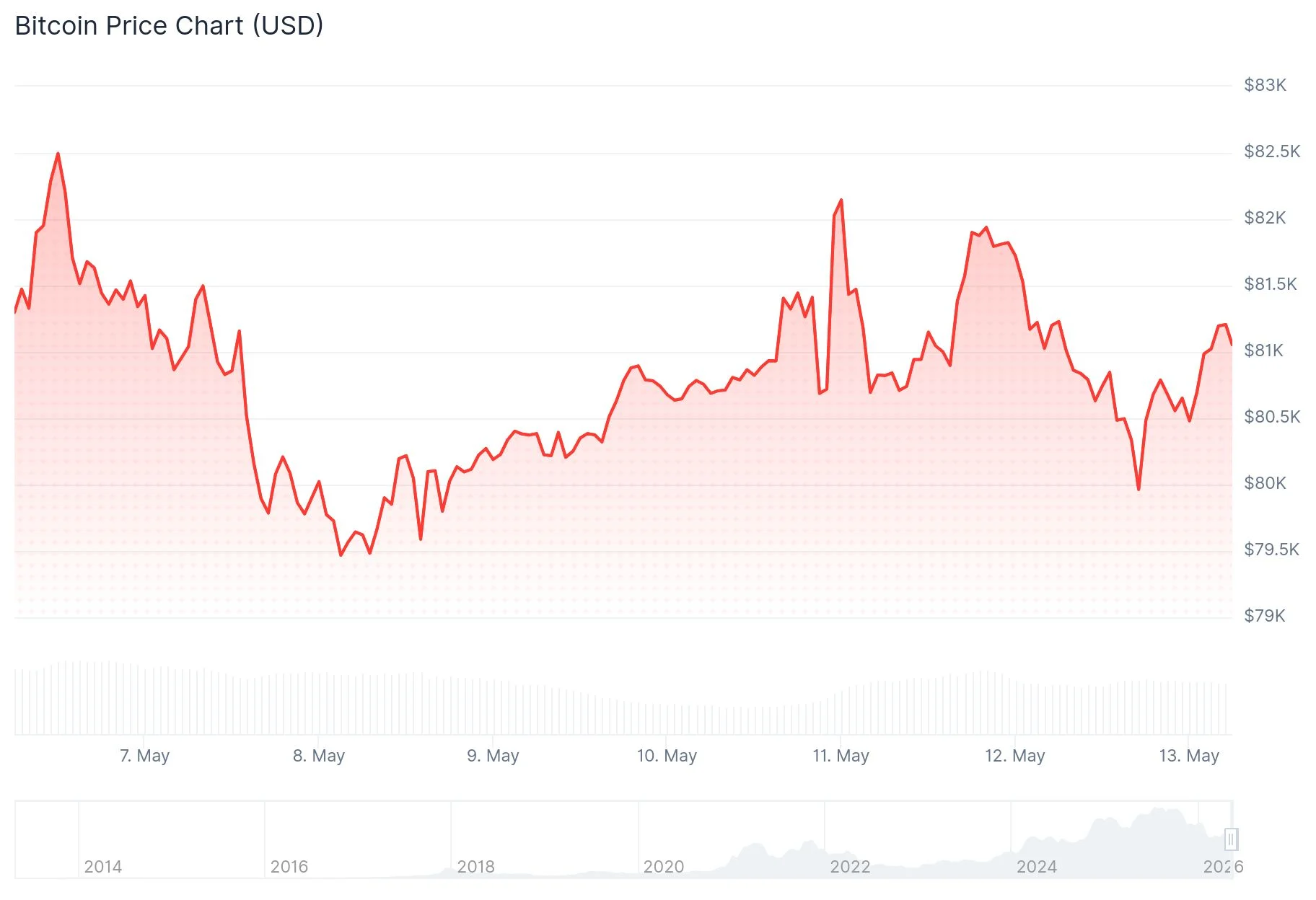
Bitcoin maintained its position near the $80,000 mark on Tuesday following the release of April’s US Consumer Price Index, which registered 3.8% on a year-over-year basis. This represents the most elevated inflation reading since May 2023.
 Bitcoin (BTC) Price
The month-over-month figure came in at 0.6%, aligning with analyst expectations. Meanwhile, the core CPI metric—which excludes volatile food and energy components—registered a 0.4% monthly gain and a 2.8% annual increase.
Energy expenses dominated the inflation narrative. According to the Bureau of Labor Statistics, energy prices surged 3.8% in April alone, accounting for more than 40% of the overall monthly uptick. On a year-over-year basis, energy costs have soared nearly 18%.
The persistent US-Iran military conflict and resulting constraints on global oil supplies continue to fuel these elevated energy prices.
Market analyst Daan Crypto Trades noted on X that Bitcoin remains “still fighting the Daily 200MA/EMA and November lows,” describing this zone as “the level to break for the bulls to see further upside into the mid/high $80Ks.”
BTC Trapped Between Critical Support and Resistance Zones
Bitcoin fluctuated around $80,681 throughout the trading session, touching an intraday bottom near $80,415. Each rally toward $82,000 met with selling pressure that forced prices lower.
Material Indicators, a prominent trading analytics platform, highlighted the 200-day SMA positioned near $82,600 as a formidable resistance barrier. The analysis suggested that bulls are attempting to establish a support base at $80,700 to mount another challenge at the upper boundary.
Cryptocurrency analyst Michaël van de Poppe pointed to the 21-day SMA at $78,800 as an important technical threshold. He emphasized that $76,000 represents a critical support level that must hold, cautioning that a breakdown below this point could trigger a “substantially lower” price trajectory.
The Coinbase Bitcoin Premium Index has persisted in negative territory throughout recent trading sessions. This metric generally indicates diminished demand from US-based spot buyers relative to international trading platforms.
Bitcoin ETF Withdrawals and Federal Reserve Policy Concerns Weigh on Sentiment
Spot Bitcoin ETF products experienced capital outflows in recent sessions, diminishing near-term buying pressure from institutional channels.
Treasury yields climbed following the inflation data release, while equity index futures declined as market participants recalibrated their interest rate forecasts. The Federal Reserve’s stated 2% inflation objective remains significantly below the current 3.8% measurement.
The CME FedWatch Tool indicates that markets anticipate rates will remain unchanged through 2026 and potentially into the following year. However, according to The Kobeissi Letter, the probability of rate increases has been steadily climbing.
Kevin Warsh’s nomination to chair the Federal Reserve advanced past a significant Senate checkpoint this week, introducing additional uncertainty into market dynamics.
Bitcoin’s near-term direction hinges on whether demand can sustain the $80,000 level. A confirmed daily close above $82,000 would alleviate immediate downside pressure and potentially open the door for further gains.
The post Bitcoin (BTC) Struggles at $80K as April CPI Surges to Three-Year Peak appeared first on Blockonomi.


You May Also Like
CNN's Abby Phillip trips up GOP insider Scott Jennings with his own Iran words

Oil Prices Slip as Iran War Disrupts Supply and Trump Heads to Beijing




