

U.S. Dollar Holds Strong as Iran Tensions and Rate Hike Bets Keep Markets on Edge
TLDR
- The dollar index fell just 0.1% after hitting a near six-week high, holding onto most of last week’s gains
- U.S.-Iran tensions remain high, with Trump warning Tehran is running out of time to accept a peace deal
- Markets are pricing a 70% chance of a Fed rate hike by December, fully priced in by March 2027
- Oil jumped 2% after a drone attack on a UAE nuclear plant, blamed on Iran
- Chinese economic data for April disappointed, adding pressure on Asian currencies
The dollar pulled back slightly on Monday but stayed close to its strongest levels in over a month. Concerns about the Iran conflict and rising interest rate expectations continued to support the greenback.
The dollar index fell 0.1% to 99.194 after touching 99.409 overnight, a near six-week high. It came after a strong week that saw the index gain more than 1%.
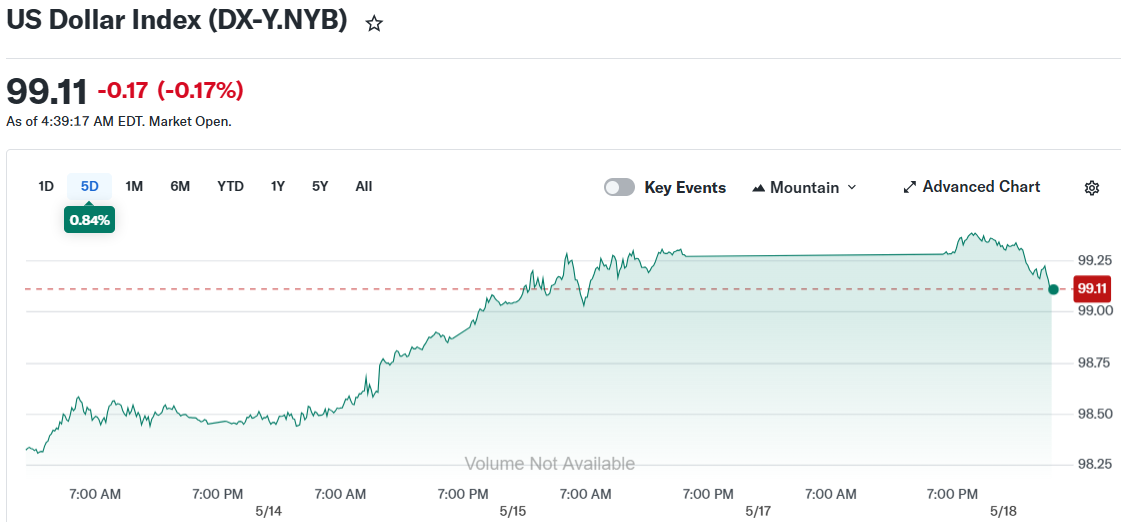 US Dollar Index (DX-Y.NYB)
Iran Conflict Keeps Markets Nervous
U.S.-Iran tensions showed no signs of easing. President Trump warned Tehran the “clock is ticking” and suggested military strikes could follow if no deal is reached.
Reports also indicated the U.S. and Israel were preparing further military operations against Iran. The situation kept oil prices elevated and bond markets under pressure.
Oil jumped 2% on Monday after a drone attack on a UAE nuclear power plant. The UAE blamed Iran and called it a “dangerous escalation.”
Higher oil prices raised fears of more inflation. That pushed markets to bet on higher interest rates globally, sending bond yields to multi-year highs.
U.S. 10-year yields hit a near one-year high last week. The 30-year yield reached its highest level since around the 2008 financial crisis.
Markets are now pricing a 70% chance the Federal Reserve raises rates by December. A full rate hike is priced in by March 2027, according to LSEG data. Last week’s higher-than-expected inflation data added fuel to those bets.
Asian Currencies Under Pressure
The Japanese yen was flat against the dollar. Japanese 10-year bond yields surged to a 29-year high, and rising inflation has markets betting on a Bank of Japan rate hike in June.
Analysts said a BOJ hike would likely give the yen only limited support given broader dollar strength.
The Chinese yuan weakened after a string of disappointing data. Chinese industrial production grew less than expected in April. Retail sales growth fell to a more than three-year low.
Fixed asset investment shrank for the first time in three months. The data pointed to continued weakness in domestic demand despite some earlier recovery in 2025.
China and the U.S. agreed over the weekend to lower some trade tariffs following a summit. However, details of the agreement remained unclear.
The Australian dollar fell 0.3% against the greenback, joining a broad pullback across Asian currencies.
The Iran conflict is expected to continue weighing on Asia’s largest economy through higher energy costs and trade disruptions.
The dollar is likely to stay supported as long as rate hike bets hold and the geopolitical situation remains unresolved.
The post U.S. Dollar Holds Strong as Iran Tensions and Rate Hike Bets Keep Markets on Edge appeared first on CoinCentral.


You May Also Like

Fasset Secures $51 Million to Expand Stablecoin-Powered Neobanking, Amongst 2026’s Largest Series B Fundraises in the Global Fintech Sector

Grok AI Predicts Binance Coin Price if the SEC Approves a Spot BNB ETF in 2026




