

Is USDT the Same Thing as a US Dollar?
BitcoinWorld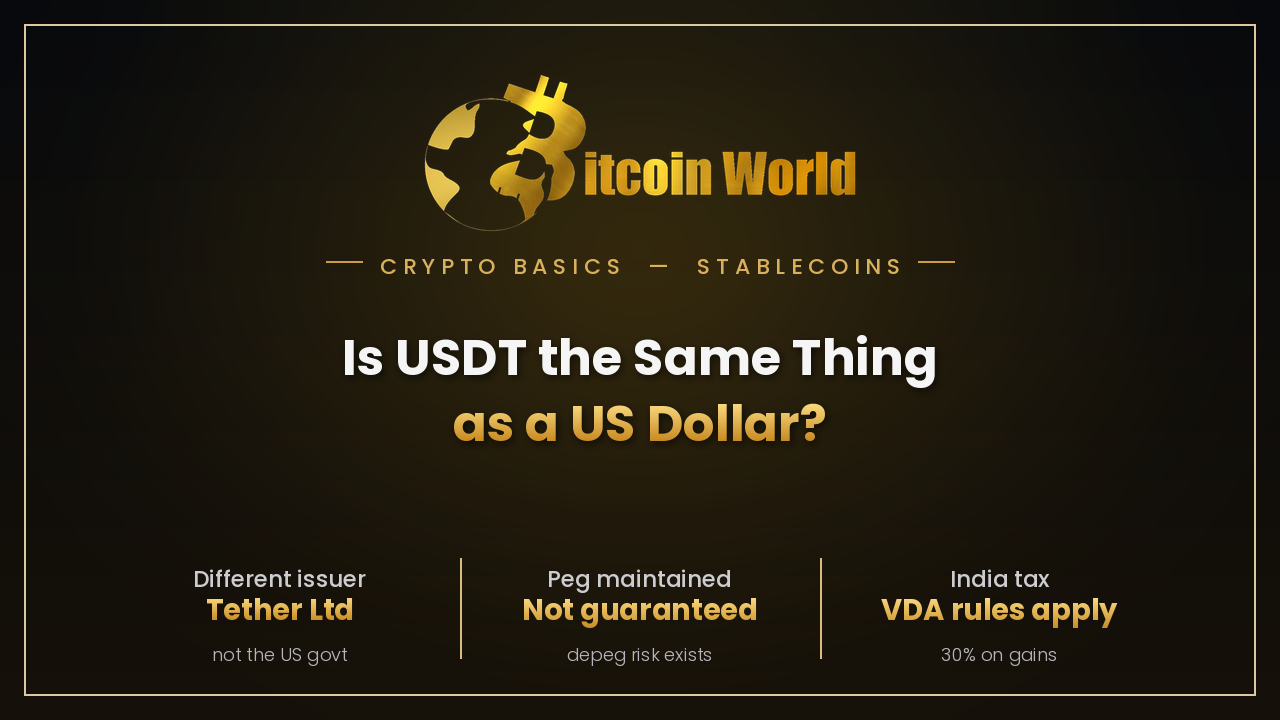
Is USDT the Same Thing as a US Dollar?
Is USDT the Same Thing as a US Dollar?
USDT being the same as a US dollar is one of the most important misconceptions in crypto to clear up, because the two look similar in practice but are fundamentally different in nature and risk. USDT is a stablecoin designed to maintain a value of approximately $1 – but it is not a dollar, not issued by the US government, and not protected by US banking safeguards. This article explains what USDT actually is, how the peg works, what risks it carries, and what Indian users need to understand before relying on it.
Is USDT the Same Thing as a US Dollar?
No – USDT is not a US dollar. It is a stablecoin issued by a private company (Tether Limited) that aims to maintain a 1:1 peg with the US dollar, but it carries distinct risks and characteristics.
- Different issuer: USDT is created by Tether Limited, a private company – not the US Federal Reserve or any government.
- Not legal tender: USDT cannot be legally demanded as payment for debts in the US or anywhere else.
- Not FDIC insured: US bank deposits are insured up to $250,000; USDT has no equivalent government guarantee.
- Peg is maintained, not guaranteed: In normal conditions, 1 USDT ≈ $1; in a crisis, the peg can and has slipped.
How Does the USDT Peg Actually Work?
Tether maintains the peg through a combination of reserve backing and market operations.
- Reserve backing: Tether claims to hold reserves – including US Treasury bills, cash, and equivalents – equal to or exceeding the total USDT in circulation.
- Redemption mechanism: Large holders can redeem USDT directly with Tether for real dollars, which helps maintain the peg.
- Market arbitrage: If USDT trades above $1, arbitrageurs create more; if below, they redeem it – this pressure keeps the price near $1.
- Reserve controversy: Tether’s reserves have faced scrutiny and legal action; they’re not audited with the same standard as a regulated bank.
What Are the Risks of Using USDT?
USDT is widely used and generally stable, but it carries risks that real dollars don’t.
- Depegging risk: USDT has temporarily lost its peg during market stress – while it recovered, brief depegs can cause real losses.
- Counterparty risk: If Tether Limited faces insolvency or regulatory action, USDT holders could lose access to redemptions.
- Regulatory risk: Stablecoins face increasing regulatory scrutiny globally, including potential restrictions in India.
- Not a bank account: Unlike a dollar in an FDIC-insured account, USDT on a non-custodial wallet or exchange carries platform and issuer risk.
What Should Indian Users Know About USDT?
USDT is widely used in India for trading, P2P transfers, and crypto-to-INR conversions.
- Widely accepted: Most Indian exchanges and P2P platforms support USDT, making it a practical tool for stable-value transfers.
- TRC-20 for low fees: Indian users commonly use USDT on the TRC-20 (Tron) network for its very low transfer fees.
- Tax treatment: USDT is a Virtual Digital Asset (VDA) in India – transfers may attract 1% TDS, and gains on disposal are taxable at 30%.
- Not a savings account: Holding large amounts long-term in USDT carries Tether-specific risk; for genuine stable savings, INR in a bank remains safer.
Frequently Asked Questions
Can USDT ever lose its $1 value?
Yes – USDT has experienced brief depegging events during market stress, falling below $1 before recovering. While USDT has maintained its peg in most conditions, it is not guaranteed to always equal exactly $1, and a severe crisis could cause a more significant or prolonged depeg. It’s a practical stability tool, not an absolute guarantee of dollar parity.
Is USDT safer than holding actual dollars in a bank?
No – a dollar in an FDIC-insured US bank account is guaranteed up to $250,000 by the US government; USDT has no equivalent guarantee. USDT is useful for crypto-native transactions where actual dollars can’t be used, but for pure savings purposes, a regulated bank account in INR or USD carries less counterparty risk. USDT is safer than volatile crypto assets, not safer than regulated bank deposits.
Is USDT legal to use in India?
Yes – USDT is a recognized Virtual Digital Asset in India and can be legally held and transferred. Transfers are subject to 1% TDS under current rules, and any gains are taxable at 30%. India’s regulatory framework continues to evolve, so confirming the latest rules with a tax professional is advisable.
Conclusion: Why “Close to a Dollar” Is Not the Same as “Is a Dollar”
Understanding that USDT is not the same as a US dollar protects Indian users from a false sense of security. USDT is a practical, widely-used tool for stable-value transfers in the crypto ecosystem – but it carries Tether issuer risk, peg risk, and regulatory risk that real dollars don’t. Use it for what it’s designed for – crypto-native transfers and trading – while keeping genuine savings in regulated, insured instruments. Know what you’re holding, and the distinction will serve you well.
This post Is USDT the Same Thing as a US Dollar? first appeared on BitcoinWorld.


You May Also Like

Shiba Inu (SHIB) Price Prediction 2026-2030: Can SHIB Reach $0.000330?
Trump lawyer barreling toward lifetime bench seat despite 'disturbing' red flags: experts

What Happens to Remittix Price When 2 Hidden CEX Names Drop at $32M?



