

Gold Rallies Nearly 3% as U.S.-Iran Agreement Dampens Inflation Concerns
Key Highlights
- Diplomatic breakthrough between Washington and Tehran triggered sharp crude oil decline, with prices dropping from over $110 per barrel to approximately $80.
- Bullion rallied 2.8%, climbing to $4,338 per ounce—the highest level recorded since early June.
- The agreement includes provisions to reopen the Strait of Hormuz, blocked since conflict erupted in late February.
- The U.S. dollar retreated to 10-day lows, enhancing gold’s appeal for international buyers.
- Market expectations for a Federal Reserve rate increase by year-end fell from 69% to 49% as inflation concerns eased.
Precious metals experienced a significant rally Monday following reports that Washington and Tehran reached a preliminary diplomatic agreement, triggering a substantial retreat in crude oil prices and diminishing expectations for additional monetary tightening.
Crude Markets React to Strait Reopening News
Spot bullion advanced 2.8% to reach $4,338.14 per ounce, with futures contracts matching those gains at $4,359.09. The upward momentum followed confirmation that U.S. and Iranian officials had secured an initial framework to cease hostilities.
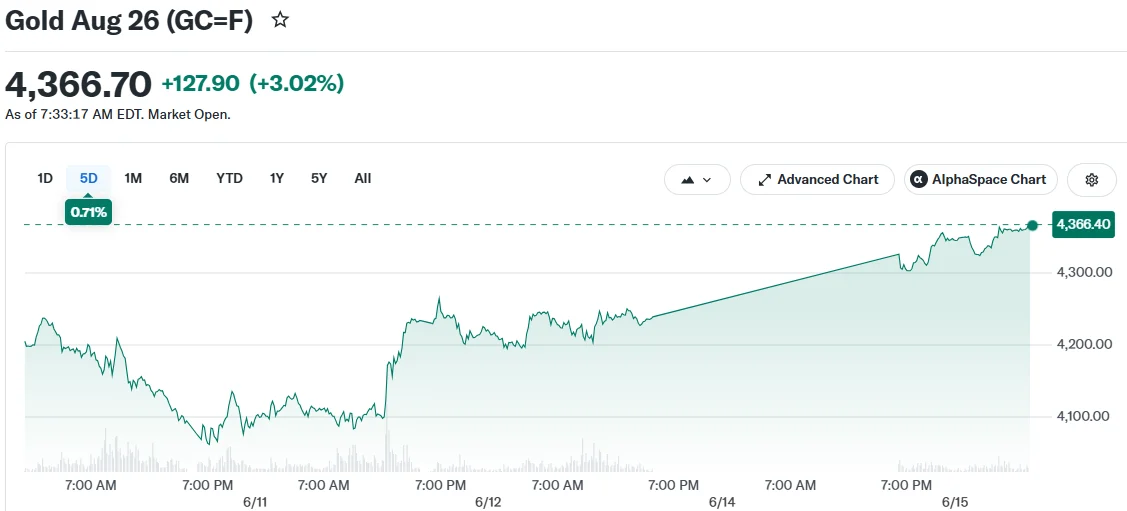 Gold Aug 26 (GC=F)
The diplomatic arrangement, facilitated with assistance from Pakistani mediators, awaits formal execution in Switzerland scheduled for Friday. Iranian officials emphasized the pact remains inactive until official signatures are secured.
President Donald Trump validated that the arrangement will restore access through the Strait of Hormuz. This strategic maritime corridor handles approximately 20% of global petroleum shipments and has been inaccessible since hostilities commenced in late February.
Brent crude futures, which surged beyond $110 per barrel during peak tensions, retreated sharply to levels just above $80 following the diplomatic announcement.
Greenback Softens, Amplifying Precious Metal Gains
The yellow metal’s ascent received additional support from weakness in the U.S. currency. The dollar index declined to its lowest reading in ten trading sessions versus major international currencies.
Throughout the military confrontation, the greenback benefited from safe-haven demand. The diplomatic resolution diminished geopolitical uncertainty, encouraging investors toward riskier assets and reversing recent dollar strength.
Currency depreciation typically benefits gold valuations by reducing purchase costs for holders of alternative currencies.
Market strategists at Britannia Global Markets noted the agreement “weakened the dollar and drove crude significantly lower, establishing more favorable macroeconomic conditions for risk assets throughout the commodity sector.”
The petroleum price collapse also reduced concerns that monetary authorities would implement restrictive policies to combat energy-fueled inflation. Gold generally outperforms during periods of accommodative monetary policy, as the non-yielding asset becomes more competitive.
Market participants now assign a 49% probability to a Federal Reserve rate increase by December, representing a substantial decline from the 69% probability calculated one week earlier, per CME FedWatch analytics.
The Federal Reserve is anticipated to maintain its current policy stance following the conclusion of its two-day monetary policy session Wednesday. The gathering represents Chairman Kevin Warsh’s inaugural Federal Open Market Committee deliberation.
Kathleen Brooks, analyst at XTB, observed the diplomatic accord “applies downward pressure on petroleum valuations and consequently alleviates inflation anxieties,” noting the significance given major central bank policy meetings occurring this week.
Neither Washington nor Tehran has disclosed comprehensive agreement terms beyond information shared through Pakistani intermediaries and Trump’s public statements.
The pact awaits formal ratification, with Iranian representatives confirming implementation will be delayed until Friday’s signing ceremony in Switzerland.
The post Gold Rallies Nearly 3% as U.S.-Iran Agreement Dampens Inflation Concerns appeared first on Blockonomi.


You May Also Like

Bitget Launches Visa-Powered Crypto Card for Everyday Spending in APAC

BingX Successfully Delivers SpaceX Pre-IPO Tokens, Reinforce Trust in Pre-IPO Access

Families of abducted UP students seek disclosure of Palparan whereabouts



