

ONDO, LINK, and AVAX in the RWA token debate

 The real-world asset (RWA) narrative is moving from early-stage experimentation into a more structured phase of financial market development, where valuation is increasingly shaped by function rather than theme. What was once compressed into a single thematic trade is now being decomposed into distinct functional layers, each reflecting a different channel of exposure to real-world finance and a different mechanism of value formation.
Rather than a unified narrative, RWA is beginning to resemble a layered financial system of interconnected but independently moving parts. The market is no longer pricing “RWA exposure” as a single beta. It is pricing infrastructure, tokenized financial products, and ecosystem growth as separate but related risk regimes.
At the center of this segmentation are three reference assets that increasingly define how the market interprets the RWA stack: ONDO, LINK, and AVAX. Each sits in a different position within tokenized finance and responds to different liquidity channels, different adoption speeds, and different forms of capital attention.
ONDO is most closely aligned with tokenized financial products and yield-linked instruments tied to real-world assets. LINK functions as infrastructure, enabling data verification, pricing feeds, and communication between blockchain systems and external financial networks. AVAX represents broader ecosystem exposure, where RWA activity interacts with network expansion, developer participation, and liquidity rotation rather than defining direction outright.
This separation is already visible in price behavior. ONDO shows relative strength over medium-term windows while remaining sensitive in the short term, reflecting shifting expectations around structured yield demand. LINK remains comparatively stable, with limited directional expansion, reflecting its role as persistent infrastructure where usage does not always translate into immediate repricing. AVAX shows stronger cyclical movement, with performance shaped more by liquidity conditions than by RWA-specific demand.
The key signal is not direction, but decoupling. These assets are not moving as a unified trade because they are not responding to the same source of demand.
RWA market architecture and functional separation
To understand these divergences, RWA must be viewed less as a narrative and more as a layered financial system with distinct but interconnected functions.
At the base are blockchain settlement networks responsible for execution, finality, and asset transfer. These systems define how value is recorded and how transactions are finalized across distributed environments, where settlement reliability becomes the primary function.
Above this sits the oracle and data infrastructure layer. This layer connects external financial reality to on-chain systems through verified inputs such as pricing data, reserve attestations, identity signals, and market benchmarks. Without this layer, tokenized assets lose alignment with real-world conditions.
The next layer consists of tokenization and issuance platforms. These systems translate traditional financial instruments into programmable representations. They define ownership logic, redemption frameworks, compliance constraints, and yield distribution mechanics, effectively converting off-chain assets into on-chain financial structures.
At the top are custody providers and regulated intermediaries. These entities ensure legal enforceability, asset safeguarding, and institutional compatibility, acting as the bridge between decentralized infrastructure and traditional financial systems.
Each layer operates under different economic constraints, which is why value does not accumulate evenly. Instead, it disperses across the stack depending on where dependency, adoption, and integration are strongest.
RWA tokens vs tokenized assets
A central distinction in RWA markets is the separation between tokenized assets and infrastructure tokens.
Tokenized assets represent direct exposure to real-world financial instruments such as government bonds, private credit, real estate, or commodities. Their valuation is anchored in traditional financial drivers including collateral quality, credit risk, legal enforceability, custody integrity, and yield stability. In essence, they represent the on-chain packaging of real-world financial assets, where traditional instruments are expressed through blockchain-based settlement rails.
This broader category of tokenized RWAs captures the transformation of off-chain financial instruments into on-chain representations of value, where real-world exposure becomes digitally transferable.
RWA infrastructure tokens represent a different category entirely. They do not represent claims on financial instruments but exposure to the systems that make those instruments possible on-chain. Their value is shaped by adoption cycles, network usage, governance participation, and integration into broader financial infrastructure.
This creates two distinct valuation regimes. Tokenized assets are evaluated through a financial lens where yield and credit risk dominate. Infrastructure tokens are evaluated through a network lens where adoption, dependency, and system integration determine long-term value formation.
Even under the same narrative umbrella, they behave as structurally different asset classes, with different sensitivity to macro conditions and different pacing of repricing.
Liquidity cycles and asynchronous behavior
Liquidity in RWA markets does not move evenly across the stack. It rotates across layers depending on capital source, risk appetite, and time horizon.
Infrastructure assets tend to follow longer adoption cycles, where pricing reflects gradual integration into financial systems rather than short-term speculative flows. Tokenization platforms respond more directly to shifts in yield demand and institutional appetite for structured financial products. Ecosystem-level assets remain more sensitive to broader liquidity conditions and macro risk sentiment.
Capital enters the system through multiple channels. Some flows are yield-driven, targeting stable returns from tokenized instruments. Others are infrastructure-driven, positioning for long-term adoption of oracle and settlement systems. A third category is cyclical, driven by liquidity expansion or contraction across crypto markets.
Because these flows operate on different time horizons, RWA-linked assets rarely move in sync, even when they share exposure to the same overarching narrative.
Institutional participation reinforces this fragmentation. Allocation into tokenized treasuries, private credit, and structured products occurs through phased processes involving legal review, custody integration, and compliance approval, introducing a structural lag between adoption and visible market impact.
Why RWA narratives diverge from price action
A defining feature of RWA markets is the persistent gap between system development and price realization.
Much of the activity in tokenized finance begins off-chain through legal agreements, custody structures, and institutional frameworks. These developments are not immediately visible in market data or token performance. Price adjustment occurs only when these systems begin producing observable signals such as liquidity expansion, fee generation, or secondary market depth.
Infrastructure improvements extend this lag further. Enhancements in settlement efficiency, compliance tooling, and data verification accumulate structurally before being reflected in valuation. At the same time, issuance of tokenized assets may scale faster than secondary liquidity develops, creating imbalance between supply expansion and tradable depth.
External constraints reinforce this delay. Fragmented legal frameworks limit cross-border interoperability, while integration between traditional finance and blockchain systems remains operationally complex. Custody requirements add further friction, slowing institutional scaling.
As a result, adoption translates into price in stages, not continuously, with timing differences depending on where in the stack the change originates.
Value distribution and risk structure
Value in RWA systems is not concentrated in a single layer. It is distributed across multiple components of the financial stack, with capture depending on structural position rather than asset size alone.
In some cases, value accrues directly to token holders through usage-based fees or protocol participation. In other cases, value is captured externally by custodians, issuers, or financial intermediaries positioned closer to the underlying assets, creating a separation between economic activity and token performance.
Yield design plays a stabilizing role. Real yield, derived from interest-bearing instruments or productive lending activity, tends to be more durable because it is anchored in external capital demand. Incentive-driven yield depends on emissions or subsidies, which can inflate returns during expansion phases but compress quickly under tightening liquidity.
Over time, this divergence shapes both capital retention and performance stability.
Risk is distributed across three primary dimensions:
• Technical risk emerges from smart contract design, oracle reliability, and bridge infrastructure, where failures are typically execution-based rather than asset-based.
• Structural risk arises from custody arrangements, redemption mechanisms, and legal enforceability, shaping how directly a token represents a claim on real-world value.
• Market risk appears through liquidity fragmentation, where shallow order books amplify volatility even when underlying assets remain stable.
This means price reflects only a partial view of the underlying risk architecture, often reacting after structural changes have already occurred.
Market interpretation of ONDO, LINK, and AVAX
ONDO’s +33% performance over 90 days, contrasted with a -12% move over the past 30 days, reflects sensitivity to expectations around structured financial products. Strength appears when demand for tokenized yield expands, while weakness emerges when uncertainty increases around redemption design or regulatory clarity. This creates a profile where medium-term strength coexists with short-term reversals.
LINK trades near $7.93 and has declined roughly -12.8% over 90 days. Its stability reflects infrastructure characteristics, where demand is persistent but pricing is shaped more by broader risk cycles than immediate usage expansion. Necessity does not always translate into immediate repricing.
AVAX trades near $6.27, with a 90-day range between $5.69 and $10.47 and a broader -34% decline. Its behavior reflects sensitivity to ecosystem-wide liquidity conditions rather than RWA-specific fundamentals. Short-term stabilization does not fully offset longer-term cyclicality.
Taken together, the data reinforces a structural observation: RWA exposure is not priced as a unified trade. Each asset responds to a different demand channel, liquidity regime, and functional role within the system.
Risks in tokenized financial systems
The core risk in RWA tokenization arises from misalignment between asset backing, legal enforceability, and liquidity conditions. These components can diverge depending on structure and market environment.
A token may reference a real-world asset while still facing constraints in redemption design, custody concentration, or jurisdictional recognition. These gaps become more visible during stress periods when assumptions about convertibility are tested.
Smart contract systems introduce additional dependency layers through oracles, bridge infrastructure, and administrative controls. These expand functionality but increase exposure to execution and coordination failures under volatility.
Regulatory risk adds further variability. Tokenized assets such as treasuries, private credit instruments, and equity-linked exposures may be classified differently across jurisdictions, altering compliance requirements, access conditions, or redemption mechanics without changes to underlying collateral.
Risk is therefore distributed across legal, technical, and market layers simultaneously.
A system moving toward structural pricing
RWA markets are transitioning from narrative-driven pricing toward structurally anchored valuation, where outcomes increasingly reflect enforceable design, integration requirements, and operational reliability.
This shift is most visible in how institutional capital interacts with new issuance. Tokenized assets are evaluated through legal structure, custody design, and redemption clarity before meaningful market participation occurs. Price formation is increasingly shaped by structural readiness rather than early speculative discovery.
Infrastructure systems are evaluated through operational reliability, including data consistency, settlement performance, and interoperability with traditional finance. These factors are becoming baseline requirements rather than optional features.
Pricing behavior increasingly reflects structural constraints embedded in system design rather than short-term liquidity flows. Market adjustment occurs with delay, reflecting the time required for institutional requirements to translate into observable impact.
ONDO, LINK, and AVAX reflect this shift from different positions within the system, where valuation responds more to integration depth and functional credibility than narrative alignment.
How to approach RWA tokens on Toobit
RWA-related tokens should be evaluated through structural positioning rather than narrative grouping.
ONDO reflects exposure to structured yield and tokenized financial products. LINK represents infrastructure enabling data integrity and interoperability. AVAX reflects ecosystem exposure shaped by liquidity cycles and network expansion.
Analysis begins with structural position, including asset backing, custody design, redemption mechanisms, regulatory environment, and smart contract dependencies. Price reflects attention, but structure determines durability.
Source: https://thebittimes.com/ondo-link-and-avax-in-the-rwa-token-debate-tbt127398.html


You May Also Like

SoftBank chief Son dismisses Musk’s idea for orbital data centres
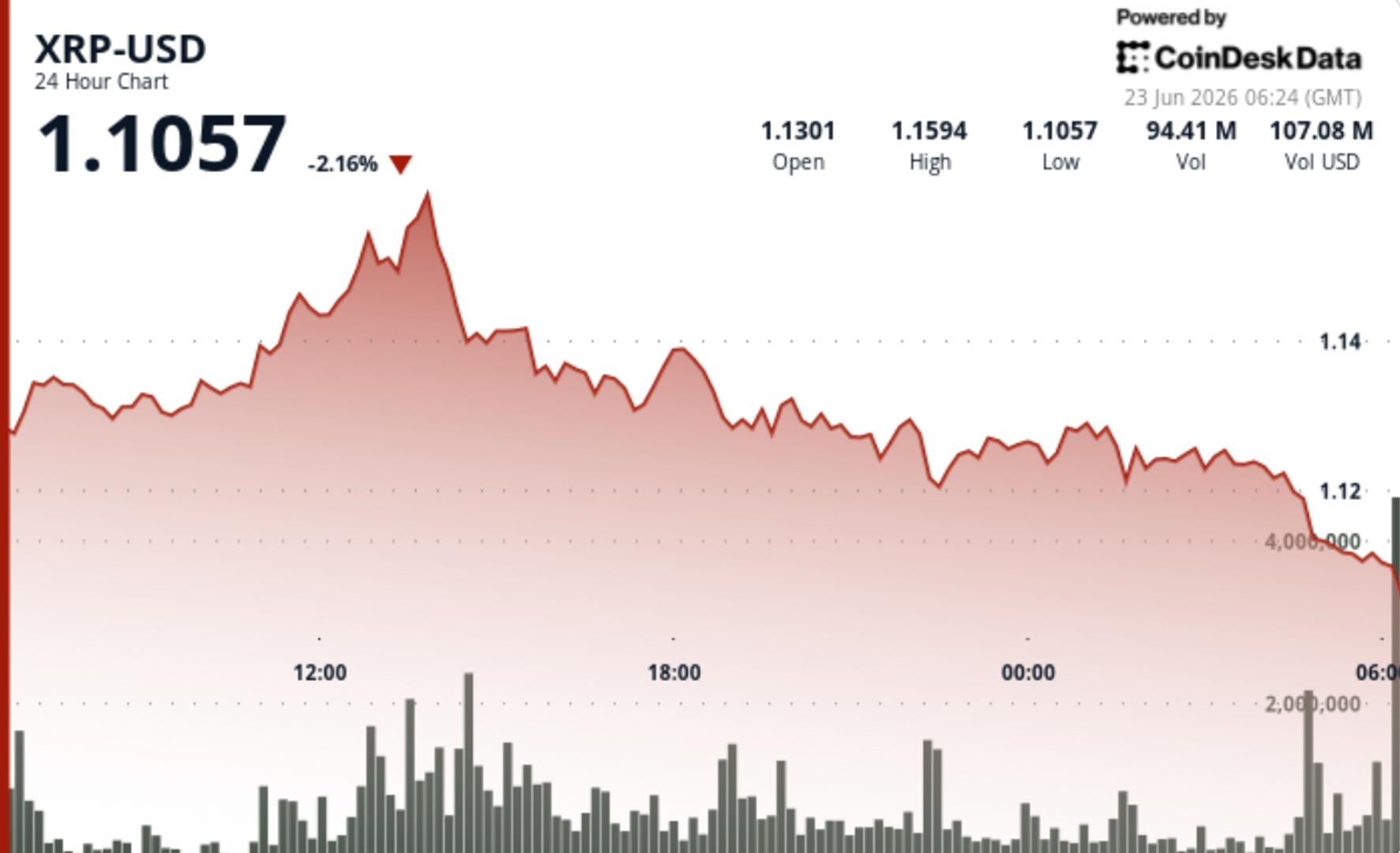
XRP drifts toward $1.10 support as traders await break from three-week range

Crypto Lobby Pushes Congress to Pass Staking and Mining Tax Bill



