

18 Best Things to Do in Busan, South Korea (2026)
Why Busan deserves more than a quick stop on your Korea trip.
Most first-timers give Seoul a week and Busan a rushed day. That’s backwards. Korea’s second city packs beaches, cliffside temples, a colourful hillside village, and the country’s best seafood into a coastline you can cross by metro. Here are the 18 best things to do in Busan, plus when to go, what to eat, and how to pay smart.
| Quick plan | Details |
|---|---|
| How long | 3–4 days for a first visit; 2 is a rush |
| Best time | Late September to October (mild, clear, dry) |
| Getting here | KTX from Seoul ~2h 40m, or fly into Gimhae (PUS) |
| Getting around | Metro + a T-money card; base fare 1,600 KRW (~S$1.35) |
| Don’t miss | Haeundae, Gamcheon, Haedong Yonggungsa, a Gyeongju day trip |
| Paying | Tap your YouTrip card (0% FX); pull won from an ATM, free first S$400/mo |
18 Best Things to Do in Busan at a Glance
| Attraction | Area | Best for | Entry |
|---|---|---|---|
| Haeundae Beach | Haeundae | The marquee beach | Free |
| Haeundae Blue Line Park & Sky Capsule | Haeundae–Songjeong | Pastel coastal ride | From 40,000 KRW/capsule |
| Gwangalli Beach & Gwangan Bridge | Suyeong | Sunset + drone show | Free |
| Gamcheon Culture Village | Saha | Murals and photos | Free to walk |
| Huinnyeoul Culture Village | Yeongdo | Cliffside cafés | Free to walk |
| Haedong Yonggungsa Temple | Gijang | Seaside sunrise temple | Free |
| Beomeosa Temple | Geumjeong | Mountain calm | Free |
| Jagalchi Fish Market | Nampo | Pick-and-cook seafood | Free entry |
| Gukje Market & BIFF Square | Nampo | Street food | Free entry |
| Taejongdae Geo-Park | Yeongdo | Sea cliffs + forest | Free (train extra) |
| Oryukdo Skywalk | Nam-gu | Glass-floor sea views | Free |
| Igidae Coastal Walk | Nam-gu | Clifftop hiking | Free |
| Busan X the Sky | Haeundae | Highest city views | ~27,000 KRW |
| Songdo Beach & Cable Car | Seo-gu | Glass-bottom cable car | From 19,000 KRW |
| Yongdusan Park & Busan Tower | Jung-gu | Old-town panorama | 12,000 KRW |
| Spa Land Centum City | Haeundae | Upscale jjimjilbang | From 17,000 KRW |
| Dongnae Hot Springs & Club D Oasis | Dongnae / Gijang | Hot-spring soak | From ~15,000 KRW |
| Songjeong Beach | Haeundae | Quiet surf beach | Free |
What’s in This Guide
- How Many Days Do You Need in Busan?
- Best Things to Do in Busan
- Free Things to Do in Busan
- What to Do in Busan at Night
- Where to Eat in Busan
- Best Day Trips From Busan
- Best Time to Visit Busan
- Where to Stay in Busan
- Getting Around Busan
- Paying in Busan Without The FX Sting
- Busan FAQs
How Many Days Do You Need in Busan?
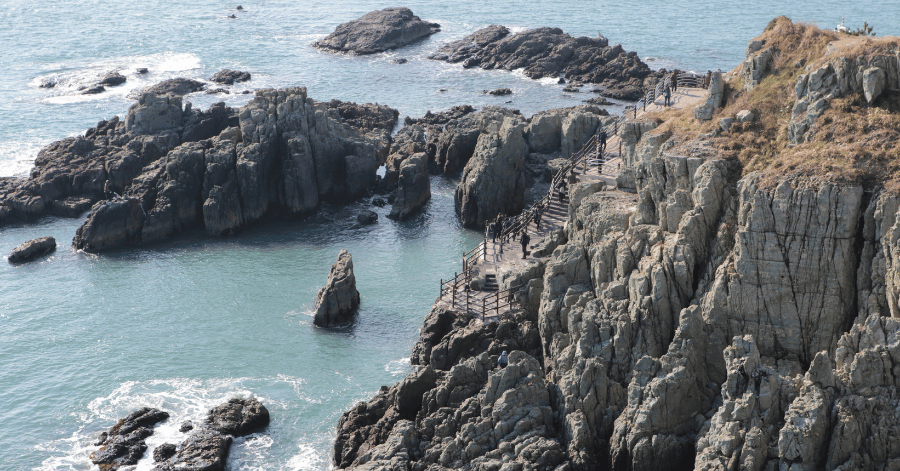
Three to four days is the sweet spot for a first visit. Two days only covers the beaches and one village before you’re rushing; three lets you slow down and add a temple morning; four buys you a day trip to Gyeongju without cutting anything.
A rough split:
- Day one for Haeundae, the Sky Capsule, and Busan X the Sky
- Day two for Gamcheon, Jagalchi and the Nampo old town
- Day three for Taejongdae and the coastal walks
- Day four for Gyeongju
Is three days in Busan enough? For the headline sights, yes. You’ll just leave wanting the slower beach mornings.
 Related Guide: Tacking Busan onto a capital-city trip? Our things to do in Seoul guide maps out the other half of your itinerary.
Best Things to Do in Busan
These are the 18 spots worth your time, from the obvious beaches to the geo-park, and the ocean-view spa scene. Each one tells you why it’s worth it, where it is, and what it costs.
1. Haeundae Beach
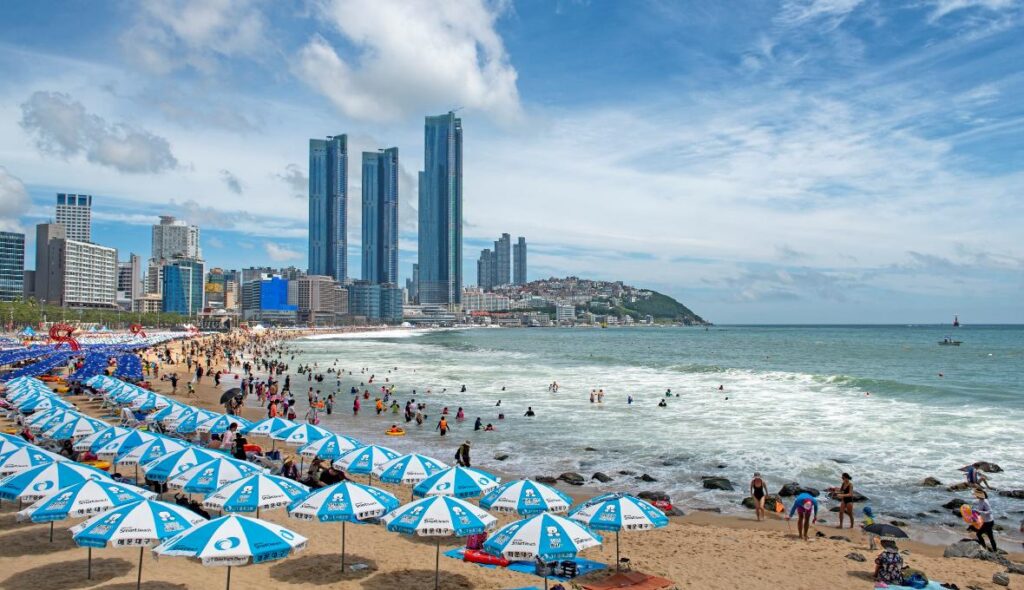
Image Credits: Visit Busan
Busan’s headline beach, and the one everyone pictures: a 1.5km crescent of pale sand backed by high-rises, cafés and a buzzing night strip. It’s the busiest stretch in the city, so come early if you want space. The official swim season runs roughly late June to mid-September, when lifeguards and marked zones are in place.
 Haeundae-gu
 Open 24h
 Free
Free
2. Haeundae Blue Line Park & Sky Capsule
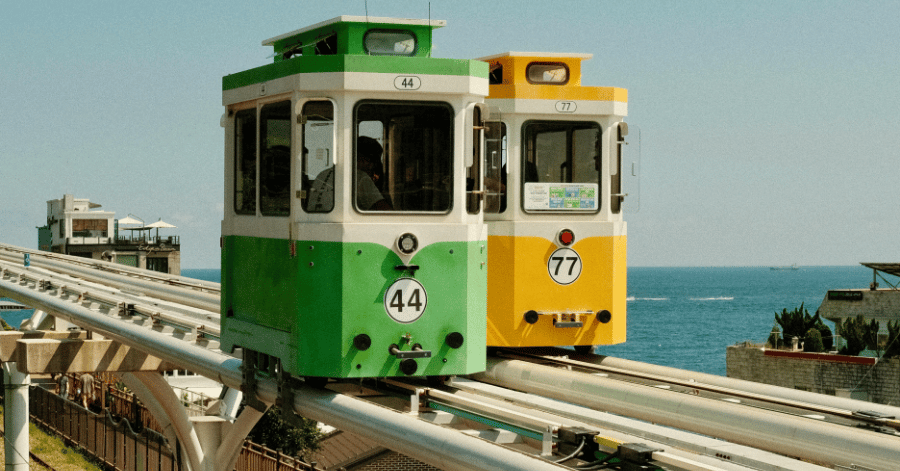
The most photographed ride in Busan, and for once the hype holds up. Pastel four-seater capsules trundle along a clifftop rail from Mipo to Cheongsapo with the sea filling every window. Book ahead! It sells out at peak. The capsules are priced per pod, so four people sharing pay far less a head than a couple.
- Mipo, Haeundae-gu
- ~9 AM–7:30 PM (seasonal)
- Sky Capsule from 40,000 KRW/capsule (~S$34); Beach Train from 8,000 KRW (~S$7)
3. Gwangalli Beach & Gwangan Bridge
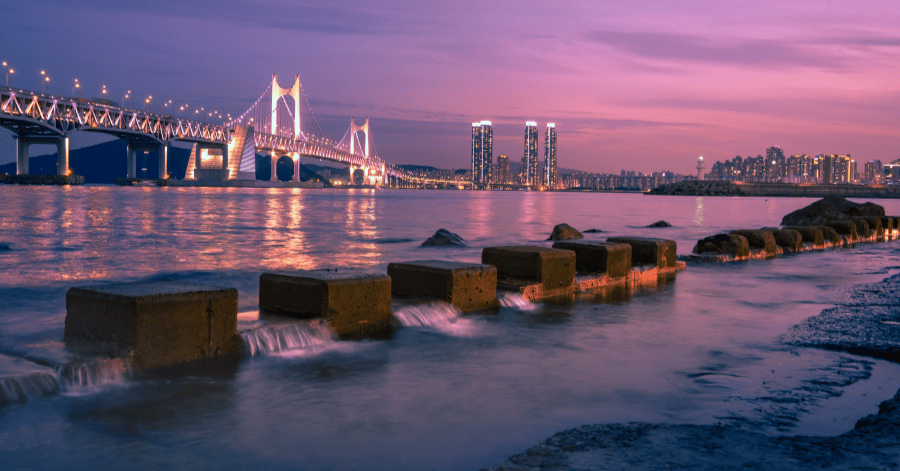
Quieter sand than Haeundae by day, and the best sunset spot in the city by night, looking straight at the lit-up Gwangan Bridge. Time your Saturday evening here for the free M Drone Light Show, Korea’s first permanent drone display, which paints the sky above the water for about 12 minutes. Cafés and craft-beer bars line the promenade behind.
- Suyeong-gu
- Beach open 24h; drone show Sat evenings (~8 PM & 10 PM, Mar–Sep)
- Free
4. Gamcheon Culture Village
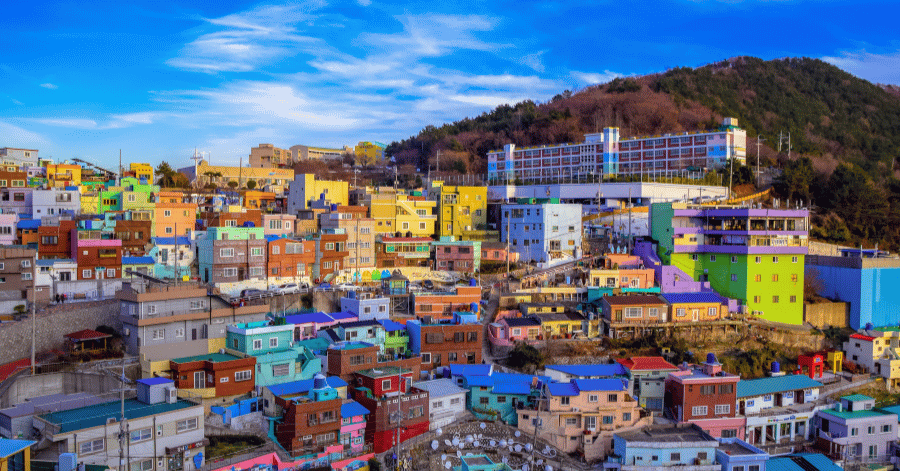
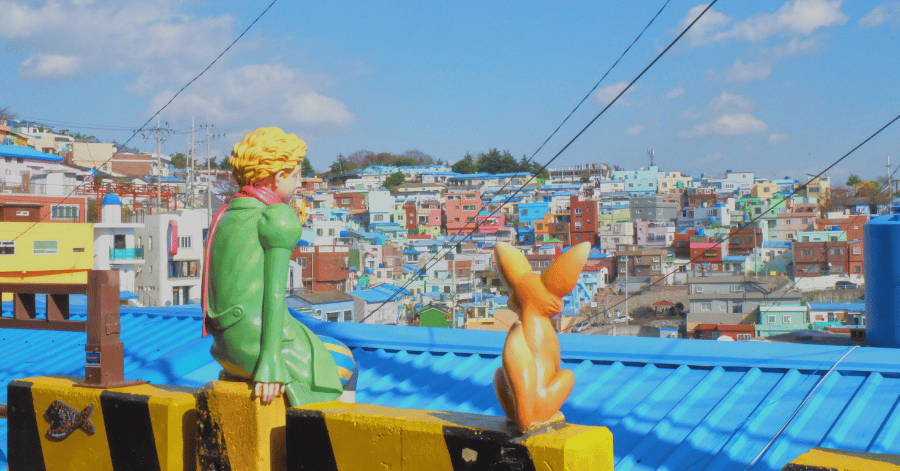
Busan’s “Santorini,” a hillside of pastel houses stacked up a slope, threaded with mural alleys, tiny galleries and view cafés. It’s free to wander; you only pay at the shops or for the souvenir stamp-tour map. Wear proper shoes. The whole place is covered in stairs. Go on a clear morning before the tour buses arrive.
- Saha-gu (Metro Line 1 to Toseong, then a green minibus)
- Alleys 24h; shops ~9 AM–6 PM
- Free to walk
5. Huinnyeoul Culture Village
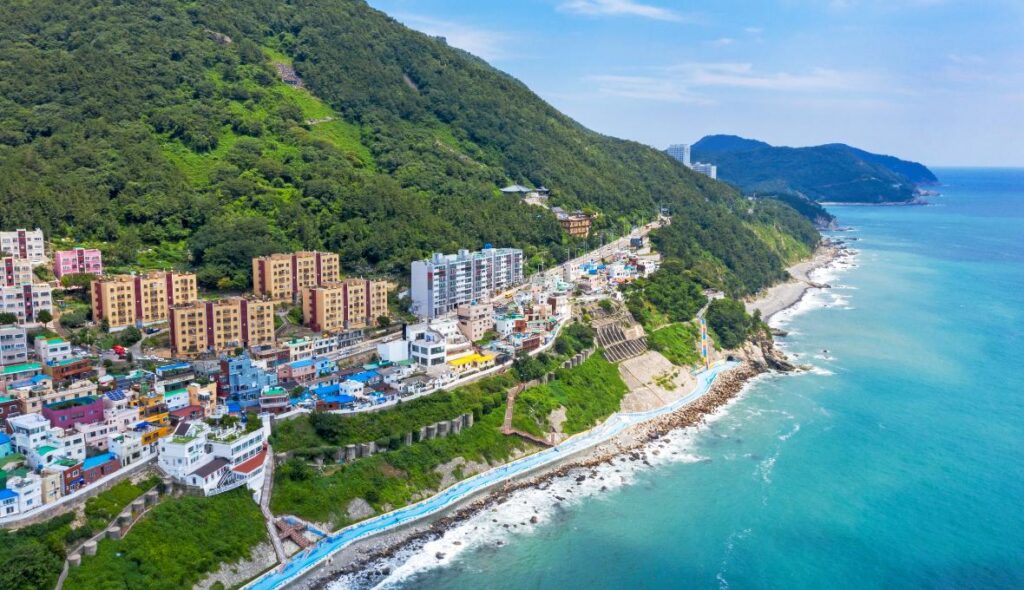
Image Credits: 비짓부산
A quieter, cliff-edge cousin to Gamcheon on Yeongdo Island. A former fishing-and-refugee village turned artist enclave, it’s a string of mural lanes and cosy cafés perched right above the water, with a seaside walkway below. You’ve probably seen its blue-and-white houses on film. Come for coffee with a sea view and far fewer crowds.
- Yeongdo-gu
- Walkable anytime; cafés ~10 AM–7 PM
- Free to walk
6. Haedong Yonggungsa Temple
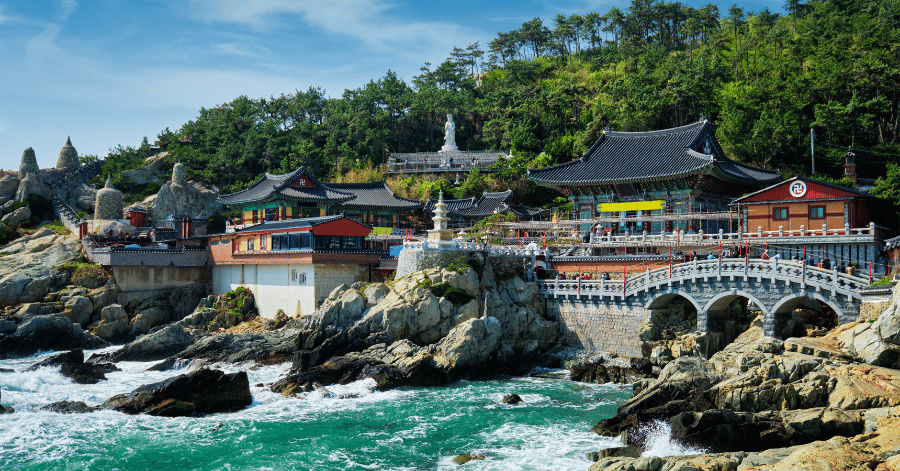
One of the few Korean temples built on the sea instead of in the mountains, and the most striking thing you’ll see in Busan. You descend 108 stone steps to pavilions perched right over crashing surf. Go at sunrise; it faces east, and the early light on the water is the whole point. Entry is free.
- Gijang-gun
- 4:30 AM–7:20 PM (last entry 6:50 PM)
- Free
7. Beomeosa Temple
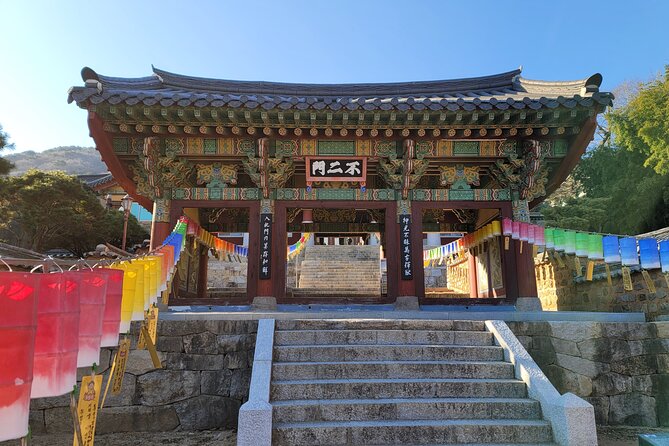
Image Credits: Tripadvisor
If the seaside temple is the showstopper, this is the soulful one: a working mountain temple on the wooded slopes of Geumjeongsan, heavy with incense and calm. It’s a real escape from the beach crowds, and home to one of Korea’s better-known Templestay programmes if you want to go deeper. Busan dropped the entry fee, so it’s free.
- Geumjeong-gu (Metro Line 1 to Beomeosa, then Bus 90)
- 8 AM–5 PM
- Free
8. Jagalchi Fish Market
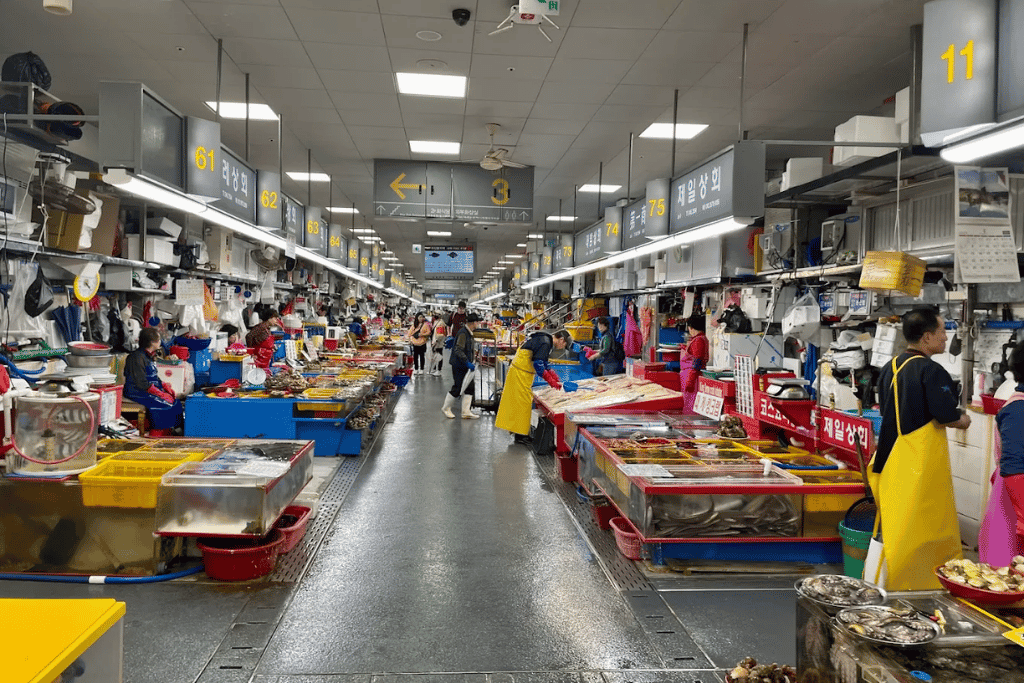
Image Credits: Sarah Askew on Google Reviews
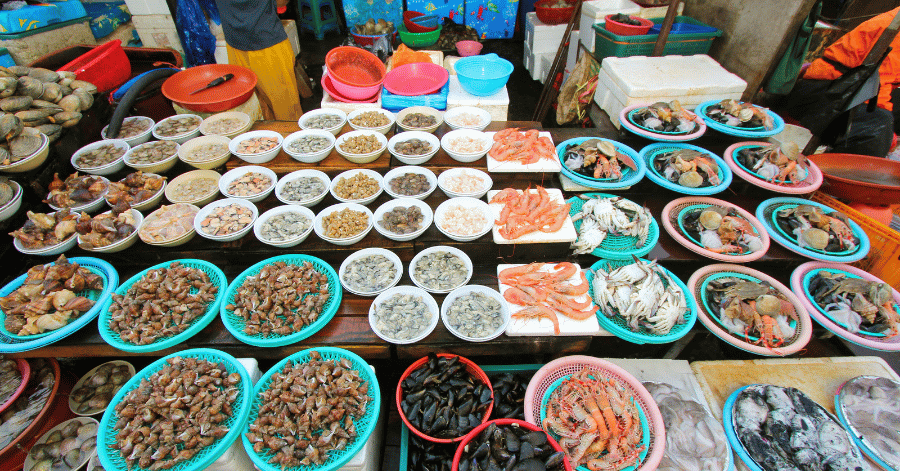
Korea’s largest seafood market, and the place to understand Busan’s appetite. Pick live fish, prawns or abalone from the stalls downstairs, then carry your haul up to a second-floor restaurant to have it cooked on the spot. It’s loud, wet and brilliant. Mornings are freshest, and floors are slippery, so closed shoes.
- Nampo-dong, Jung-gu
- ~5 AM–10 PM; closed the 1st & 3rd Tuesday most months
- Free entry
9. Gukje Market & BIFF Square
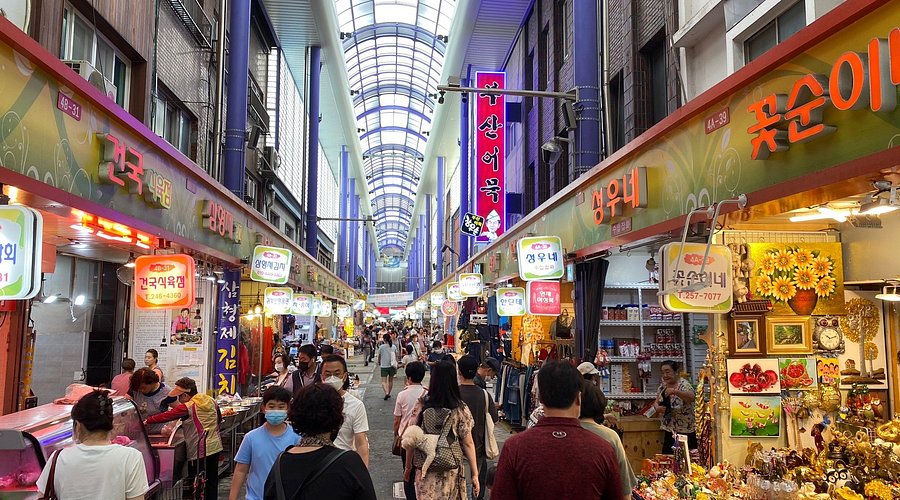
Image Credits: Tripadvisor
A sprawling post-war market that bleeds straight into BIFF Square, the plaza named for Busan’s film festival. This is street-food central: come hungry. The signature bite is ssiat hotteok, a sweet pancake stuffed with seeds and nuts, fried in front of you. Wander the food alleys, then pick up cheap socks and souvenirs in the market proper.
- Nampo-dong, Jung-gu
- ~9 AM–8 PM (stalls run later)
- Free entry
10. Taejongdae Geo-Park
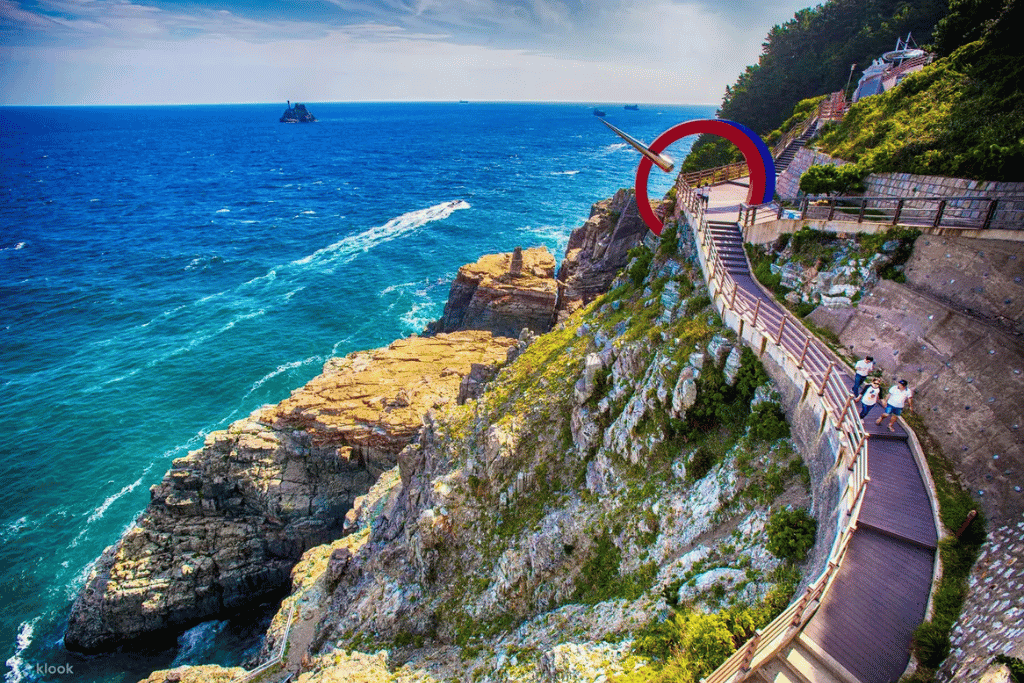
Image Credits: Klook
One of the best half-days in Busan, and still a surprise to most first-timers. A forested headland of dramatic sea cliffs on Yeongdo Island, it feels almost prehistoric, all untouched coastline and ocean views. Ride the open-side Danubi tram between stops, get off at the lighthouse, and walk down to the wave-pounded rock platforms where haenyeo (free-diving sea women) sell fresh seafood.
- Yeongdo-gu
- Park 4 AM–midnight; Danubi train ~9 AM–5:30 PM
- Park free; Danubi train 4,000 KRW return (~S$3.40)
11. Oryukdo Skywalk
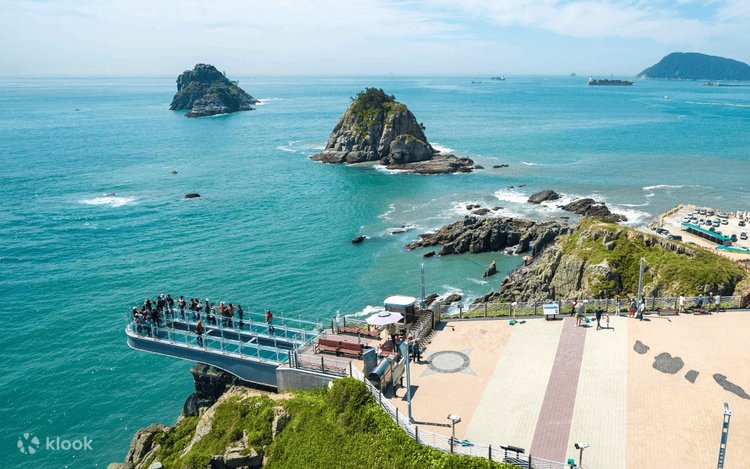
Image Credits: Klook
A horseshoe of glass floor jutting out from a headland cliff about 35 metres above the sea, in the city’s south. You shuffle out in provided slippers and watch the water churn far below your feet. It’s free, quick, and pairs perfectly with the Igidae walk that ends nearby. Skip it on very windy or wet days; it closes.
- Nam-gu
- 9 AM–6 PM (to 7 PM Jun–Sep)
- Free
12. Igidae Coastal Walk
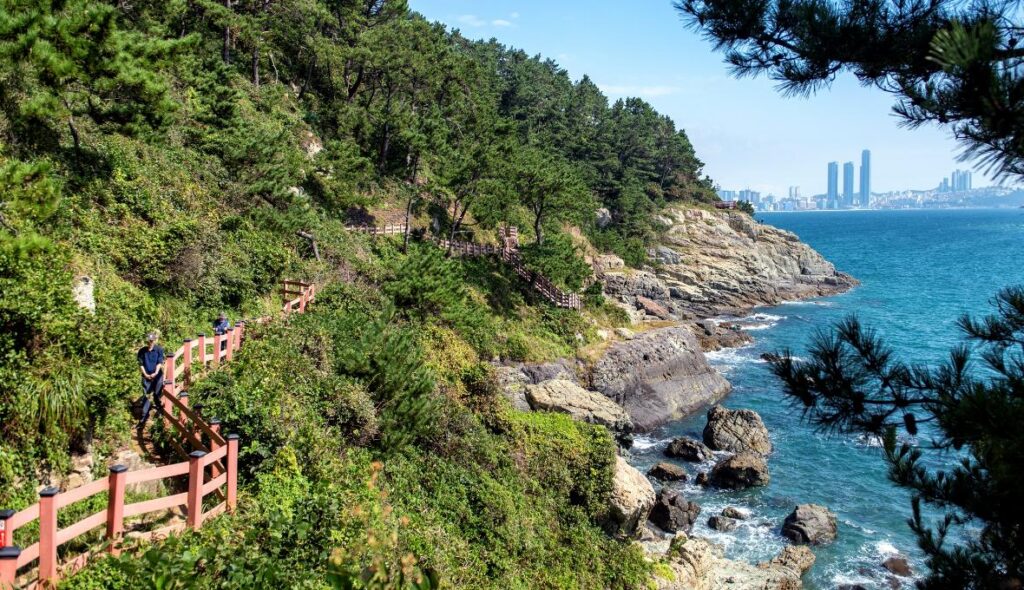
Image Credits: Visit Busan
The best free thing to do in Busan if you’ve got legs for it: a roughly 4.7km cliffside trail of dirt path, boardwalk and stairs hugging the coast, with Gwangan Bridge and the city skyline across the water. It runs from the Gwangalli side down to the Oryukdo Skywalk, so do the two together. Allow a couple of hours one way.
- Nam-gu
- Daylight hours best
- Free
13. Busan X the Sky
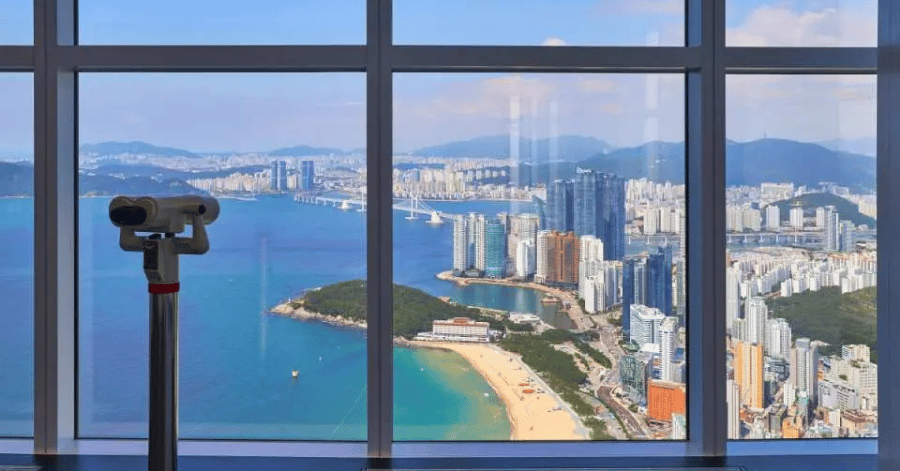
Image Credits: KKday
The highest views in the city, from an observatory near the top of the LCT Landmark Tower right on Haeundae Beach. Floor-to-ceiling glass looks straight down the sand and out to Gwangan Bridge, and there’s a café up top billed as Korea’s highest Starbucks. Worth it at dusk, when the beach lights flick on below you.
- LCT Landmark Tower, Haeundae
- ~10 AM–9 PM (later Sat)
- From ~27,000 KRW online (~S$23), a little more at the door
14. Songdo Beach & Cable Car
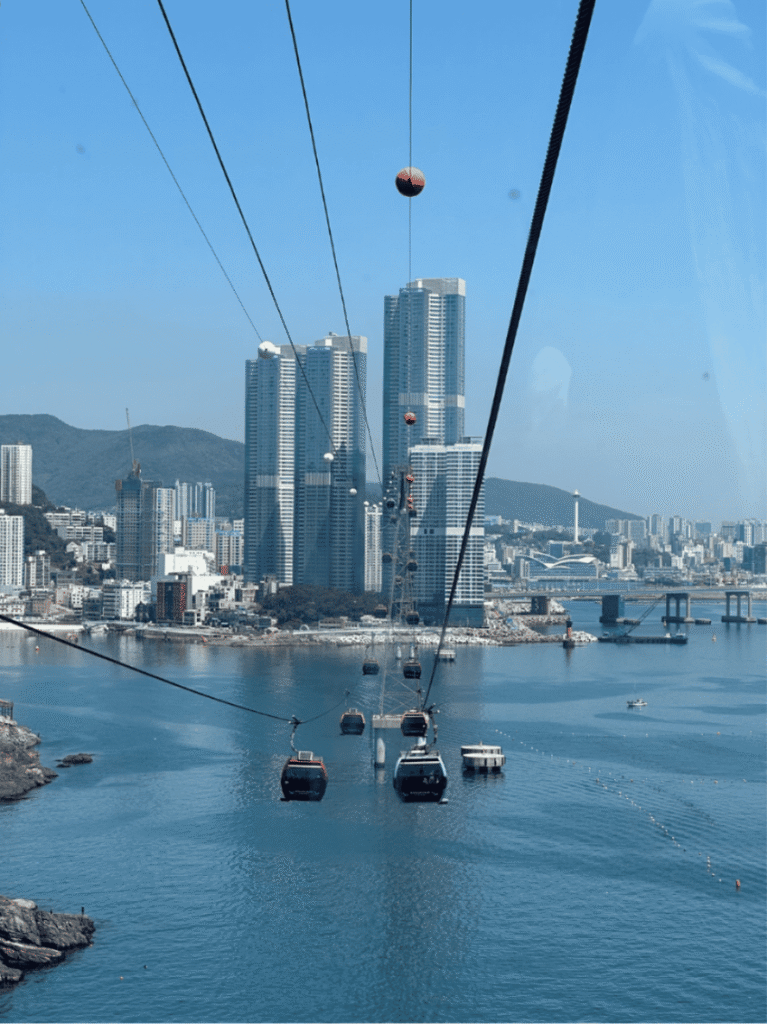
Busan’s oldest public beach, with a twist: a cable car gliding across the bay, including glass-bottom “Crystal” cabins for the nervous-but-curious. Add the free Songdo Skywalk, a 365m glass-floor walkway over the water toward Turtle Island, and it’s an easy, scenic couple of hours away from the Haeundae crowds.
- Seo-gu
- Cable car ~9 AM–9 PM (weather permitting)
- Air Cruise from 19,000 KRW return (~S$16); Crystal cabin from 24,000 KRW (~S$20)
15. Yongdusan Park & Busan Tower
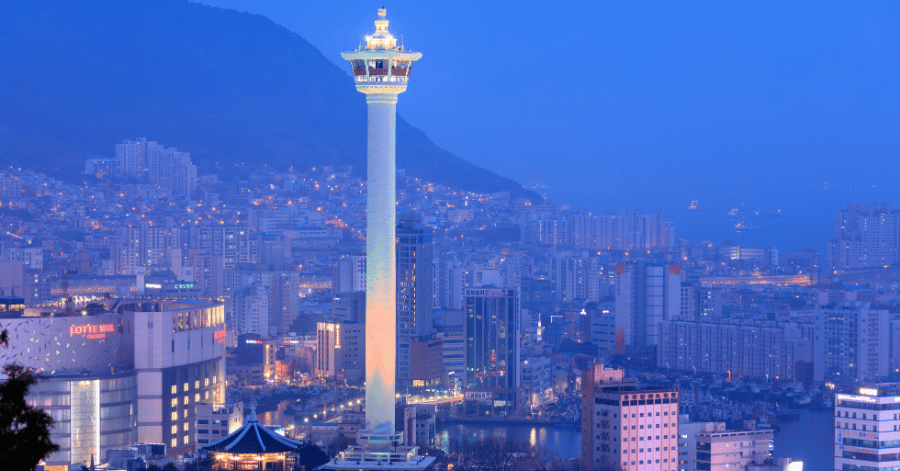
A hill-top park in the old downtown, reached by escalator from the Nampo shopping streets, crowned by the 120m Busan Tower (now branded the Diamond Tower). The observation deck gives you a 360-degree look over the old port and city, and it’s best at dusk. Free to stroll the park; pay only if you go up the tower.
- Yongdusan Park, Jung-gu
- 10 AM–10 PM (last entry 9:30 PM)
- Park free; tower deck 12,000 KRW (~S$10)
16. Spa Land Centum City
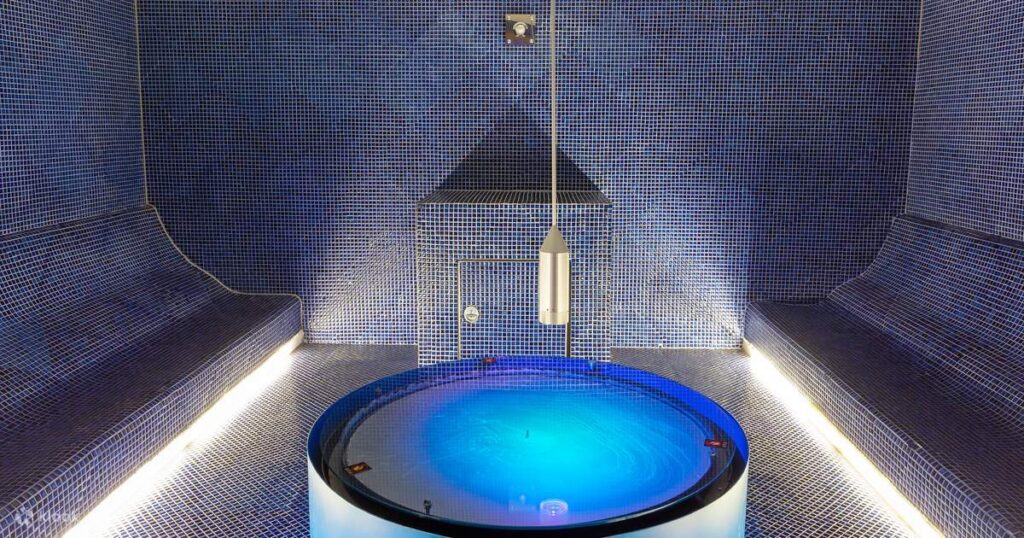
Image Credits: Klook
Busan does jjimjilbang (Korean bathhouse) better than anywhere, and this is the upscale pick: 22 baths fed by hot-spring water drawn from a kilometre down, plus 13 themed saunas, inside the giant Shinsegae Centum City mall. The bath zones are gender-split and clothing-free, Korean style; the sauna lounge is in a provided uniform. There’s a four-hour limit on a standard ticket. Perfect on a rainy or cold day.
- Shinsegae Centum City, Haeundae
- Hours vary, check before visiting
- From 17,000 KRW weekday / 20,000 KRW weekend (~S$14–17)
17. Dongnae Hot Springs & Club D Oasis
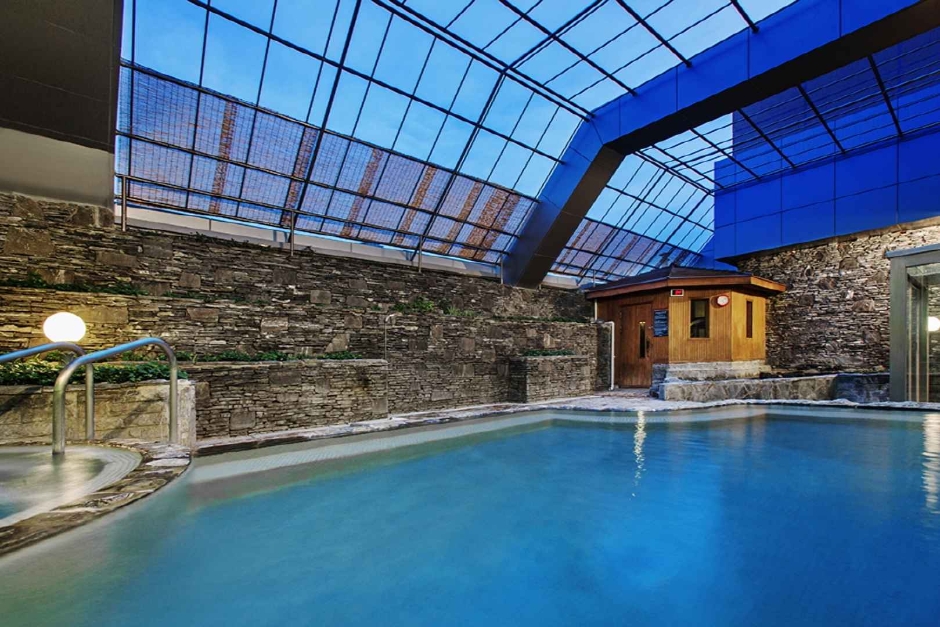
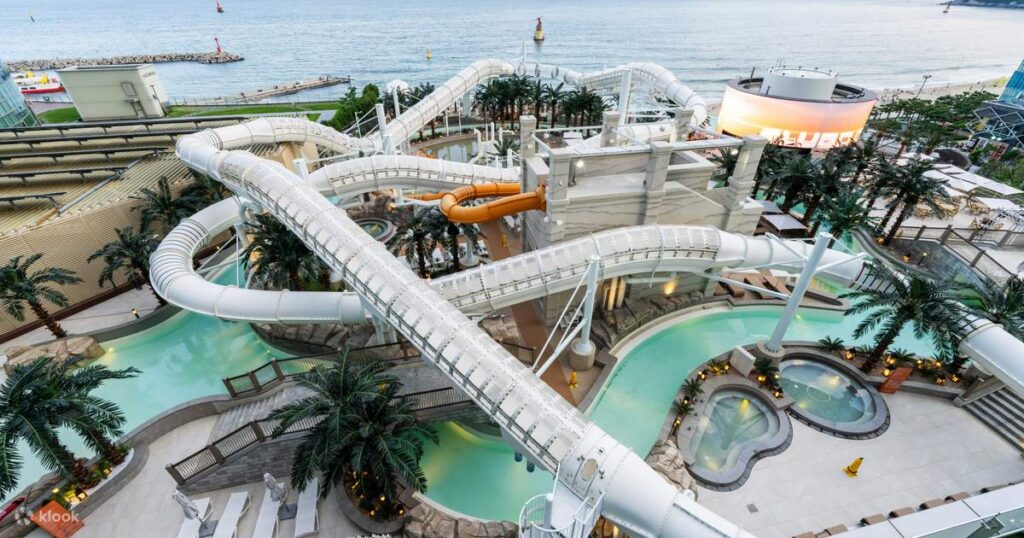
Image Credits: Visit Korea; Klook
Busan’s hot-spring heritage runs deep, and there are two ways to soak. Dongnae Oncheon is the historic spa district, where Hurshimchung, one of Korea’s largest bathhouses, runs around 40 different baths.
For something newer and resort-scale, Club D Oasis out near Osiria mixes hot-spring pools with a water park. Either way, this is the local way to recover after a day on your feet.
- Dongnae-gu (Hurshimchung) / Gijang (Club D Oasis)
- Varies by venue
- Hurshimchung from ~15,000 KRW (~S$13); Club D Oasis from ~33,000 KRW (~S$28)
18. Songjeong Beach
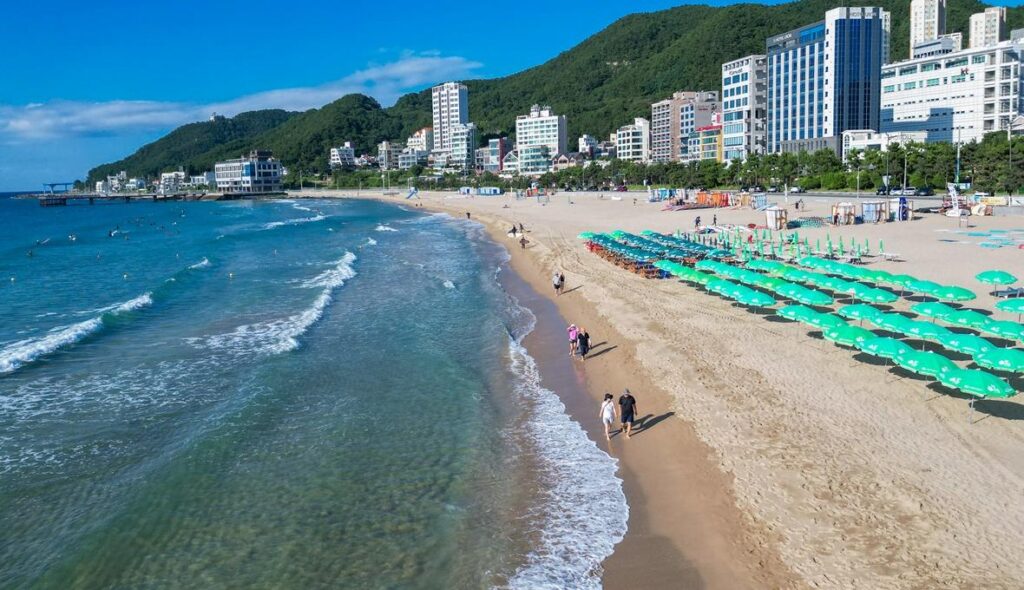
Image Credits: 비짓부산
The locals’ beach, and the home of Korean surfing. Calmer, shallower and far less built up than Haeundae, it sits at the far end of the Blue Line Park past Cheongsapo. Gentle waves and plenty of board rentals make it a friendly spot for a first lesson, and it’s a quieter place to just sit with a coffee.
- Haeundae-gu
- Open 24h
- Free
Related Guide: Working out how to get down from the capital first? Our Seoul to Busan guide compares the KTX, the bus and flying.
Free Things to Do in Busan
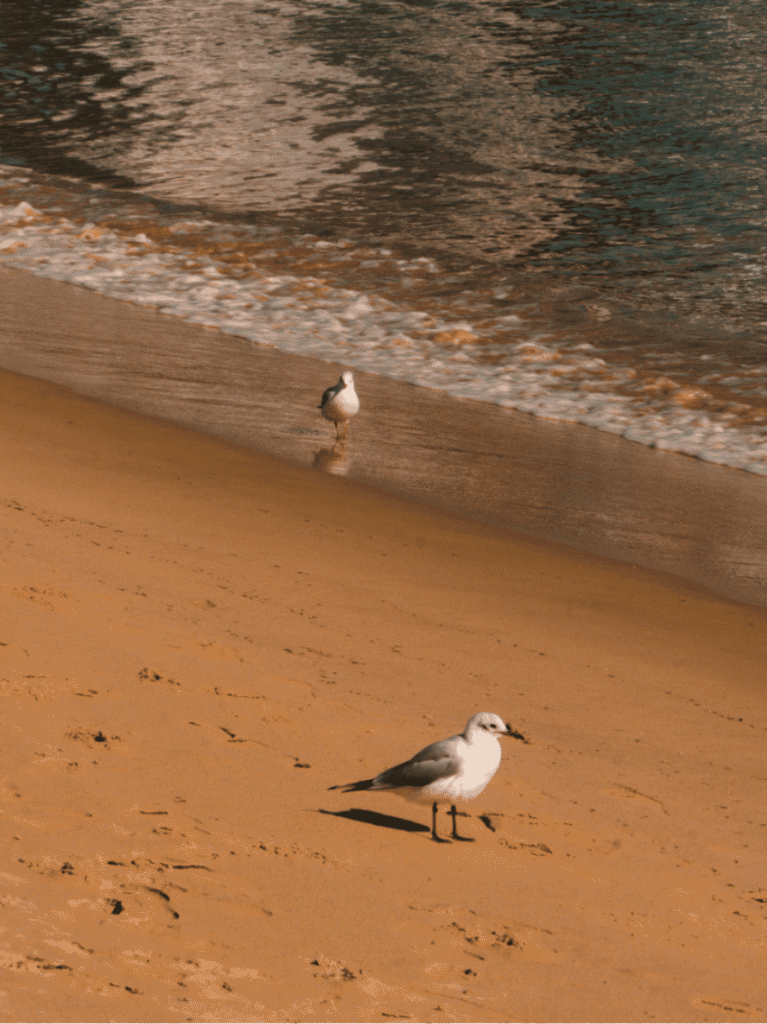
Plenty of the best of Busan costs nothing. The beaches (Haeundae, Gwangalli, Songjeong) are all free, as are both culture villages, both temples, and the Saturday drone show over Gwangan Bridge.
For free views, string together the Oryukdo Skywalk and the Igidae coastal walk in the south, or take the Songdo Skywalk over the water in the west. The Haeundae Haewol Observatory and the Yeongju-dong hillside lanes give you sea views without a ticket too.
Add the markets, where wandering and people-watching are free even if the ssiat hotteok isn’t, and you can fill two days without paying for a single attraction.
Related Guide: Lotte World Seoul Guide: Tickets, Rides, Tips
What to Do in Busan at Night
Busan after dark is mostly about the water, and the city lights reflected off it. Here’s where to point yourself once the sun drops.
Gwangan Bridge drone show & Gwangalli bars
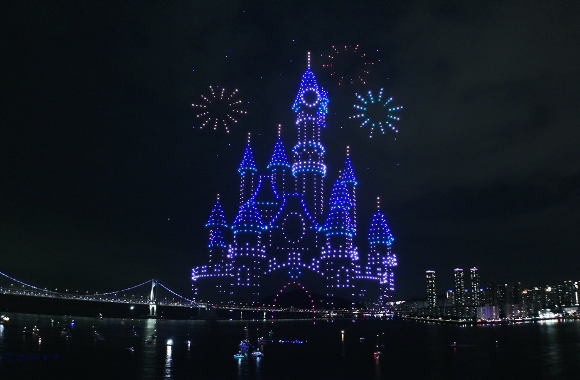
Image Credits: Visit Busan
Saturday night is drone-show night at Gwangalli, when a free 12-minute display lifts off above the bay against the lit Gwangan Bridge. Grab a spot on the sand early, or a window table at one of the craft-beer bars and pojangmacha (street tents) lining the promenade behind. It’s the single best free night out in the city.
Busan X the Sky after dark
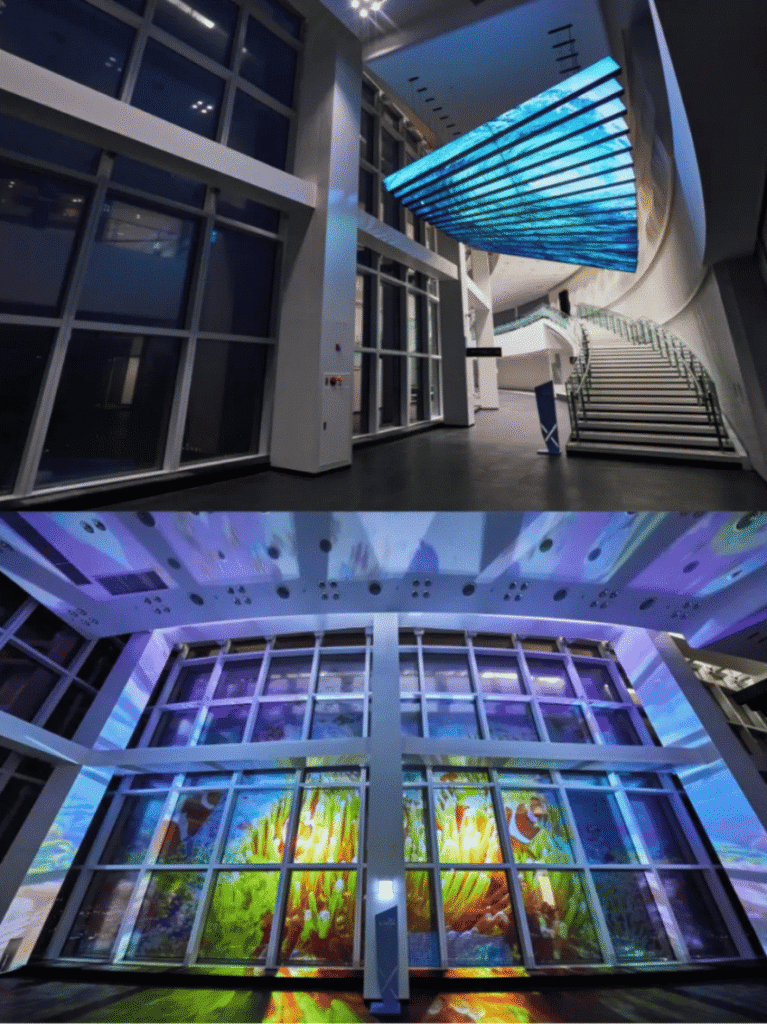
Image Credits: KKday
The observatory near the top of the LCT tower turns from a daytime viewpoint into something better at night, when Haeundae’s beach strip and Gwangan Bridge glitter far below. Go up around dusk so you catch the switch from gold to neon, then linger over a drink at the top-floor café while the city lights spread out under the glass.
BIFF Square & Nampo street food
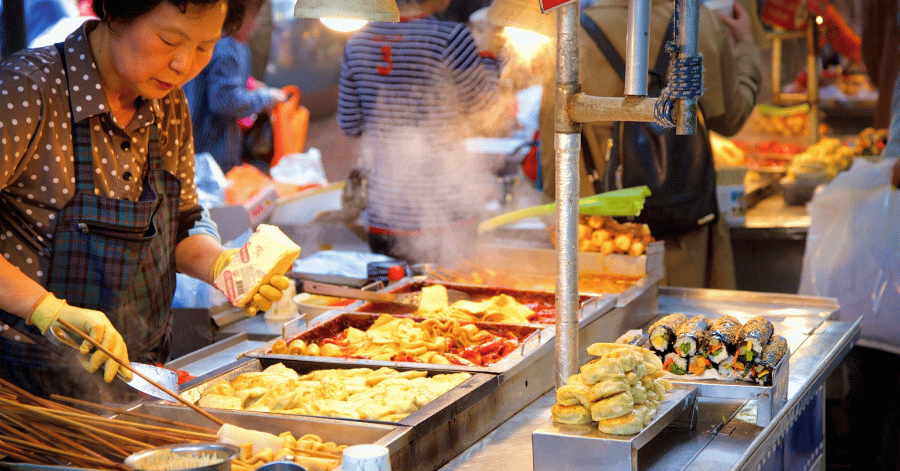
Image Credits: Expedia
The old downtown around BIFF Square and Gukje Market hums at night with food stalls, neon and crowds. This is where you graze, ssiat hotteok, fish-cake skewers, chungmu gimbap, working your way through the alleys before the cinemas and shops of Nampo-dong. It’s loud, cheap and very Busan.
A late soak at a jjimjilbang
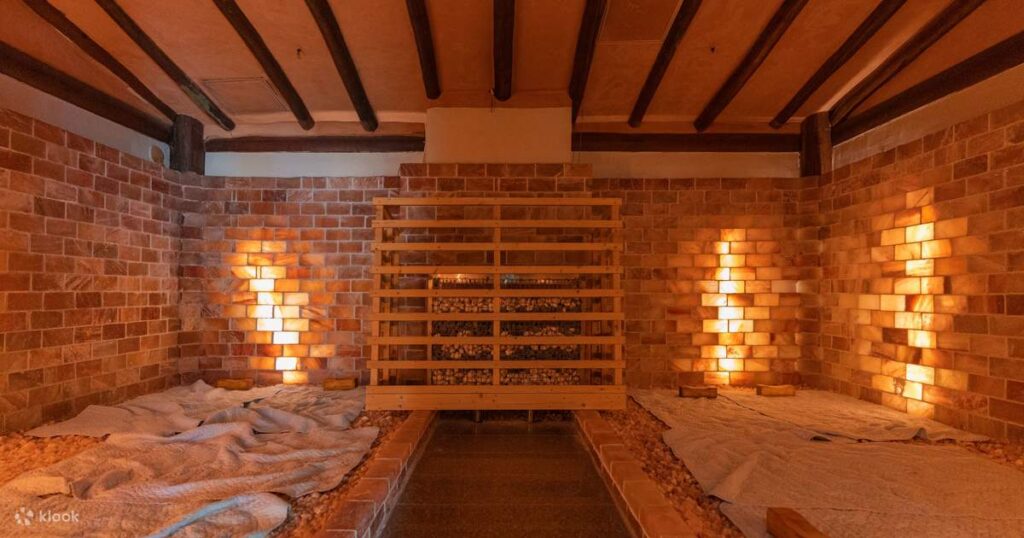
Image Credits: Klook
Korea’s bathhouses run late, and there’s no better way to end a day on your feet. Spa Land at Centum City is open until 10pm, so a post-dinner soak in hot-spring water and a sweat through the themed saunas is an easy, very local nightcap, especially welcome on a cold or rainy evening.
Related Guide: Korea Weather Guide: Best Time To Visit Korea By Month
Where to Eat in Busan
Busan is a port city, so the food leans seafood, soup and street snacks, with a few dishes you’ll struggle to find as good anywhere else in Korea. Come hungry.
Dwaeji gukbap (pork soup rice)
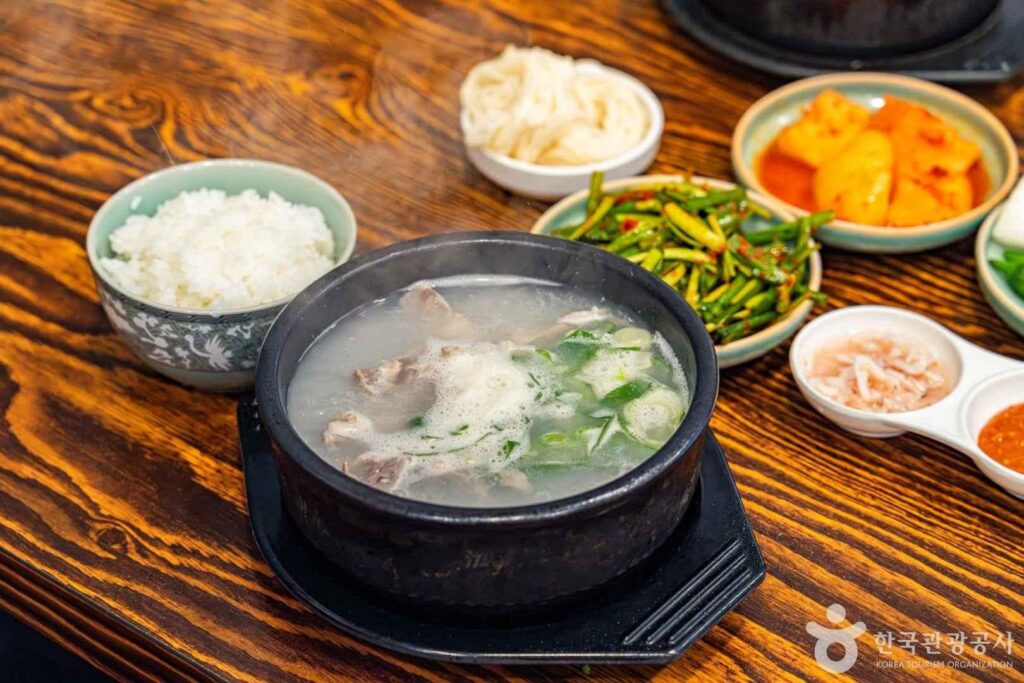
Image Credits: Visit Korea
Busan’s signature comfort dish: a milky pork-bone broth poured over rice, fixed up at the table with chives, salted shrimp and chilli paste. It’s cheap, filling and everywhere, with a whole “gukbap alley” near Seomyeon dedicated to it. This is the one local dish to try before anything else.
Milmyeon (cold wheat noodles)

Image Credits: Visit Korea
A Busan invention born after the war, when buckwheat was scarce: chewy wheat noodles in an icy, tangy broth, or tossed dry with a sweet-spicy sauce (bibim-milmyeon). It’s the city’s answer to a hot, humid summer day, and a proper point of local pride. Order it where you see queues of locals.
Ssiat hotteok (seed-stuffed pancake)
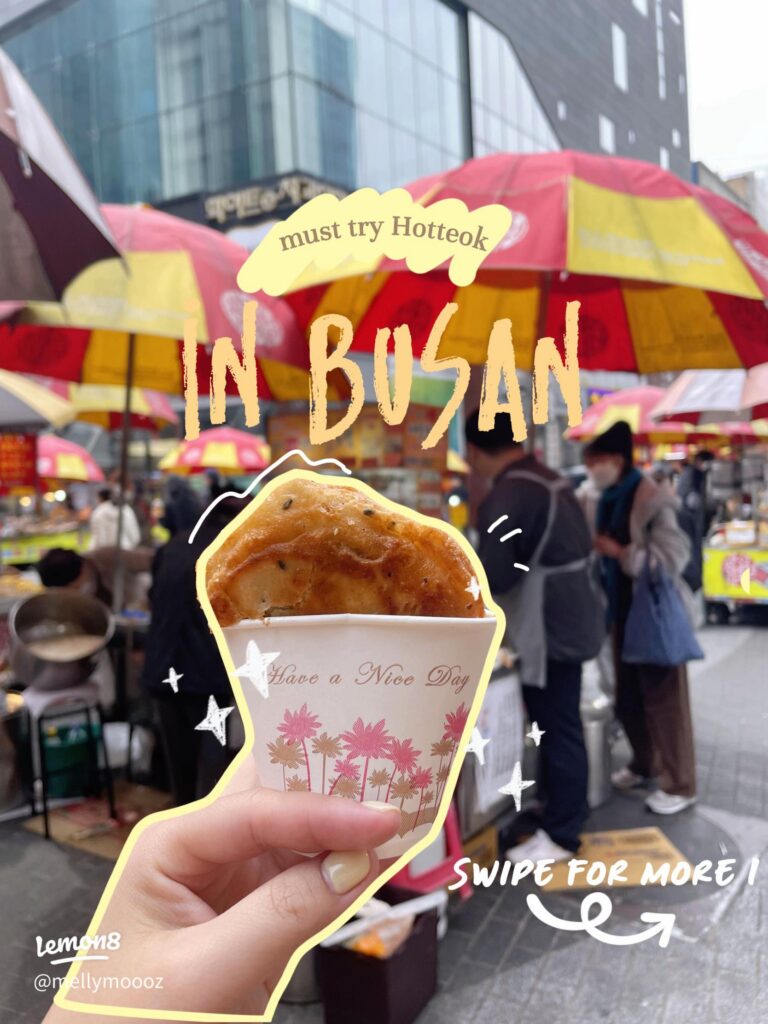
Image Credits: @mellymoooz on Lemon8
The BIFF Square classic: a hotteok pancake fried crisp, split open and packed with sunflower seeds, peanuts and brown sugar. You eat it scalding from a paper cup as you walk. It’s the definitive Busan street snack, and worth burning your fingers for. Look for the longest stall queue.
Jagalchi seafood
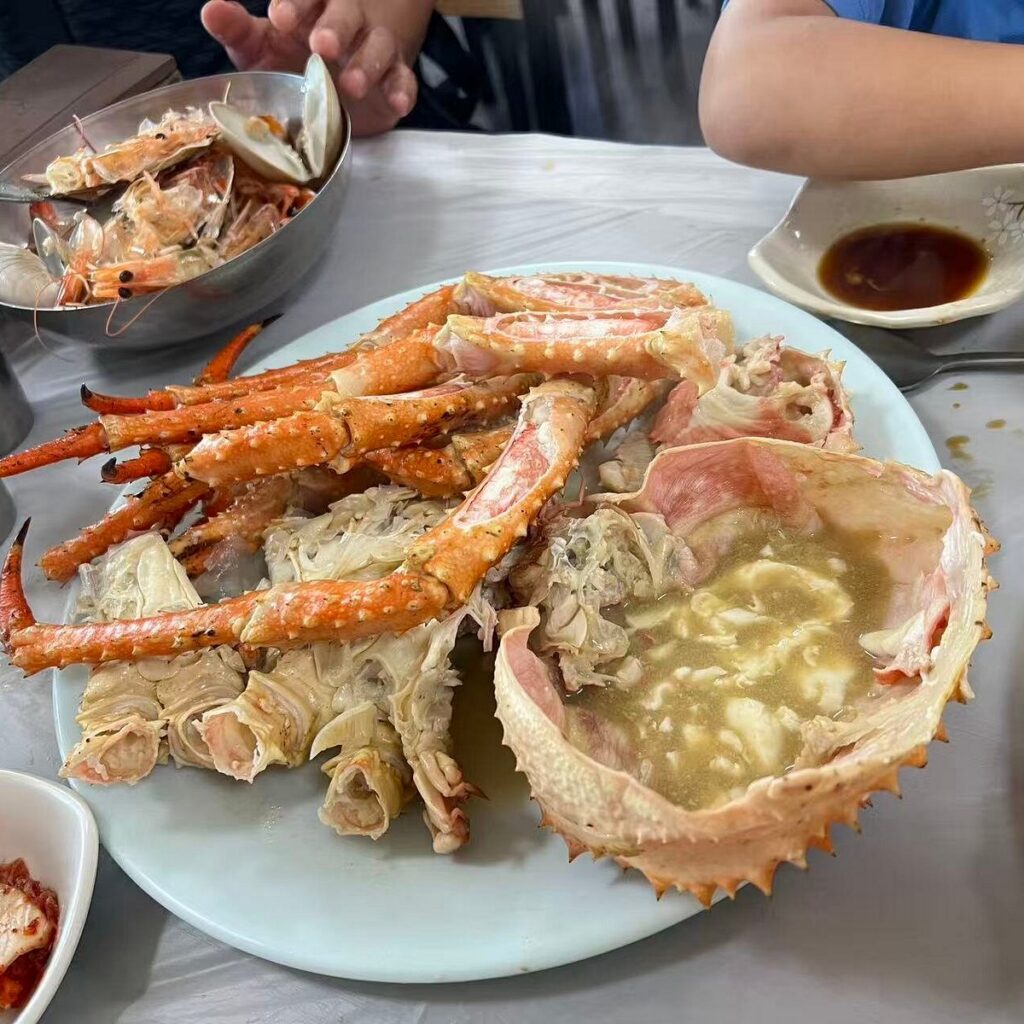
Image Credits: Tripadvisor
For the full seafood ritual, head to Jagalchi: choose your catch live downstairs, then take it upstairs to be grilled, steamed or served as hoe (Korean-style sashimi). Hweh, grilled eel and steamed crab are the things to order. Go at lunch when it’s freshest, and agree the price before they cook.
Eomuk (Busan fish cake)
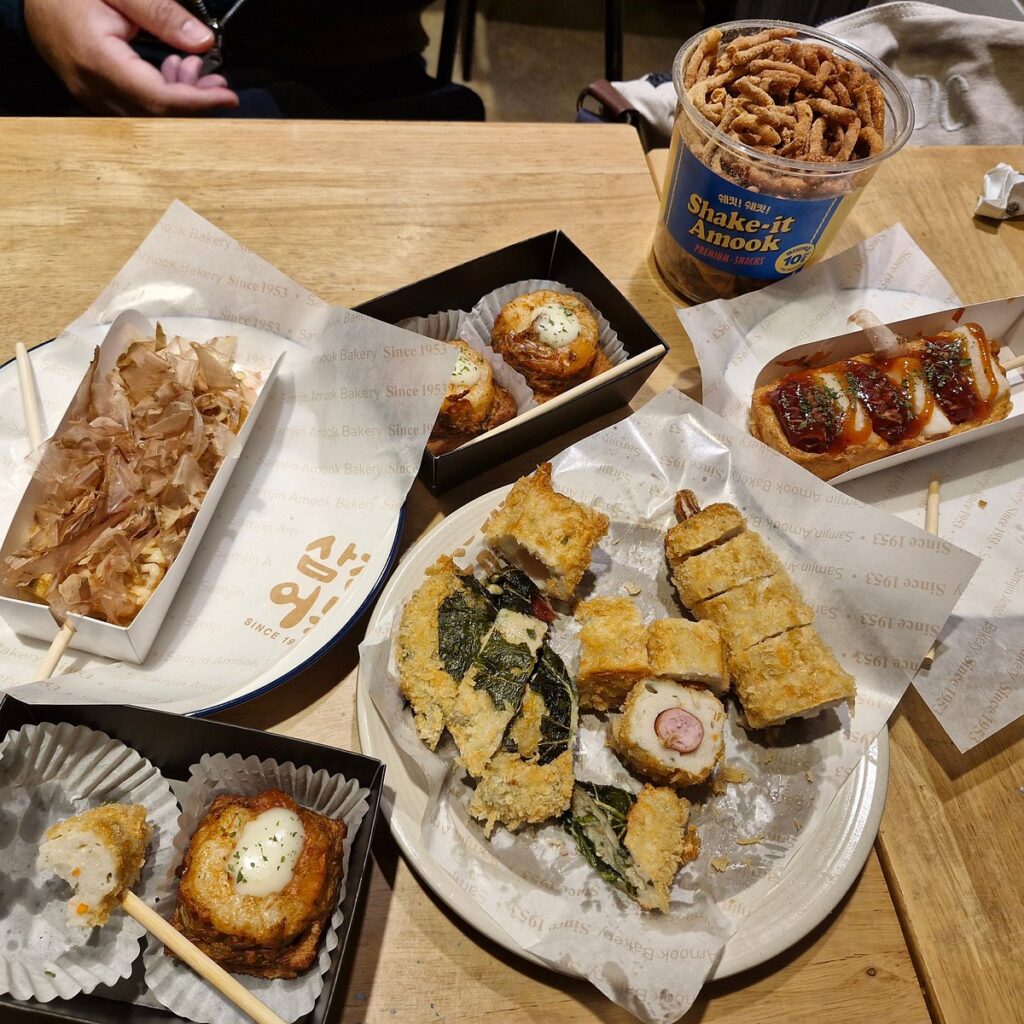
Image Credits: Tripadvisor
Busan basically invented Korea’s modern fish cake, and you’ll find it everywhere from market stalls to a smart flagship bakery-style shop near the station. Skewered and dipped in hot broth on a cold day, or stuffed and fancy at the famous Samjin Eomuk, it’s the cheap, warming snack the city runs on.
Related Guide: Lotte Duty Free Korea: Exclusive Deals, K-Beauty Picks & What to Know
Best Day Trips From Busan
Busan makes a great base for a day out, and one trip in particular is close to unmissable.
Gyeongju
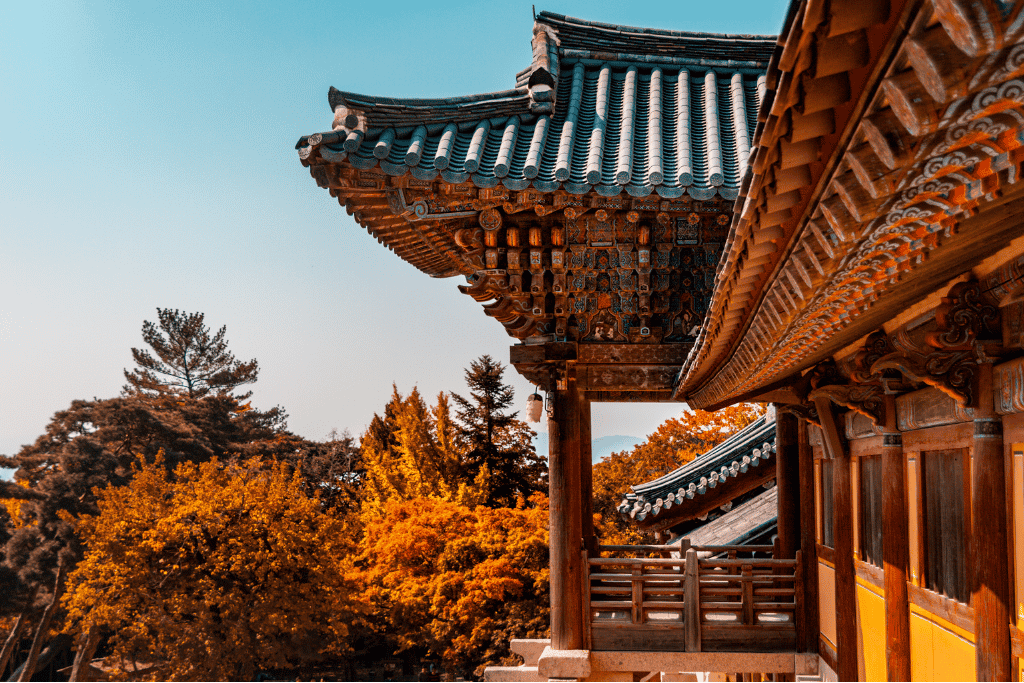
The ancient Silla capital, about an hour away and the best day trip in southern Korea: an open-air museum of grass-covered royal tombs, the UNESCO-listed Bulguksa Temple and Seokguram Grotto, and the lantern-lit Donggung Palace and Wolji Pond at night.
Take the intercity bus from Nopo terminal (~7,500 KRW / ~S$6), which drops you central, rather than the KTX, whose station sits outside town.
Tongyeong
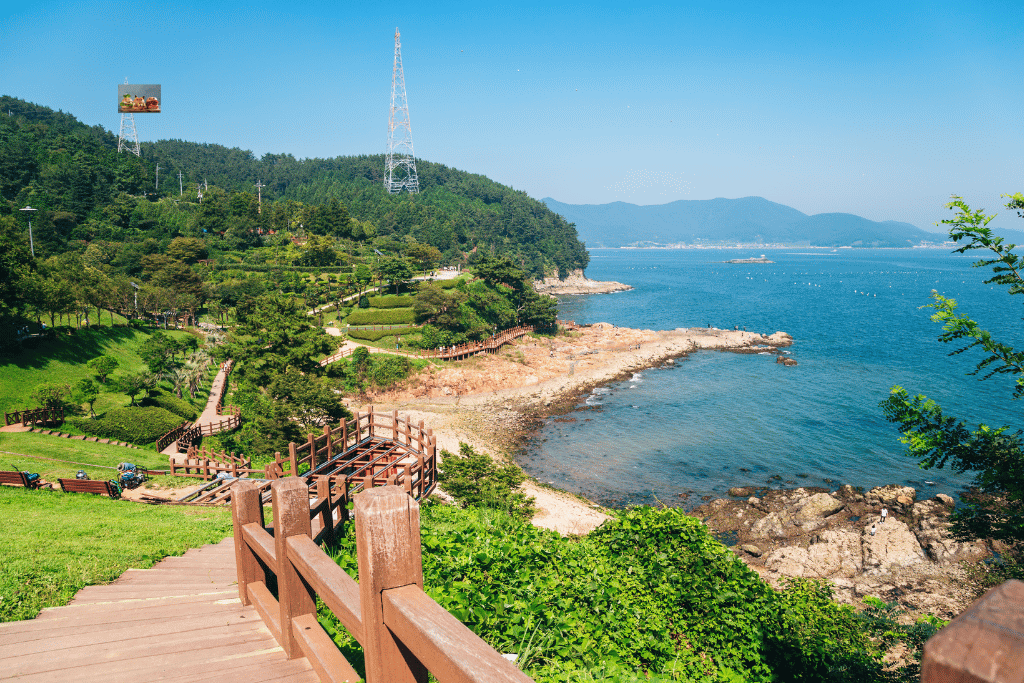
A pretty harbour town often called “Korea’s Naples,” about 1.5 hours west by bus. Ride the cable car up Mireuksan for island-dotted sea views, wander the mural-painted Dongpirang village, and eat your way through the lively Jungang Market. It’s a slower, scenic counterpoint to Busan’s big-city pace.
Across to Fukuoka by ferry

If you’ve got an extra day and a passport handy, Busan is one of the few Korean cities you can leave by sea: an overnight ferry runs across to Fukuoka in Japan from Busan Port. Sailings and schedules change, so check the current timetable before you bank on it, but it’s a novel add-on for a longer trip.
Related Guide: Extending the Korea trip further? Our Seoul to Jeju guide covers the country’s island getaway.
Best Time to Visit Busan
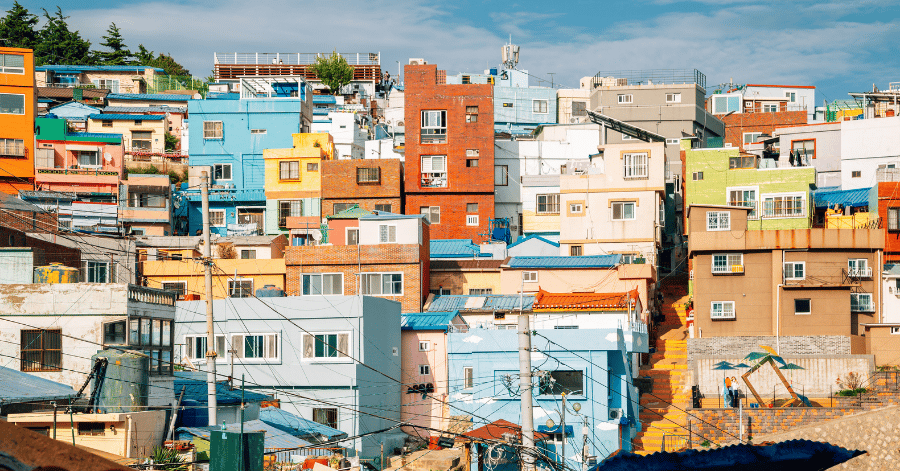
The sweet spot is autumn, roughly late September through October: mild temperatures around 15–25°C, low humidity and clear skies, ideal for the coastal walks and temples. It’s the most comfortable time to be on your feet all day.
Spring (April–May) is lovely too, with cherry blossoms and warm-but-not-hot days, though peak blossom week gets busy. Summer (June–August) is hot, humid and the height of beach season, so it’s the most crowded, and it overlaps with the rainy spell and a small typhoon risk. Winter (December–February) is cold but milder than Seoul, the quietest and cheapest time, though the beaches are out of action.
Related Guide: Chasing the blossoms? Our cherry blossom Korea forecast tracks the bloom dates city by city.
Where to Stay in Busan
For a first visit, base yourself in Haeundae or Seomyeon. Haeundae puts you on the best beach, beside the Sky Capsule and Busan X the Sky, and is the easy, scenic choice if you want to wake up by the sea. Seomyeon is the central transport and shopping hub, where the metro lines cross, so it’s the most convenient base for darting around the whole city and the gukbap alleys are on your doorstep.
Nampo-dong is the third option, best if markets, street food and the old downtown are your priority, with Jagalchi, Gukje and Yongdusan Park all walkable. Wherever you land, stay near a metro station, and the rest of Busan opens up cheaply.
Related Guide: Best Things To Do In Jeju: 4-Day Itinerary + Travel Tips
Getting Around Busan
Busan’s metro is clean, cheap and gets you to most sights, with the rest a short bus or taxi away. Grab a rechargeable transport card and tap on. The base metro fare is 1,600 KRW (~S$1.35), and a card gives you free transfers between metro and bus within 30 minutes.
T-money works city-wide, and the local Cashbee card does too; buy either at any station or convenience store and top it up with cash. From Gimhae International Airport (PUS), the Busan–Gimhae Light Rail is the cheapest way in (~1,600 KRW / ~S$1.35) with a transfer onto the metro, while limousine buses run direct to the main districts for a bit more.
If you’re hitting a lot of paid attractions, the Visit Busan Pass (from ~55,000 KRW / ~S$46 for 24 hours) bundles entry to the likes of Busan X the Sky and the Blue Line Park beach train, but only pays off on a packed sightseeing day.
Related Guide: New to Korea’s transport cards? Our T-money card guide explains how to buy, top up and use one.
Paying in Busan Without the FX Sting
Busan is mostly cashless, cards and QR pay are accepted nearly everywhere, but you’ll want a little cash for market stalls, street food and the odd small temple shop. The smart way to handle both: tap your YouTrip card for everything that takes cards, and pull a small amount of won from an ATM when you land.
Tap-to-pay with YouTrip charges 0% in foreign transaction fees, and every won spend auto-converts from your SGD at the Mastercard wholesale rate, the same rate banks use between themselves, with no markup on top. That beats a typical travel credit card quietly adding 3–3.5% on every overseas swipe.
For the cash you do need, withdraw it from a Korean ATM with YouTrip rather than changing money before you fly. Your first S$400 of overseas ATM withdrawals each calendar month is free, then it’s a flat 2%.
A money changer looks “fee-free” but bakes a markup of a few percent into the rate it quotes you, wider still on a less-common currency like KRW.
For deeper detail, see our guide on whether YouTrip works in Korea, the SGD to KRW rate guide, and the South Korea ATM withdrawal guide.
Busan FAQs
For a first visit, three days covers the headline sights comfortably: the beaches, Gamcheon, a seaside temple and the markets, with an evening for the Gwangalli drone show. Stretch to four if you want to add a Gyeongju day trip without rushing, or slower mornings on the sand.
Busan is Korea’s biggest port city and beach capital, famous for Haeundae and Gwangalli beaches, the cliffside Haedong Yonggungsa Temple, the colourful Gamcheon Culture Village, and Jagalchi, the country’s largest seafood market. It’s the laid-back, coastal counterpoint to Seoul.
Don’t leave without seeing Haeundae Beach, the hillside murals of Gamcheon Culture Village, and Haedong Yonggungsa Temple at sunrise. Add the Sky Capsule ride, a seafood lunch at Jagalchi, and the free Saturday drone show at Gwangalli for the full Busan hit list.
Plan for three to four days. Two is enough only for the beaches and one village before you’re rushing; three adds a temple and the markets; four lets you fit a day trip to Gyeongju. Five or more rewards slower beach time and the quieter coastal walks.
Yes. Busan gives you beaches, mountains, temples and Korea’s best seafood in one compact, easygoing city, with fewer crowds and lower prices than Seoul. For most travellers, it earns two to three days of its own rather than a single rushed day trip.
Mostly no. Cards and QR pay work nearly everywhere, but keep a little won for market stalls and street food. Tap a YouTrip card for card-friendly spots at 0% FX, and withdraw a small amount of cash from an ATM, free on your first S$400 each month, rather than using a money changer.
Busan, Sorted
Two beaches, a clifftop temple, a hillside of murals and the best seafood in Korea, all reachable on a 1,600-won metro hop. Busan rewards every extra day you give it, so give it more than one.
Not a YouTrooper yet? Download the YouTrip app to spend in 150+ currencies with no foreign transaction fees, unlock travel perks through YouTrip Perks, and join the conversation on our Telegram channel and the YouTroopers community group for the latest deals and travel tips.


The post 18 Best Things to Do in Busan, South Korea (2026) appeared first on YouTrip Singapore.


You May Also Like

Bitcoin’s AI Correlation Problem: Why Semiconductor Sell-Offs Are Starting to Move BTC

Binance Coin (BNB) Alert: $620 Support Tested While This New Crypto Hits 3x

Bithumb Crypto Exchange Fined 210M Won for Unauthorized User Data Sharing



