

Dollar Hits 13-Month High as Rate Hike Bets Grow Ahead of Key Inflation Data
TLDR
- The U.S. dollar index hit a 13-month peak of 101.8, pushing the euro below $1.14 and the pound to seven-month lows
- Traders now expect at least one Fed rate hike as soon as October, a shift from earlier expectations of cuts
- Bitcoin dropped below $60,000 for the first time since 2024 and gold briefly fell under $4,000 an ounce
- The Fed’s preferred inflation gauge, core PCE for May, is due Thursday and is forecast at 3.4% — well above the 2% target
- Japan is being watched closely for potential currency intervention as the yen hovers near 40-year lows around 161.79 per dollar
The U.S. dollar is on track for its biggest monthly gain in nearly a year, fueled by rising bets that the Federal Reserve will hike interest rates before the end of 2026.
The dollar index, which tracks the greenback against six major currencies, touched a 13-month high of 101.8 on Wednesday before settling around 101.60 on Thursday.
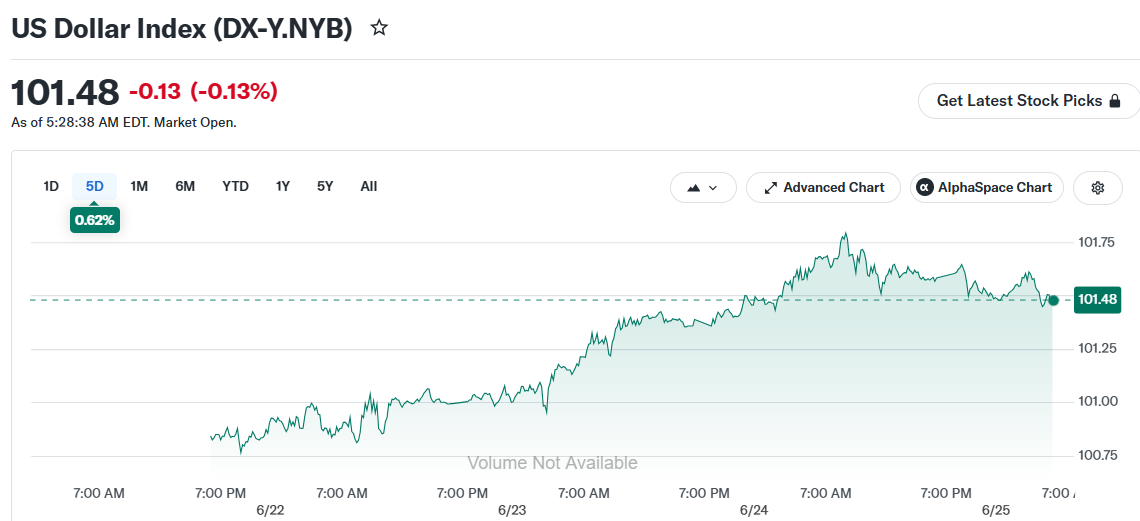 US Dollar Index (DX-Y.NYB)
The euro fell below $1.14, its lowest in over a year. Sterling dropped to $1.314 at its weakest, a level not seen since November. Both currencies recovered slightly on Thursday but remained under pressure.
The Japanese yen held near 161.79 per dollar, close to its weakest level in 40 years. Traders and analysts are watching closely for any sign that Japanese authorities may step in to support the currency.
Rate Hike Bets Drive the Dollar Higher
The shift in market sentiment has been stark. Earlier this year, traders widely expected the Fed to cut rates. Now, markets are pricing in at least one hike as soon as October, with a roughly 50% chance of a second by year-end.
That change follows the U.S.-Israeli military conflict with Iran, which added inflation pressure and reduced the case for easing monetary policy.
Two-year U.S. Treasury yields, which reflect short-term rate expectations, have risen nearly 14 basis points this month to 4.15%. That compares to only a 2 basis point rise in German yields and a near 9 basis point fall in UK gilt yields, widening the gap that makes dollar assets more attractive.
MUFG currency strategist Lee Hardman said the market is clearly betting the Fed will “back up tough talk on inflation by hiking rates this year.”
Crypto and Gold Feel the Dollar’s Pressure
Dollar strength has rippled into other markets. Bitcoin fell below $60,000 for the first time since 2024, weighed down by the stronger greenback and shifting risk appetite.
Gold briefly dipped below $4,000 an ounce for the first time in more than seven months before recovering slightly.
PCE Inflation Data in Focus
All eyes are now on the core Personal Consumption Expenditures price index for May, due Thursday. Economists polled by Reuters forecast a rise of 3.4%, well above the Fed’s 2% target.
The reading could push the dollar even higher if it comes in hot, or offer some relief to other currencies if it surprises to the downside.
The Australian dollar slipped 0.12% to around $0.69 after mixed jobs data. The New Zealand dollar also remained near seven-month lows, with both currencies taking direction from U.S. rate expectations.
The post Dollar Hits 13-Month High as Rate Hike Bets Grow Ahead of Key Inflation Data appeared first on CoinCentral.


You May Also Like

Amazon (AMZN) Stock: $48B India Investment Fuels Cloud Battle Against Tech Giants
Govt drafting new law to tighten e-commerce platform accountability, plug regulatory gaps

Saudi developer Ladun pursues move to main market



