

Euro Stalls Near $1.05 as Dollar Hits 13-Month High Ahead of Key U.S. Inflation Data
BitcoinWorld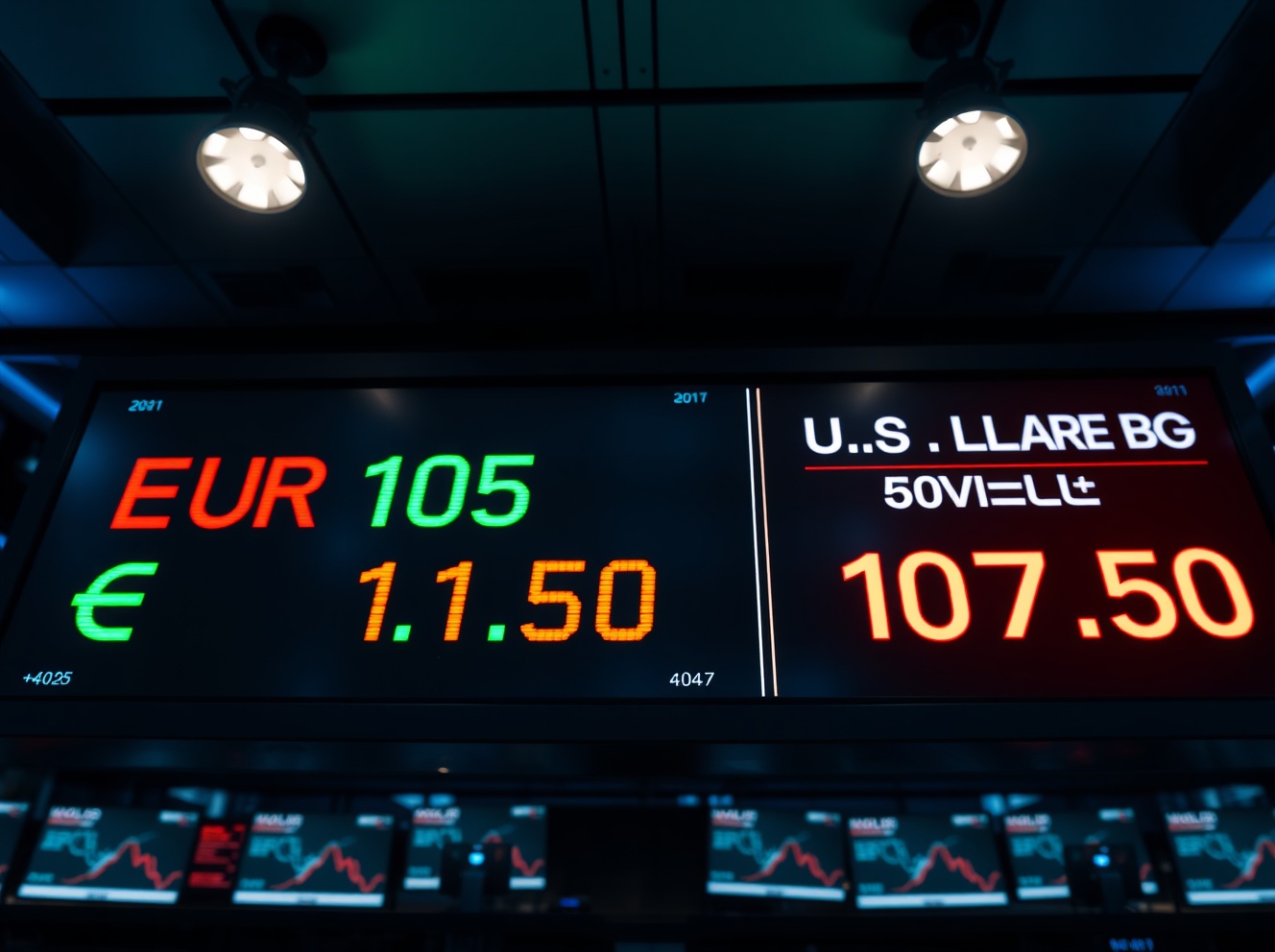
Euro Stalls Near $1.05 as Dollar Hits 13-Month High Ahead of Key U.S. Inflation Data
The euro remained pinned near the $1.05 mark on Thursday, struggling to recover as the U.S. dollar surged to its strongest level in 13 months. Traders are now squarely focused on the release of the U.S. Personal Consumption Expenditures (PCE) price index — the Federal Reserve’s preferred inflation gauge — due later this week.
Dollar Strength Pressures EUR/USD
The U.S. Dollar Index (DXY) climbed above 107.50, its highest since November 2023, driven by resilient U.S. economic data and hawkish signals from the Federal Reserve. The euro, meanwhile, has weakened against a backdrop of persistent political uncertainty in the eurozone and a more dovish European Central Bank (ECB) outlook.
Since early December, the EUR/USD pair has shed roughly 3%, accelerating losses after the ECB cut interest rates by 25 basis points last week and signaled further easing ahead. In contrast, the Fed has maintained a cautious tone, with Chair Jerome Powell repeatedly emphasizing the need for more evidence that inflation is sustainably moving toward the 2% target before considering rate cuts.
PCE Inflation Data in Focus
The core PCE price index, due for release on Friday, is expected to show a monthly increase of 0.2% and an annual rate of 2.8%. A hotter-than-expected reading could reinforce the Fed’s patient stance, further boosting the dollar and pushing EUR/USD below the psychologically important $1.05 level. A softer print, however, might provide temporary relief for the euro.
Markets are pricing in a roughly 60% probability of a Fed rate cut by June, according to CME Group’s FedWatch tool. That timeline could shift depending on the PCE outcome and upcoming labor market data.
What This Means for Traders and Investors
For forex traders, the current environment favors dollar longs, but the risk of a sharp reversal exists if inflation data surprises to the downside. European importers and exporters are also closely watching the exchange rate, as a weaker euro boosts export competitiveness but raises the cost of dollar-denominated imports, particularly energy.
The broader macroeconomic picture suggests that divergence between the Fed and ECB will remain a key driver of currency markets in the coming months. Any shift in Fed rhetoric or unexpected ECB action could quickly alter the trajectory.
Conclusion
The euro’s slide reflects a combination of U.S. economic resilience, hawkish Fed positioning, and eurozone headwinds. Friday’s PCE release is the next major catalyst. A strong inflation print could extend the dollar’s rally, while a weaker number might trigger a short-term correction. Either way, the $1.05 level is a critical threshold that will likely determine the next directional move in EUR/USD.
FAQs
Q1: Why is the U.S. dollar strengthening?
The dollar is gaining due to strong U.S. economic data, the Federal Reserve’s cautious approach to rate cuts, and relative political stability compared to the eurozone.
Q2: What is the PCE price index and why does it matter?
The Personal Consumption Expenditures price index is the Fed’s preferred measure of inflation. It influences interest rate decisions, which in turn affect currency values, bond yields, and stock markets.
Q3: Could the euro fall below $1.05?
Yes, if U.S. inflation data comes in hotter than expected, the dollar could strengthen further, pushing EUR/USD below $1.05. Conversely, a soft PCE reading might help the euro recover some ground.
This post Euro Stalls Near $1.05 as Dollar Hits 13-Month High Ahead of Key U.S. Inflation Data first appeared on BitcoinWorld.


You May Also Like

WhatsApp is not charging users a mandatory fee, but there’s a new subscription to know about

TIAA’s CEO made $26,000 in her first job but still maxed out her 401(k). She has advice for Gen Z
Apple (AAPL) Shares Tumble 5% Following Unexpected Price Increases on Mac and iPad Products



