

Bitcoin price rebounds toward $62K after $459M ETF exodus, but bears still hold the edge
Bitcoin price has rebounded toward $62,000 after a sharp selloff pushed the crypto asset below $60,000, though weak institutional demand and persistent macroeconomic risks continue to keep traders on the defensive.
- Bitcoin price rebounded toward $62,000 on June 25 after an oversold bounce followed its drop below the $60,000 level.
- Spot Bitcoin ETFs recorded $459 million in net outflows as institutional investors reduced exposure.
- Analysts warn the recovery could fade unless Bitcoin reclaims key resistance around $62,800 to $65,000.
According to data from crypto.news, Bitcoin (BTC) price climbed back to around $61,800 on June 25 after tumbling as much as 5.7% a day earlier to an intraday low near $59,175. The recovery followed an aggressive round of dip buying after the four-hour Relative Strength Index fell to its lowest level since August 2023, a condition that historically attracts swing traders looking for oversold entries.
The bounce also came after a wave of long liquidations flushed leveraged positions below the psychological $60,000 level.
Selling pressure intensified after renewed concerns over a potential supply shock. Creditors of the collapsed Mt. Gox exchange are expected to begin receiving roughly $9 billion worth of Bitcoin in July, raising fears that a large portion of those coins could be sold into the market. At the same time, the German government continues to transfer seized Bitcoin to centralized exchanges, adding another source of near-term supply.
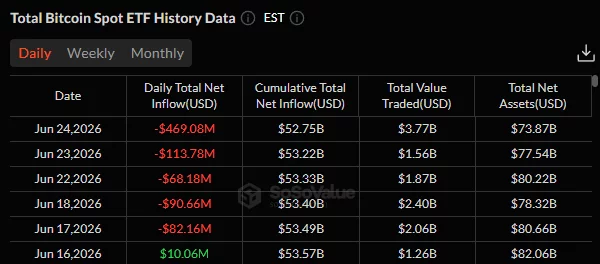
Institutional flows also deteriorated. U.S. spot Bitcoin exchange-traded funds recorded $459 million in net outflows on Wednesday, one of the largest daily withdrawals in recent weeks, suggesting large investors reduced exposure as volatility accelerated. The retreat came as markets continued to price in higher U.S. interest rates following persistent inflation data, while the U.S. dollar remained firm against major currencies.
Outside crypto markets, another headwind eased only partially. Crude oil dropped below $70 per barrel for a fourth consecutive session as optimism surrounding U.S.-Iran peace negotiations improved the global supply outlook.
The decline erased nearly all of oil’s geopolitical premium, although investors have yet to rotate aggressively back into risk assets such as Bitcoin.
Bitcoin remains below key resistance despite relief bounce
The technical picture remains fragile despite Thursday’s rebound. On the four-hour chart, Bitcoin continues to trade below a descending trendline that has capped every recovery attempt since mid-June.
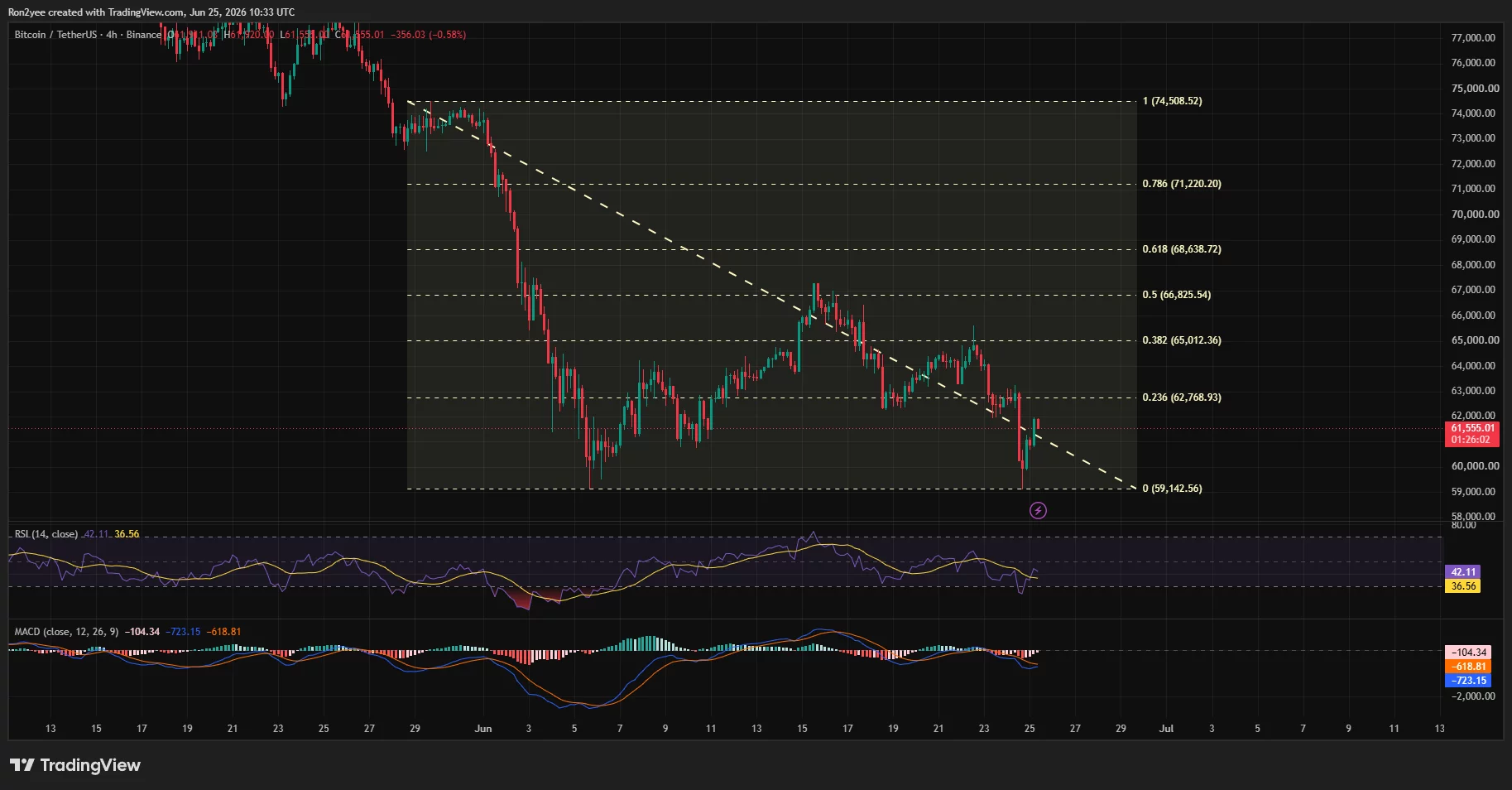
Bitcoin price also remains under the 23.6% Fibonacci retracement level near $62,770, while the next major resistance sits around $65,000, followed by the 50% retracement near $66,825.
Momentum indicators have yet to confirm a trend reversal. The four-hour RSI recovered from deeply oversold territory but remains below the neutral 50 level, while the MACD continues to trade below its signal line with negative histogram bars, showing bearish momentum remains intact.
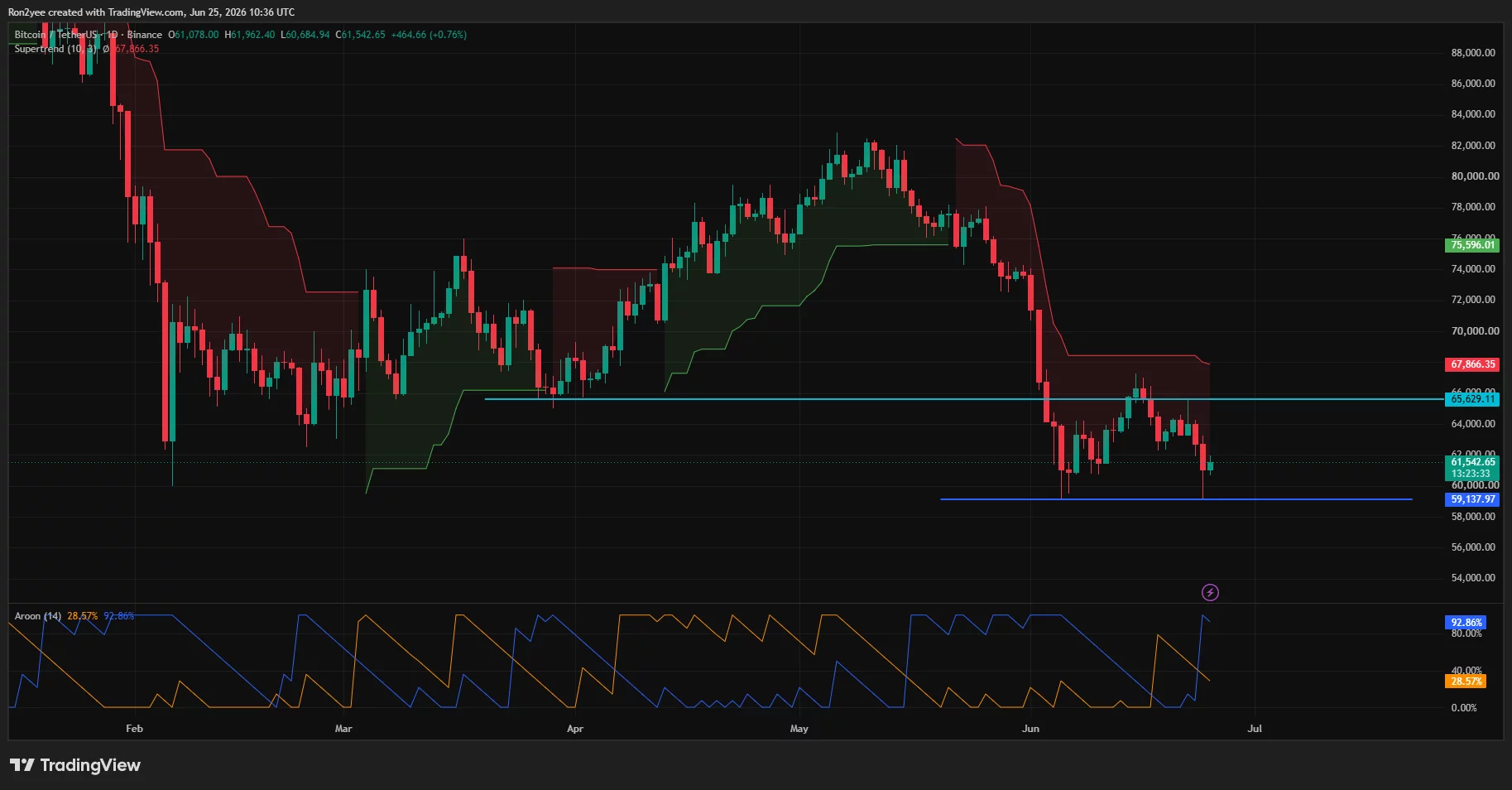
The daily chart presents a similar picture. Bitcoin continues to trade below the daily Supertrend indicator near $67,866, preserving the broader bearish structure. Meanwhile, the Aroon indicator shows Aroon Down above 90 and Aroon Up below 30, suggesting sellers continue to dominate the prevailing trend.
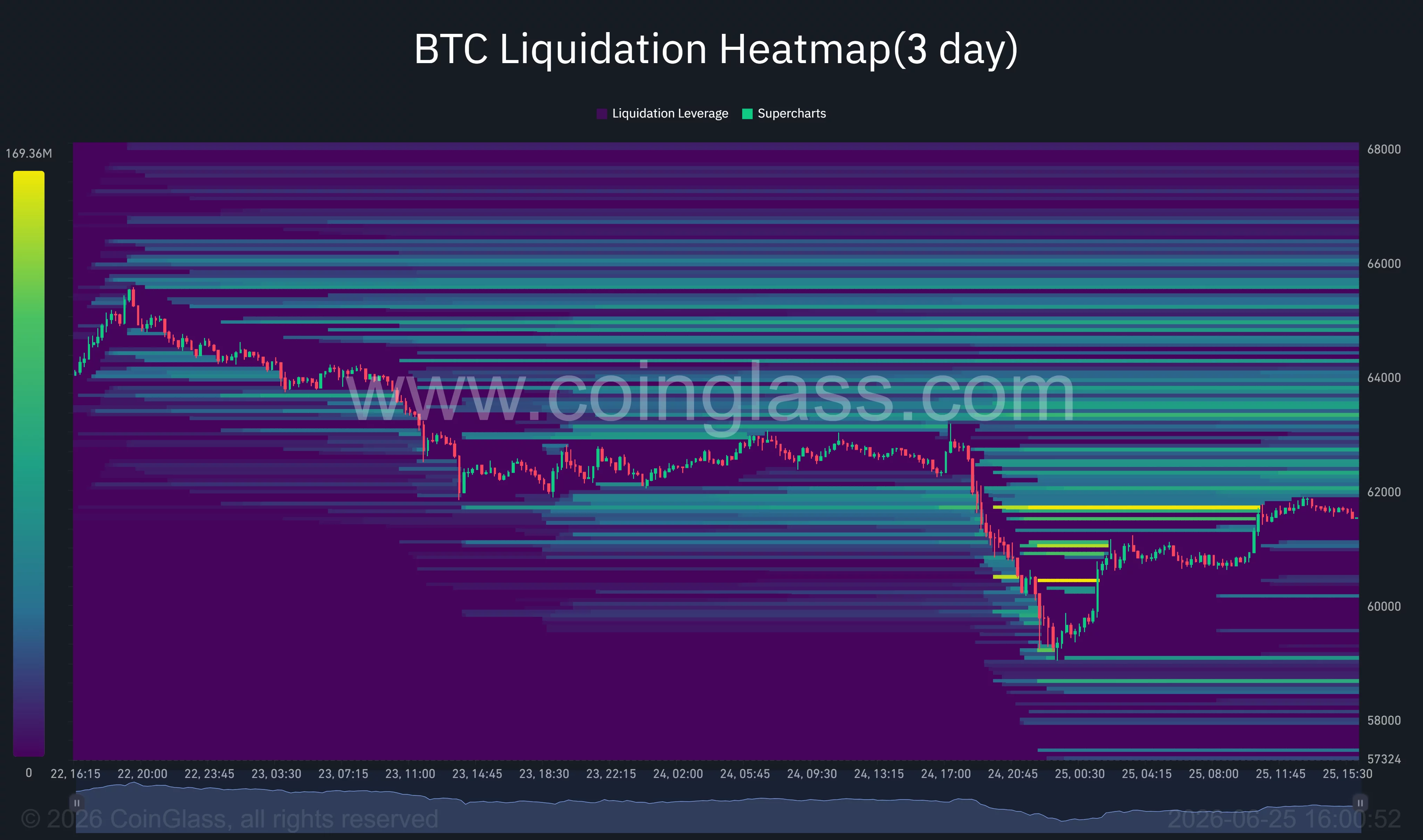
Derivatives positioning also supports a cautious outlook. CoinGlass liquidation heatmaps show dense short liquidation clusters between $62,000 and $62,800, with another larger concentration around $63,000-$64,000. Those levels could become upside magnets if buyers regain control, but they may also attract fresh short positions.
Commenting on Bitcoin’s current move, analyst Ted Pillows wrote:
According to fellow analyst Lennaert Snyder, funding rates have already turned negative across most exchanges, confirming that short sellers currently dominate positioning. He added that the $62,000-$62,800 region contains a major liquidation cluster and remains the first area where bears may attempt to re-enter the market.
Loss of $59K support could trigger another liquidation cascade
The current rebound remains vulnerable unless Bitcoin can reclaim the $62,800-$65,000 resistance zone with rising spot demand and stronger ETF inflows. A failure at current levels would leave the market exposed to another test of the recent low near $59,175.
A decisive break below that support would invalidate the relief-bounce scenario and could trigger another round of leveraged liquidations. Persistent ETF outflows, a stronger U.S. dollar, delayed Federal Reserve rate cuts, or additional Bitcoin sales tied to Mt. Gox distributions and government wallets would likely add further pressure on prices before a more durable recovery can begin.
Disclosure: This article does not represent investment advice. The content and materials featured on this page are for educational purposes only.


You May Also Like

Ripple Price Prediction: Will the CLARITY Act Trigger a Repricing Event for XRP?

Popular Mediterranean restaurant files for Chapter 11 bankruptcy

New Chinese AI GLM-5.2 Beats Every ChatGPT Model, Trails Only Anthropic's Claude Fable



