From models to engineers: AI deployment investment tops $6.5 billion
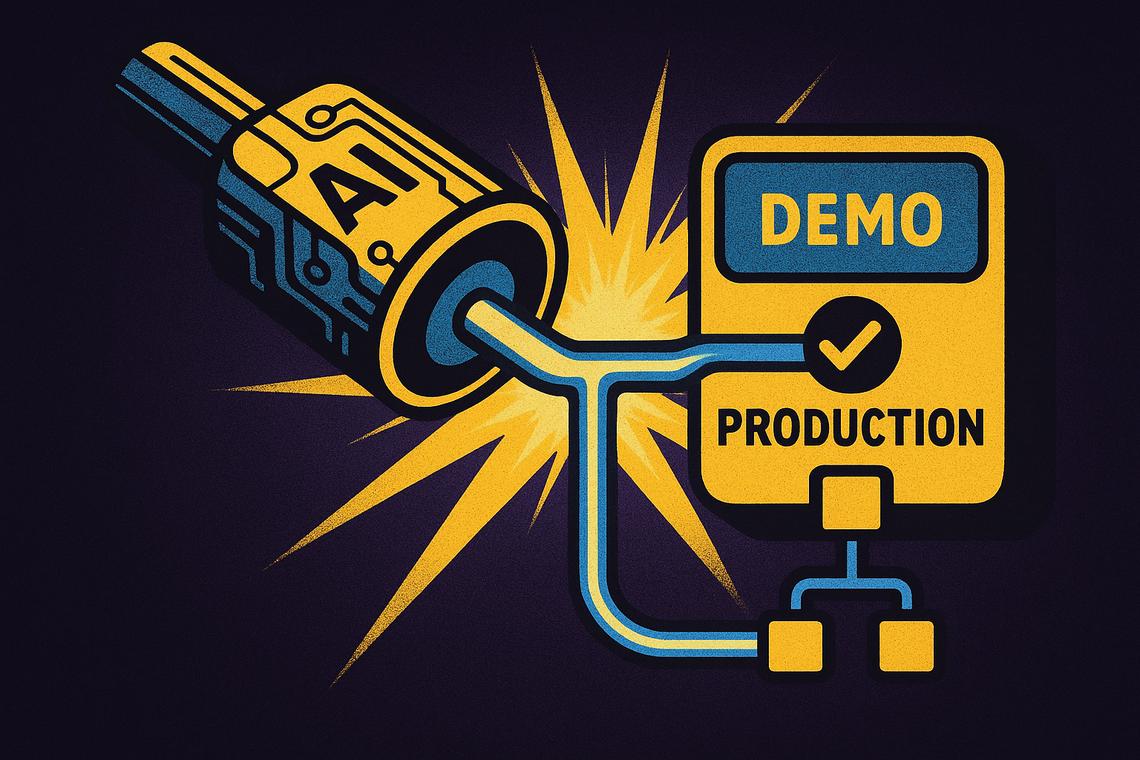
More than $6.5 billion has quietly piled up around a single problem in enterprise AI: getting the technology to actually work inside real companies. Amazon Web Services just added its share to that total — and the way it structured its bet says a lot about where the competitive pressure in AI is really coming from.
Key takeaways
- AWS is investing $1 billion entirely from its own balance sheet — no external investors — to build a Forward Deployed Engineers unit announced on June 30, 2026.
- FDEs physically embed inside client companies to bridge the gap between AI prototype and working production system.
- OpenAI valued its equivalent joint venture at $4 billion; Anthropic’s consortium raised roughly $1.5 billion — both with private equity backing.
- Microsoft entered the race on July 2, 2026, committing $2.5 billion and 6,000 specialists through a new subsidiary called Microsoft Frontier Co.
- The collective shift signals that AI competition has moved decisively from model capability to enterprise deployment.
AWS Launches Its $1 Billion Forward Deployed Engineers Unit
On June 30, 2026, AWS announced a $1 billion AI deployment investment to build an internal Forward Deployed Engineers organization — a unit of thousands of specialists whose job is to physically embed inside client companies and build AI systems from the ground up, in production, not in a lab. The entire sum comes from Amazon’s own balance sheet, with no private equity partners and no co-investors.
That structural choice matters. Where OpenAI and Anthropic turned to external capital to fund analogous efforts, AWS is keeping the whole thing in-house. Full control over client relationships, over the engineering process, and over the data generated during each engagement stays inside the Amazon ecosystem.
FDEs Embedding Inside Client Companies
The core premise of the FDE model is simple, even if the execution isn’t. Engineers don’t sell software and walk away. They move in. They work alongside the client’s own teams, inside the client’s infrastructure, with access to real operational data, until the AI system is actually running in production.
AWS’s version of this deploys engineers in pods of five or six people, each pod supported by autonomous AI agents that can handle tasks independently — compressing timelines and letting human engineers focus on higher-order integration problems. The model acknowledges something the industry has been reluctant to say plainly: the gap between a working AI demo and a deployed AI system is enormous, and most companies can’t close it alone.
Leadership and Organizational Structure
Francesca Vasquez, vice president of AWS for frontier AI engineering and services, is leading the new unit. She described it as the first time AWS has brought its various engineering capabilities together inside a single business unit with a shared deployment methodology — a consolidation of resources that had previously operated in silos.
That internal reorganization may be as significant as the dollar figure. AWS had the talent. What it lacked was a unified structure for deploying that talent systematically at enterprise scale.
Competitive Landscape of AI Deployment Initiatives
AWS is not moving into a vacuum. By the time it made its announcement, two of the most prominent AI labs in the world had already staked out similar territory — using very different financial structures.
OpenAI and Anthropic’s External Funding Models
OpenAI structured its deployment effort as a joint venture valued at $4 billion, bringing in private equity firms TPG, Advent International, Bain Capital, and Brookfield as partners. Anthropic moved in May with its own consortium — backed by Blackstone, Hellman & Friedman, and Goldman Sachs — for a combined total of roughly $1.5 billion.
Both approaches spread financial exposure across institutional partners. AWS chose the opposite: concentrated ownership, concentrated risk, concentrated upside. The logic is that whoever controls the engineering relationship with the client controls the long-term account — and that’s not an asset AWS wants to share.
Microsoft’s $2.5 Billion AI Deployment Commitment
Two days after AWS’s announcement, on July 2, 2026, Microsoft entered with the largest single commitment in the wave. The company announced Microsoft Frontier Co., a new subsidiary backed by $2.5 billion and staffed with 6,000 employees drawn from existing FDE teams, technical consultants, industry specialists, and salespeople. Rodrigo Kede Lima, who had been leading Microsoft’s Asia business, will serve as its president.
Microsoft’s Commercial Business CEO Judson Althoff deliberately distanced the effort from the FDE label, calling it “the largest, most capable, outcome-driven engineering organization in the industry” — though the structure is functionally similar to what AWS, OpenAI, and Anthropic are building. The company cited early partnerships with the London Stock Exchange Group, Unilever, Land O’Lakes, and Accenture.
Microsoft’s position is complicated by its own recent performance. Its stock has dropped 21% in 2026, the worst showing among large-cap tech peers, and products like Microsoft 365 Copilot have yet to achieve meaningful enterprise penetration. The Frontier Co. bet is partly a pivot — a recognition that selling AI tools isn’t enough if clients can’t operationalize them.
Why the Shift From Training to Deployment Changes Everything
The FDE model isn’t new. Palantir pioneered it more than a decade ago, embedding engineers inside government agencies and large corporations to build bespoke data systems — charging for outcomes rather than licenses. Judson Althoff credits Palantir explicitly with popularizing the job title. What’s new in 2026 is who is adopting it and at what scale.
The collective AI deployment investment now exceeds $6.5 billion across OpenAI, Anthropic, AWS, and Microsoft — and none of that money is going toward building better models. It’s going toward making existing models work inside actual businesses. That tells you something important about where the bottleneck is. Companies have AI access. They have budgets. What they lack is the deep engineering capacity to take a proof-of-concept and turn it into something that runs reliably in a production environment, integrated with legacy systems and real data.
Whoever solves that problem for a client tends to become embedded — operationally, contractually, and informationally. That’s the strategic prize the major players are competing for. An FDE team that spends months inside a company’s infrastructure builds a kind of institutional knowledge that’s extremely hard for a competitor to displace, regardless of model performance.
Financial Market Developments Linked to AI Deployment
The AI deployment race is also generating pressure in financial markets. STARTRADER, a Dubai-based multi-asset broker, launched two pre-IPO CFD products on June 29, 2026 — OPENAIUSD and ANTHUSD — allowing retail traders to take positions on OpenAI and Anthropic ahead of any public listing, with leverage of up to 5x and 24/7 tradability.
These are synthetic instruments: pricing reflects broker estimates rather than any official valuation, and the leverage amplifies both gains and losses. The fact that a retail broker is packaging speculative exposure to these two companies as a tradable product underscores how much investor attention the AI deployment story is attracting beyond institutional capital.
FAQ
What is the purpose of AWS’s Forward Deployed Engineers unit?
The FDE unit consists of specialists embedded inside client companies to build and operationalize AI systems, bridging the gap from prototype to production. Teams are deployed in pods of five or six engineers, supported by autonomous AI agents that accelerate the deployment cycle.
How does AWS’s FDE investment differ from OpenAI and Anthropic’s initiatives?
AWS’s $1 billion investment is funded entirely from its own balance sheet without external investors. OpenAI structured its equivalent as a joint venture valued at $4 billion with private equity partners, while Anthropic’s consortium raised roughly $1.5 billion with backing from Blackstone, Hellman & Friedman, and Goldman Sachs.
What role do autonomous AI agents play in AWS’s FDE teams?
FDE teams operate in pods supported by autonomous AI agents that perform tasks independently, allowing human engineers to focus on higher-order integration challenges and compressing the overall deployment timeline.
Why is there a shift in AI investment focus from model training to enterprise deployment?
Companies already have access to capable AI models and the budgets to use them, but lack the deep engineering expertise to bring projects into production reliably. The gap between prototype and working system proved wider than many executives anticipated, creating strong demand for embedded engineering teams that can operationalize AI within existing business infrastructure.
Article produced with the assistance of artificial intelligence and reviewed by the editorial team.


You May Also Like

The spectacular implosion of Trump's big bash shows America is finished with this clown

Aave Price Prediction: AAVE Dips After DeFi Wallet Surge While Pepeto's 150x Presale Window Draws Thousands Before Expected Listing