Blockchain On-Chain Metrics: Ethereum, Bitcoin, Solana, BSC, Tron & Base Q2 Report (April – June 2026)
- Ethereum remained the largest DeFi ecosystem despite TVL declining from $53.99B to $37.21B, while retaining the strongest derivatives activity.
- Solana led decentralized trading volumes, with DEX activity peaking above $3.7B and perpetual trading approaching $5.9B during the quarter.
- BNB Chain maintained stable liquidity near $5B, demonstrating resilience despite softer market conditions and reduced derivatives activity.
- TRON recorded one of the most stable TVL trends among major blockchains, supported by consistent DeFi liquidity and strong stablecoin-driven network activity.
- Bitcoin’s DeFi ecosystem contracted during the quarter, while Base continued expanding its Layer-2 presence with TVL holding above $4B for most of Q2.
- Overall, Q2 2026 saw broad declines in TVL and token valuations, but sustained DEX and perpetual trading activity highlighted continued resilience across leading blockchain ecosystems.
Ethereum
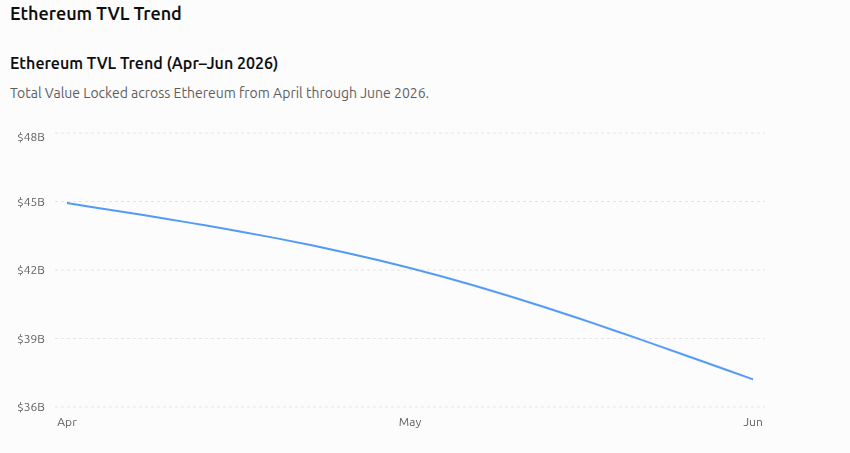 ETH TVL – Q2 2026
Ethereum retained its position as the largest decentralized finance (DeFi) ecosystem throughout the second quarter, although liquidity steadily declined amid broader market weakness. Total value locked (TVL) fell from $53.99 billion in early April to $37.21 billion by the end of June, reflecting a gradual reduction in on-chain capital.
Despite lower liquidity, decentralized exchange (DEX) activity remained resilient, with daily trading volume peaking at $3.50 billion on April 19 before easing below $1 billion toward the end of June. Perpetual futures trading also remained consistently strong, generally ranging between $1.3 billion and $1.9 billion per day throughout the quarter.
Ethereum’s token market capitalization climbed above $292 billion in mid-April before retreating to approximately $194 billion by the end of June as crypto markets corrected. Although liquidity weakened during the second half of the quarter, Ethereum continued to dominate DeFi liquidity and derivatives activity, reinforcing its role as the primary settlement layer for decentralized finance.
Solana
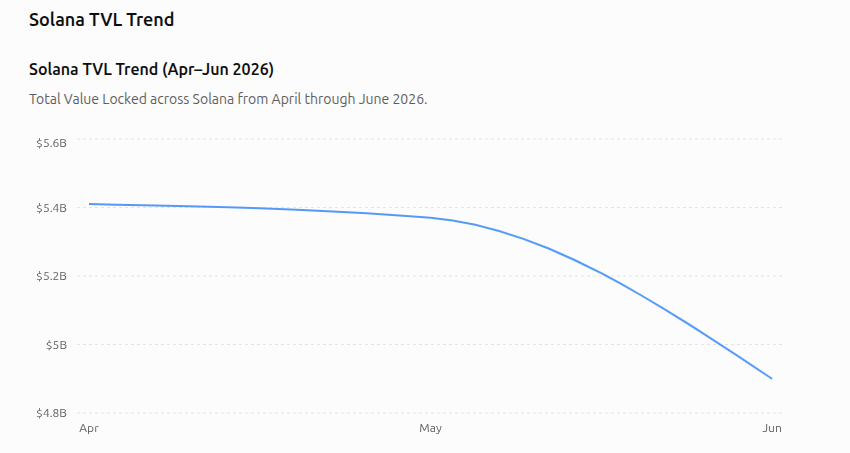 SOL TVL – Q2 2026
Solana remained the leading blockchain for decentralized trading activity during the second quarter, consistently posting some of the highest DEX volumes across major networks. While TVL declined from $6.34 billion in early April to $4.90 billion by the end of June, user activity remained robust despite softer market conditions.
DEX volume surged above $3.70 billion on June 4, highlighting strong trader participation during periods of elevated volatility. Perpetual futures trading also accelerated sharply during May, reaching nearly $5.90 billion in daily volume as speculative activity increased.
Although Solana’s market capitalization retreated from April highs before stabilizing around $43.55 billion at the end of June, the network continued attracting significant on-chain trading activity. The quarter reinforced Solana’s position as one of the industry’s most active ecosystems for decentralized trading.
BNB Chain
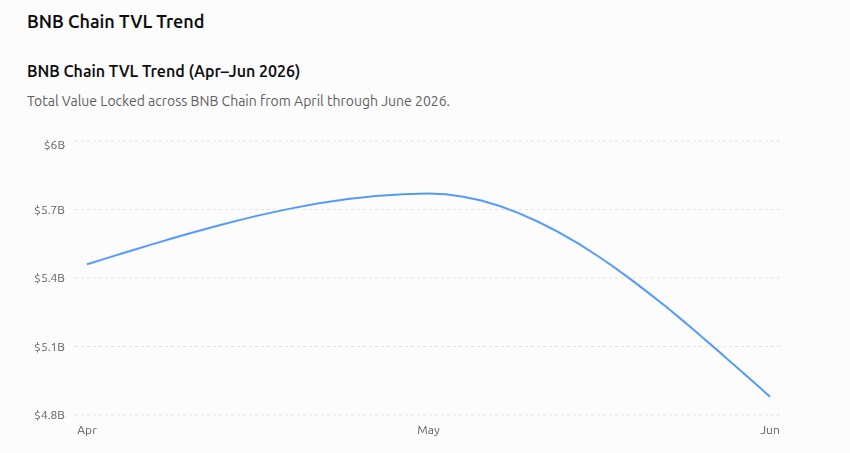 BNB Chain – Q2 2026
BNB Chain delivered comparatively stable performance throughout the second quarter, avoiding the sharp liquidity swings experienced across several competing blockchain ecosystems. TVL gradually eased from $5.41 billion to $4.88 billion as broader market sentiment weakened.
DEX trading activity remained relatively consistent, generally fluctuating between $500 million and $1.30 billion per day, with a brief surge above $1.50 billion during early June. Meanwhile, perpetual futures trading remained modest, particularly throughout May and June, when daily volumes frequently stayed below $35 million.
Despite softer speculative activity, BNB Chain maintained stable liquidity and steady user participation. Its resilience throughout the quarter enabled the network to preserve its position among the largest DeFi ecosystems by total value locked.
TRON
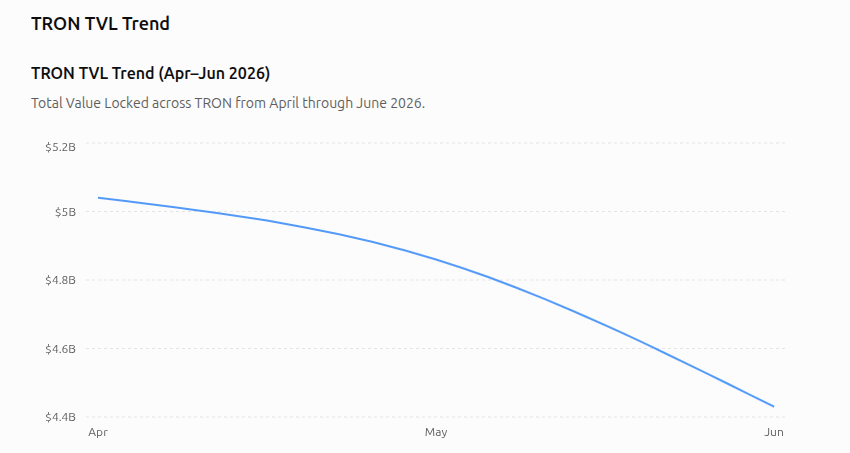 TRON TVL – Q2 2026
TRON remained one of the quarter’s most resilient blockchain ecosystems, with TVL fluctuating within a relatively narrow range of $4.3 billion to $5.2 billion. Compared with several competing networks, liquidity declined only gradually despite broader weakness across digital asset markets.
DEX trading volumes remained relatively modest, generally ranging between $30 million and $100 million per day. Perpetual trading activity also remained moderate, recording occasional spikes above $200 million during periods of heightened market volatility.
Supported by its strong stablecoin settlement and payment infrastructure, TRON continued to maintain steady DeFi activity throughout April, May, and June. The network finished the quarter with one of the most stable TVL profiles among major blockchain ecosystems.
Bitcoin
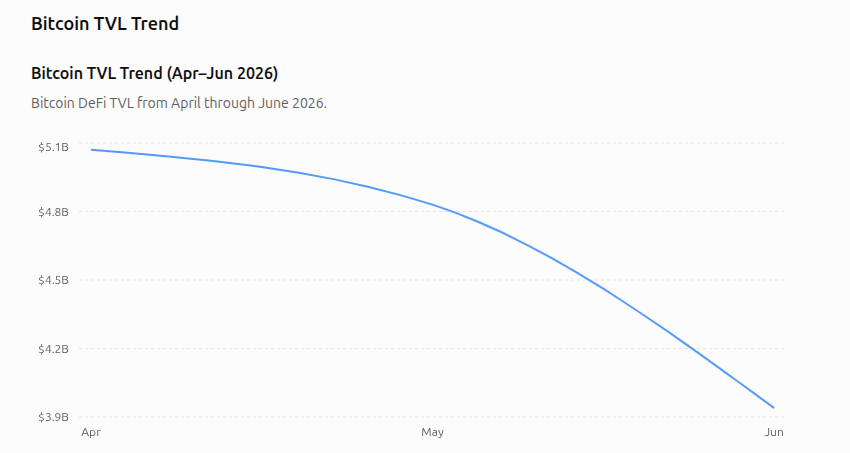 Bitcoin TVL – Q2 2026
Bitcoin‘s decentralized finance ecosystem contracted during the second quarter as total value locked declined from $4.62 billion at the beginning of April to $3.94 billion by the end of June. Liquidity expanded steadily through mid-April before reversing alongside the broader crypto market correction.
The largest decline occurred during early June as market-wide risk appetite weakened significantly. Even so, Bitcoin maintained a meaningful DeFi presence relative to previous years, supported by continued adoption of Bitcoin-native decentralized finance protocols.
TVL stabilized near the $4 billion mark during the second half of June, suggesting that the pace of capital outflows moderated after the initial market correction. Overall, Bitcoin’s DeFi ecosystem demonstrated resilience despite sustained pressure on digital asset markets.
Base
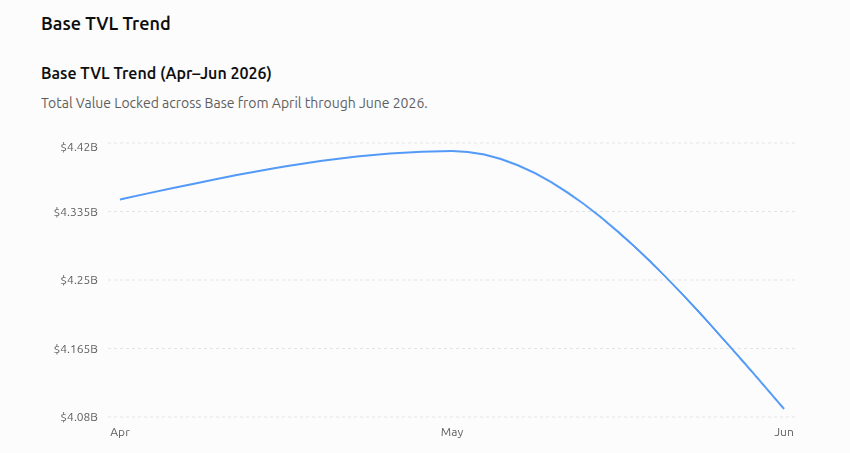 Base TVL – Q2 2026
Base continued expanding its Layer-2 ecosystem throughout the second quarter despite broader market weakness. TVL remained above $4 billion for most of the period before ending June at $4.09 billion, reflecting relatively stable liquidity compared with many competing scaling networks.
DEX trading activity remained healthy throughout the quarter, with daily volume repeatedly exceeding $1 billion during periods of heightened market participation. Perpetual trading also maintained steady activity, although volumes remained well below those recorded on Ethereum and Solana.
Following a TVL peak above $5 billion during May, Base experienced a moderate correction alongside the broader market. Nevertheless, the network continued strengthening its position as one of Ethereum’s leading Layer-2 ecosystems, supported by sustained user activity and consistent decentralized trading volumes.
Overall Conclusion
The second quarter of 2026 was defined by a broad market correction that reduced liquidity and token valuations across nearly every major blockchain ecosystem. Ethereum maintained its leadership in decentralized finance despite recording the largest absolute decline in TVL, while Solana continued leading the industry in decentralized trading activity.
BNB Chain and TRON demonstrated comparatively stronger stability, preserving consistent liquidity despite weaker market conditions. Bitcoin’s DeFi ecosystem contracted during the quarter but stabilized toward the end of June, while Base continued strengthening its position within the Layer-2 sector despite lower market participation.
Although total value locked declined across most major networks, decentralized exchanges and perpetual futures markets remained active throughout the quarter. The data suggests that while investors adopted a more cautious approach to capital allocation, overall on-chain participation remained resilient, underscoring the continued maturity of the decentralized finance ecosystem.
- Ethereum remained the largest DeFi ecosystem in Q2, but TVL declined further from $52.49B at the end of Q1 to $37.21B, reflecting continued capital outflows despite resilient derivatives activity.
- Solana retained its leadership in decentralized trading, although TVL fell from $6.16B to $4.90B. DEX activity remained exceptionally strong, with daily volume peaking above $3.7B during Q2.
- BNB Chain experienced a moderate decline in TVL from $5.35B to $4.88B, while maintaining relatively stable DEX activity and consistent ecosystem liquidity throughout the quarter.
- Bitcoin’s DeFi ecosystem continued its Q1 correction, with TVL falling from $4.54B to $3.94B, although liquidity stabilized toward the end of June after the early-quarter decline.
- TRON remained one of the most resilient blockchain ecosystems, preserving TVL above $4.4B while continuing to benefit from its dominant stablecoin infrastructure and steady network activity.
- Base maintained healthy Layer-2 growth despite broader market weakness, ending Q2 with $4.09B in TVL, slightly above its Q1 closing level of $3.97B, supported by consistent DEX trading activity.
The second quarter of 2026 extended the correction that began in late Q1, with most major blockchain ecosystems recording lower total value locked and weaker token valuations. Ethereum and Solana remained the industry’s leading DeFi and trading networks despite continued liquidity outflows, while BNB Chain and TRON demonstrated greater resilience by maintaining relatively stable liquidity.
Bitcoin’s DeFi ecosystem stabilized after its sharp Q1 decline, and Base strengthened its Layer-2 position by ending the quarter with slightly higher TVL than at the close of Q1. Overall, Q2 reflected a shift from rapid growth to capital preservation, although sustained decentralized exchange and derivatives activity highlighted continued user engagement across leading blockchain ecosystems.


Ayrıca Şunları da Beğenebilirsiniz

Why Is ETH Still Weak While Ethereum Staking Hits Record Highs?
Binance Surpasses $1B in Stock Trading AUM within 30 Days