9 Best Free Virtual Credit Cards in 2026
Free virtual credit cards are digital card numbers you use online instead of sharing your real one. They’re great for:
- Safer shopping
- Cleaner subscription payments
- Tighter budgeting
- A better way to handle business spending
But it can be hard to sort out which free options are worth it, and which ones hide fees, weak limits, or awkward setup rules?
So in this guide, I’ll share the 9 best free virtual credit cards, plus what you should check before you sign up. I’ll also go over how to pick the best card for you, depending on your needs and preferences.
Let’s get started!
What a free virtual credit card actually is
A free virtual card is a temporary or separate card number that you use online instead of your real one. It still works for payments, but it puts a layer between merchants and your main account, which is why so many people use them for subscriptions, one-off purchases, and trial signups.
You get more control without changing how checkout works. If the card gets exposed, you can close it, limit it, or replace it without touching your everyday card.
How virtual card numbers protect your main account
When you use a virtual card, the merchant sees the virtual number, not your actual card number. That’s useful because card data leaks happen, and online merchants can get hit with breaches.
A virtual number gives you a buffer, so your real account details stay out of the line of fire.
That buffer helps in a few practical ways:
- Fraud exposure stays smaller: If a virtual number is stolen, the damage is usually contained
- Breach fallout is easier to handle: You can shut down the number instead of replacing your main card everywhere
- Spending control gets tighter: Many virtual cards let you set a limit or make the card single-use
- Cancellation is fast: If a subscription gets messy, you can cut off the card without a long customer service battle
How to choose the best free virtual credit card in 2026
Go with the one that fits how you actually spend, where you live, and how much control you want over each card number.
First, match it to your own habits. A freelancer who pays for software subscriptions needs different controls than a parent shopping on a few retail sites, or a business owner handing out cards to a team.
Before you sign up, run through these questions in order:
- Can you qualify based on your country and account type?
- Is it for personal use, business use, or both?
- Does the provider support the way you want to fund it?
- Are the limits high enough for your normal purchases?
- Do the controls fit your habits, like subscriptions or one-time buys?
- Is the mobile app easy to use when you need to freeze a card fast?
- Are there any fees hiding behind the word "free"?
That last point is probably the most important one. A card that looks free at signup can turn expensive once you add monthly fees, foreign transaction charges, or paid upgrades.
The 9 best free virtual cards in 2026
| Card | Best for |
| 1. Revolut | Everyday spending and travel, especially disposable card numbers |
| 2. Privacy.com | Locking down subscriptions and one-off purchases (US users) |
| 3. N26 | Managing cards from a clean mobile banking app (EU) |
| 4. Wise | International and multi-currency spending for freelancers and travelers |
| 5. Payoneer | Getting paid across borders and spending that balance directly |
| 6. Coinbase Card | Spending crypto you already hold on Coinbase, especially stablecoins |
| 7. Ramp | Business teams wanting vendor and employee cards with budget control |
| 8. Brex | Funded startups and larger teams issuing cards at high volume |
| 9. BILL Spend & Expense | Budget-controlled cards inside the BILL ecosystem |
1. Revolut
Best for: everyday spending and travel, especially if you want disposable card numbers
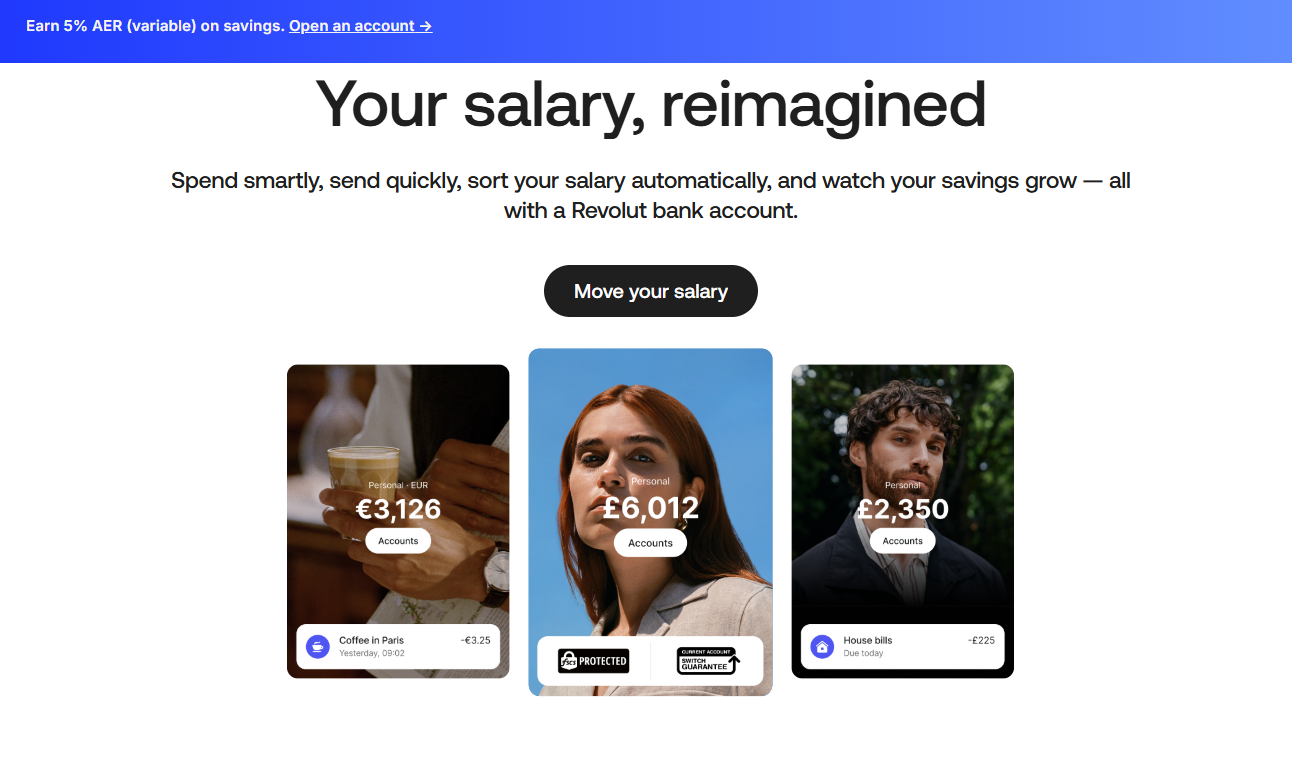
Revolut is a strong pick if you want virtual credit cards for travel, plus day-to-day spending. It's one of the more flexible options for online purchases, and in many markets it also offers disposable virtual cards. These generate a fresh number after each checkout.
That disposable feature is great. It gives you a little extra privacy for merchants you don't plan to use again, while the standard virtual card handles recurring bills and regular shopping.
For travelers, Revolut is especially useful when you're moving between currencies and don't want your bank's markup on every purchase.
Just remember that some features depend on your plan and country. The free plan covers one standard virtual card and the basics. Unlimited cards and the better controls come with paid tiers, so it's worth confirming what's available where you live.
Pros:
- Disposable virtual cards in many markets, a fresh number for one-off checkouts
- Strong multi-currency and travel handling for spending abroad
- Free plan covers the basics, with unlimited virtual cards on paid tiers
- Available across the EU, UK, US, Australia, and Japan
Cons:
- The free plan gives you one standard virtual card, real volume needs a paid plan
- Fees and limits vary by plan and country, so check your local terms
- The better card tools sit behind Premium or Metal
Go to Revolut
2. Privacy.com
Best for: locking down subscriptions and one-off purchases, for US users
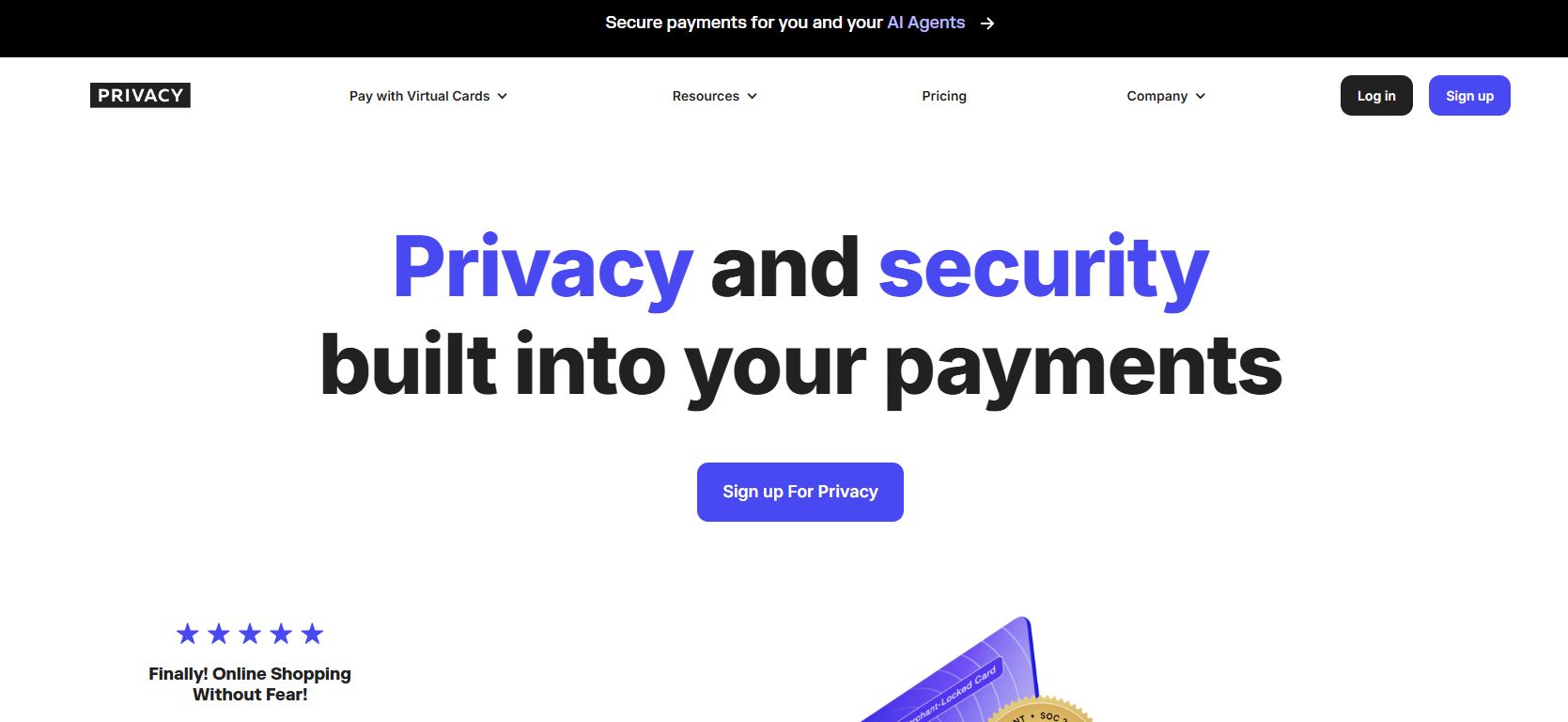
Privacy.com is one of the best free picks for personal use, especially if you want tight control over subscriptions and trials. The free plan lets you create up to 12 new virtual cards a month.
You can:
- Set spending limits
- Close cards in a tap
- Use a separate number for each merchant so one bad subscription never spills into the rest
The main limits are reach and funding. Privacy.com is US-only and works with a linked US bank account or debit card rather than credit. The free tier is generous for personal spending. Heavier use and extra features move you to a paid plan.
Pros:
- The strongest free pick for subscriptions: up to 12 new cards a month on the free plan
- Merchant-locked and single-use cards, with spending limits you actually control
- Pause or close any card instantly, great for killing trials and runaway subscriptions
Cons:
- US only, you need a US bank account to use it
- Funds from a bank account or debit card, not credit
- Higher card volume and extra features sit behind paid tiers
Go to Privacy.com
3. N26
Best for: managing card spending from a clean mobile banking app, if you're in the EU
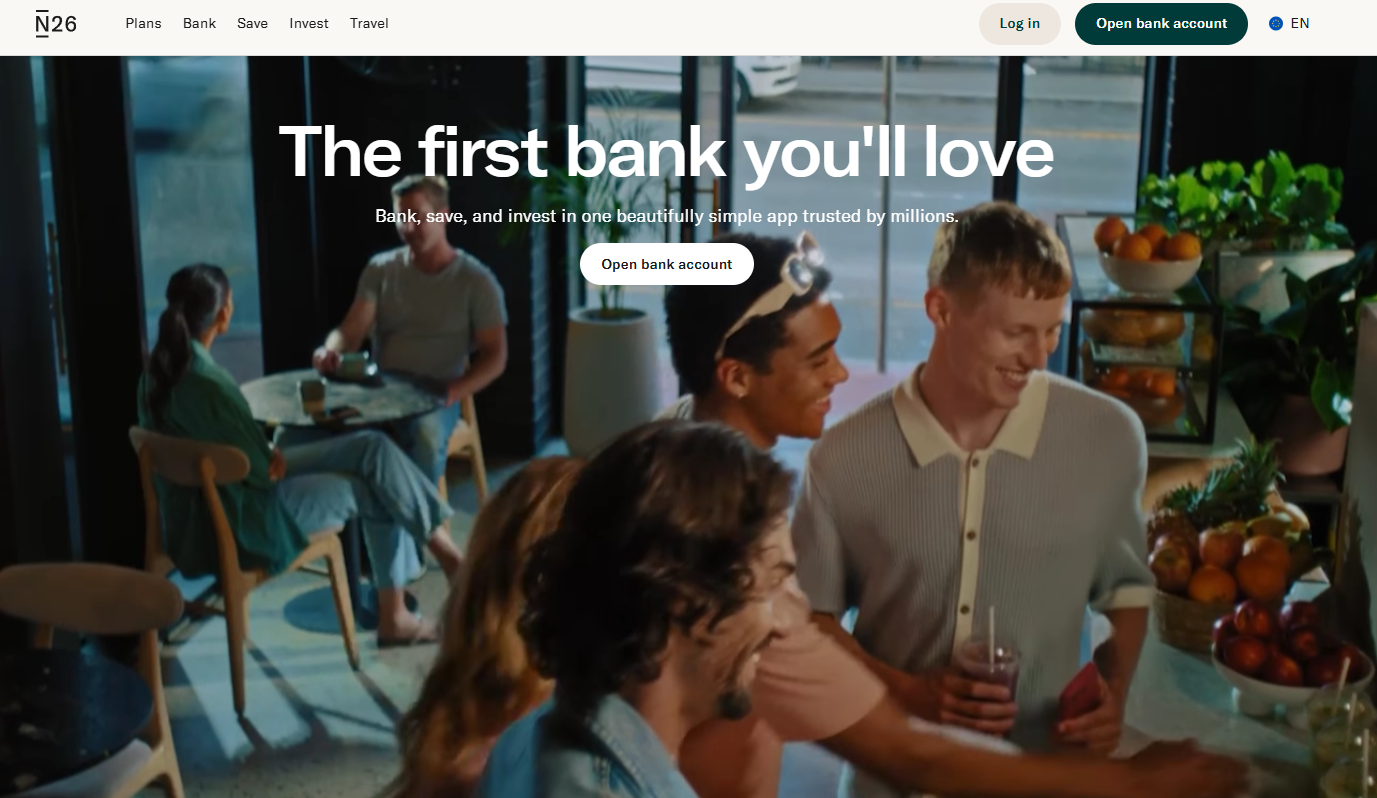
N26 works well if you want digital banking with simple card control built in. The virtual card setup suits people who like to run everything from their phone without a lot of account clutter.
The main thing is the app itself. You can handle card settings, locking, and spending visibility in one place, which helps if you want online purchases kept separate from your main account.
As soon as your free Standard account opens, the virtual card is ready, so there's no waiting on plastic to start spending.
The limits are worth knowing up front. The free Standard plan includes a single virtual card. More cards come with the paid tiers. N26 is also a European bank, available across the EU and EEA, but not in the US.
Pros:
- Virtual card is live the moment your free account opens, no waiting on a physical card
- Clean app controls: lock, set limits, and watch spending in one place
- The Standard account is genuinely free, with no opening or maintenance fee
Cons:
- The free plan includes just one virtual card; extra cards need a paid tier
- EU and EEA only, it's not available in the US
- These are account-linked debit cards, not single-use burner numbers
Go to N26
4. Wise
Best for: international and multi-currency spending, especially freelancers and travelers
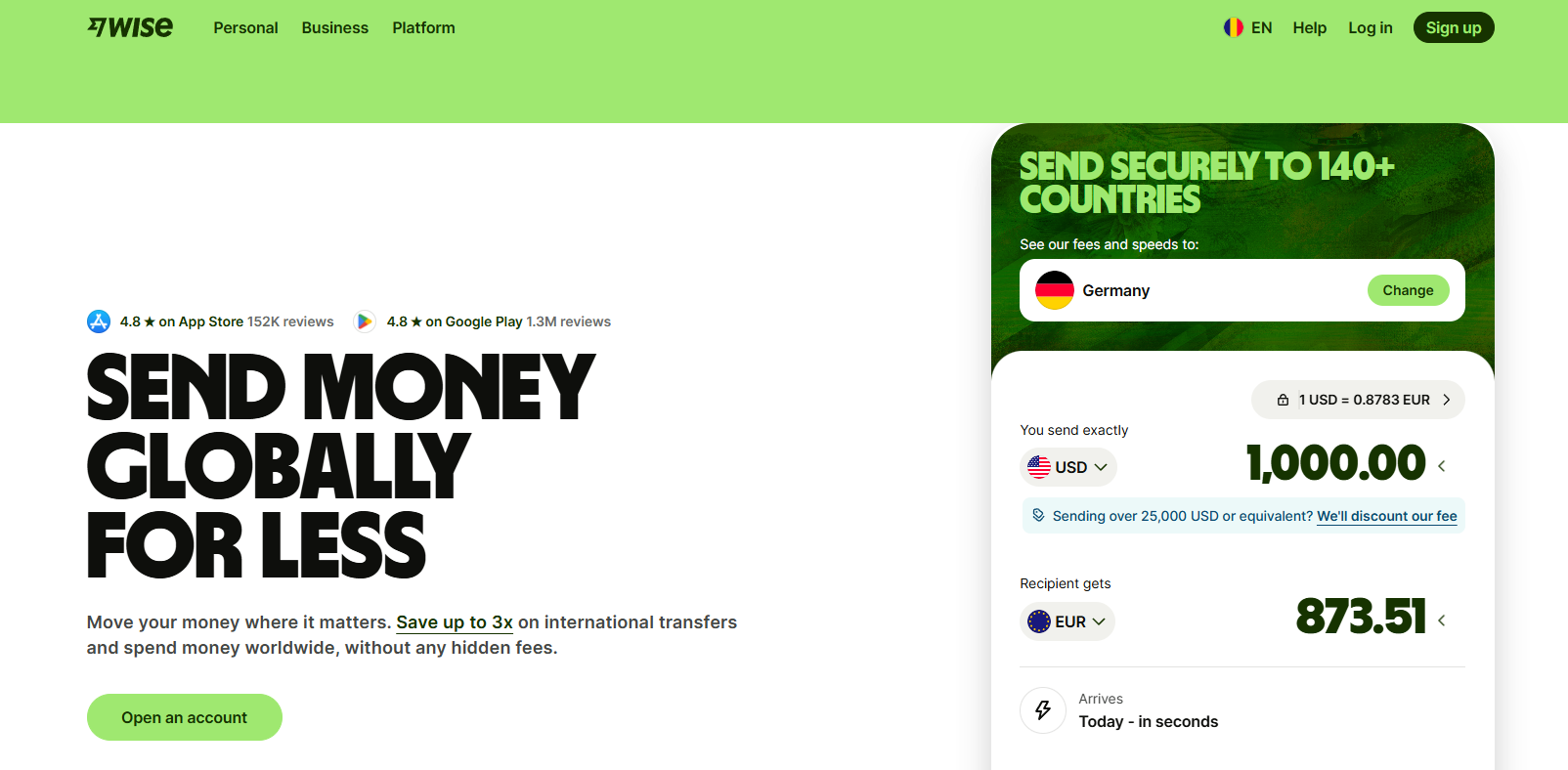
Wise is one of the strongest choices for cross-border spending. If you shop across borders, get paid in different currencies, or travel often, the virtual card makes online payments smooth.
Wise handles currency conversion at the mid-market rate very cleanly. It’s great for:
- Freelancers billing clients abroad
- Travelers booking flights and hotels
- Anyone buying from foreign merchants
There's no monthly fee, and you can freeze the card after each purchase (and get a new one) for an extra layer of security.
Be aware that Wise is a debit card, not credit, so there's no credit line or credit-card-style purchase protection. You usually order the physical card first, a one-time fee of around $9 in the US, before you get the virtual Visa card for free.
Conversion and ATM fees apply once you go past the free monthly allowances ($250 / €250 / £250), though they stay fairly low compared with most bank cards (roughly 2-3%)
Pros:
- Excellent multi-currency spending at the mid-market rate, great for freelancers and travelers
- The virtual "digital" card is free to create once your account is set up, and you can make as many as you like
- No monthly or annual fee, freeze it after each purchase, works with Apple and Google Pay
Cons:
- It's a prepaid debit card, not credit, so no credit line or credit-card purchase protection
- You generally order the physical card first (with a one-time fee) before the virtual one
- Conversion and ATM fees kick in once you pass the free thresholds
Go to Wise
5. Payoneer
Best for: getting paid across borders and spending that balance directly
Payoneer is great if you already get paid across borders and want to spend that money without funneling it through a bank first. If you collect income from marketplaces, platforms, or international clients, the virtual card lets you spend straight from your Payoneer balance.
That makes it great for
- Freelancers
- Online sellers
- Anyone running ad campaigns on Google, Meta, or TikTok
The setup is light. Once you've received a small amount into your account (around $100 in the last six months, depending on your country), you can order a virtual card. You can spin up a stack of them, up to 50 without any approval, to separate clients, campaigns, or subscriptions.
Same-currency purchases in USD, EUR, GBP, and CAD don't carry a per-transaction fee in supported regions, and funds move from your balance to the card automatically.
There’s a caveat. Payoneer charges a $29.95 annual fee, but only if you receive less than $6,000 in a 12-month window, and it's waived once you cross that. So for an active earner it's effectively free.
It's also business and freelancer focused rather than a casual personal card. But it’s a great credit card for young adults who work fully online.
Pros:
- Spend your earnings directly, with no need to fund from a separate bank account or top-up
- Up to 50 virtual cards with no approval, handy for separating clients, campaigns, or subscriptions
- No per-transaction fee on same-currency USD, EUR, GBP, and CAD purchases in supported regions
- Strong fit for freelancers, marketplace sellers, and ad spend on Google, Meta, and TikTok
Cons:
- A $29.95 annual fee applies if you receive under $6,000 a year, though it's waived above that
- Business and freelancer focused, not aimed at casual personal use
- Not available to residents of Russia, India, or OFAC-sanctioned countries, and FX and ATM fees apply otherwise
Go to Payoneer
6. Coinbase Card
Best for: spending crypto you already hold on Coinbase, especially stablecoins
The Coinbase Card is perfect if you already use Coinbase and want a card tied to that balance. It suits you if you’re comfortable holding funds in crypto and want a simple way to spend them online or in stores.
You get a crypto credit card right after approval, with no annual or issuance fee. US cardholders can earn rotating crypto rewards of up to 4%. You can pay with USD, USDC, or another supported coin, and Coinbase converts crypto to dollars at the moment of purchase.
If you spend a volatile coin rather than a stablecoin, the conversion carries a spread and, for US users, counts as a taxable event every time you swipe. Rewards are US-only and the rate rotates rather than staying fixed. It's a great spending path if your money already lives on Coinbase, and less impressive as a general-purpose free card.
Pros:
- Instant virtual card tied straight to your Coinbase balance
- No annual or issuance fee, and US users can earn rotating crypto rewards up to 4%
- Spend USD, USDC, or other crypto, with Apple and Google Pay in supported regions
Cons:
- Spending volatile crypto triggers a conversion spread and, for US users, a taxable event on every swipe
- Rewards are US-only and the rate rotates, so it's not a fixed cashback number
- Only worth it if you already keep funds on Coinbase; limits and wallet support vary by region
Go To Coinbase
7. Ramp
Best for: business teams that want vendor and employee cards with budget control
Ramp is a smart free option for business teams that need virtual cards for vendors, projects, or employees. It's great for finance teams that want control without turning every purchase into a paperwork chase.
The biggest draw is budget control. You can issue cards with limits and assign them to specific people or vendors. And Ramp doesn't charge per-card fees, which matters when you're handing out a lot of them.
It also saves time on the back end, with cleaner records and automatic receipt matching instead of manually policing every expense.
The trade-off is scope. Ramp is for registered US businesses, not personal use, and the more advanced controls sit on a paid tier. If you run a small company or a growing startup, though, it's worth a hard look.
Pros:
- Genuinely free for businesses: unlimited virtual cards, no per-card or monthly fee on the base plan
- Issue cards by employee, vendor, or project with limits baked in
- Cleaner expense tracking and receipt matching, less month-end cleanup
Cons:
- Business use only, you'll need a US-registered company to qualify
- Advanced controls live on the paid Plus tier
- Overkill if you just want a personal card for subscriptions
Go to Ramp
8. Brex
Best for: funded startups and larger teams that issue a high volume of cards
Brex is a strong business choice if you need unlimited virtual cards and expect to issue a lot of them. It works best for companies managing many:
- Vendors
- Departments
- Employees that need spending separated at a granular level
That scale is why I put Brex on this list. You can spin up cards for different teams or use cases without treating each one as an administrative project, there's no annual fee, and approval doesn't rely on a personal guarantee or personal credit check, since limits track your company's cash.
Brex is aimed at funded startups and mid-market firms, typically expecting around $50,000 or more in the bank, and it doesn't accept sole proprietors. The free plan also covers a single country, with multi-currency and advanced features on paid tiers.
One more thing to keep in mind: Capital One completed its acquisition of Brex in April 2026, so the product's longer-term roadmap carries some uncertainty.
Pros:
- Unlimited virtual cards with no annual fee, built for high-volume card sprawl
- No personal guarantee and no personal credit check; limits track your company's cash
- Strong spend controls and automated expense handling across teams
Cons:
- High qualification bar: aimed at funded startups and mid-market firms, typically needs around fifty thousand dollars in the bank, and no sole proprietors
- The free plan is single-country, multi-currency and advanced features need a paid tier
- Now owned by Capital One after the April 2026 deal closed, so the roadmap carries some uncertainty
Go to Brex
9. BILL Spend & Expense
Best for: businesses that want budget-controlled cards inside the BILL ecosystem.
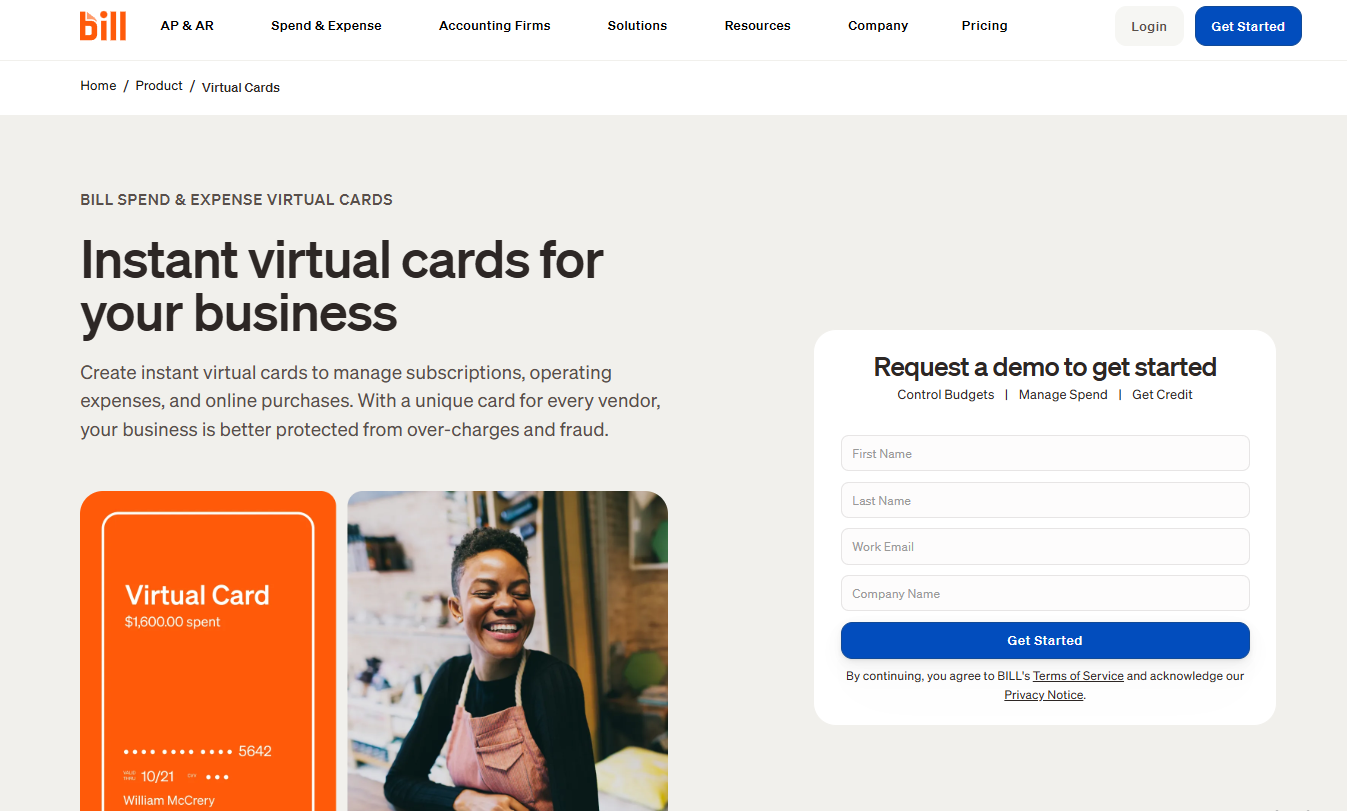
BILL Spend & Expense is a solid free option for businesses that want virtual cards with budget controls and a tighter grip on expenses. It makes the most sense for companies already using BILL, since the card side fits neatly into the same workflow.
Its biggest selling point is cost control. You can issue unlimited physical and virtual cards, set limits, and tie spending to a clear budget, which cuts down on surprise charges and messy reconciliation later.
It syncs well with QuickBooks and NetSuite, so the books stay close to current instead of piling up at month-end.
The fit is specific, though. You need a US-registered business with an EIN and a US business bank account, the card is a charge card so the balance is due in full each cycle, and foreign transaction fees apply. The virtual cards support limits and expiry dates but aren't true single-use cards.
If your business already runs on BILL, it's an easy add-on to a workflow you already know.
Pros:
- Free expense software with unlimited physical and virtual cards
- Strong budget controls and automatic reconciliation, especially with QuickBooks and NetSuite
- Fits naturally if you already run bills or expenses through the BILL ecosystem
Cons:
- US-registered businesses only (LLC or Corp with an EIN and a US business bank account)
- It's a charge card, so the balance is due in full each cycle, and foreign transaction fees apply
- Virtual cards support limits and expiry dates but aren't true single-use cards
Go to BILL Spend & Expense
The bottom line
The best free virtual credit card in 2026 depends on what you need it to do.
Compare country availability, free limits, funding rules, and the controls you actually want, like spending caps, merchant locks, and instant card deletion.
Pick the card that matches your spending habits, not the one with the most advanced features.
Next, feel free to check out our guides on:
- $5000 Limit Credit Cards With Instant Approval
- 6 Best Credit Cards for 600 Credit Score


Ayrıca Şunları da Beğenebilirsiniz

Why The Green Bay Packers Must Take The Cleveland Browns Seriously — As Hard As That Might Be

Crypto Hack: Drift Protocol Drained Over $200M in Private Key Breach