买币
行情
现货
合约BTC
理财
活动中心
福利中心
更多
0 费狂欢节
Billions in digital assets sit idle across fragmented blockchains — disconnected from real yield and productive use. Bitway is built to fix that. In this guide, you'll learn what Bitway is, how itsBillions in digital assets sit idle across fragmented blockchains — disconnected from real yield and productive use. Bitway is built to fix that. In this guide, you'll learn what Bitway is, how its
新手学院/区块链百科/热门概念/What is Bitway (BTW)? How BTW Token Powers the Future of On-chain Finance

What is Bitway (BTW)? How BTW Token Powers the Future of On-chain Finance

初阶
Sep 21, 2026Oliver Hughes
9 分钟
分享
Billions in digital assets sit idle across fragmented blockchains — disconnected from real yield and productive use.
Bitway is built to fix that.
In this guide, you'll learn what Bitway is, how its DeTraFi model works, what the BTW token does, and why this Bitcoin-aligned infrastructure is worth understanding.

Key Takeaways
  • Bitway is a DeTraFi infrastructure that connects idle stablecoins and Bitcoin with institutional-grade yield strategies onchain.
  • BTW is the native utility and governance token that powers staking, access, rewards, and network security across the Bitway ecosystem.
  • Bitway Earn lets users deposit USDT or USDC into audited vaults to earn yield through market-neutral strategies — no active management required.
  • Bitway Lending enables native BTC holders to borrow stablecoins without selling their BTC, using non-custodial Discreet Log Contracts (DLCs).
  • BTW has a total supply of 10 billion tokens, with 22% circulating at TGE and a structured vesting schedule designed for long-term ecosystem alignment.

What is Bitway?

Bitway is an open, onchain strategy infrastructure that connects idle digital capital with institutional-grade, transparent financial strategies across both DeFi and traditional finance.
Rather than choosing between DeFi's openness or TradFi's stability, Bitway introduces DeTraFi — a model that combines institutional-grade risk frameworks with onchain transparency and decentralized execution.
Its architecture is built on three core pillars:
  • Bitway Earn — a yield-generating vault for stablecoins, powered by market-neutral strategies
  • Bitway Ledger — a purpose-built, Bitcoin-compatible Layer 1 blockchain
  • Bitway Lending — non-custodial, native BTC-backed lending using Discreet Log Contracts (DLCs)
Together, these components form what Bitway calls the Internet Capital Gateway — infrastructure that turns idle digital assets into productive, yield-generating capital, accessible to anyone, anywhere.

Bitway vs BTW Token: What's the Difference?


Bitway
BTW Token
What it is
The entire protocol, ecosystem, and infrastructure
The native utility and governance token of the Bitway ecosystem
Function
Connects onchain liquidity to yield strategies, Bitcoin lending, and cross-chain payments
Powers staking, governance, fee benefits, and network security
Analogy
Like Ethereum (the platform)
Like ETH (the native token)
Role in ecosystem
The infrastructure layer for DeTraFi products
The economic unit that aligns all participants within that infrastructure
Simply put: Bitway is the system. BTW is what makes the system run.


What Problem Does Bitway Solve?

The global stablecoin market has scaled rapidly — yet most of that capital remains trapped, idle, and underutilized.
Bitway was built to address four structural failures in today's onchain financial system.

1. Idle Liquidity

A massive proportion of stablecoins sitting in wallets and exchanges generate zero yield.
This inactive capital represents a systemic inefficiency — resources that could be deployed into productive strategies are instead left dormant, benefiting no one.

2. Fragmented Ecosystems

Stablecoins exist across dozens of blockchains, each with isolated liquidity pools and friction-heavy bridging.
Moving capital across chains introduces slippage, additional trust assumptions, and operational complexity that discourages efficient capital allocation.

3. Opaque Risk Profiles

Centralized yield platforms routinely obscure how user funds are deployed, who holds custody, and what counterparty exposures exist.
The collapse of centralized platforms in recent years has proven that users cannot afford to trust opaque, black-box systems with their capital.

4. Bitcoin's Disconnection from Onchain Finance

Bitcoin remains the world's largest digital asset by market cap, yet it has almost no native presence in DeFi.
Most BTC activity is routed through custodial wrappers like wBTC on Ethereum — introducing bridging risk, custodial trust, and friction that contradicts Bitcoin's core ethos of self-custody.


The Story Behind Bitway Crypto

Bitway was developed by Side Labs Inc., the core team behind the protocol's research and infrastructure.
The project was conceived to address a fundamental gap: the absence of a neutral, trusted layer connecting onchain liquidity with real-world, institutional-grade yield opportunities.
Bitway has undergone multiple independent security audits conducted by Blocksec and Salus across three rounds (January 2025, August 2025, and October 2025), covering its core smart contracts, FROST bridge, Bitway Chain, and Bitway Earn vaults.


Key Features of Bitway (BTW)


1. Bitway Earn — Institutional Yield, Onchain


Bitway Earn allows anyone to deposit USDT or USDC into audited staking vaults on BNB Chain and earn yield through market-neutral strategies — primarily perpetual funding rate arbitrage and basis trading, executed on institutional-grade venues.
Users receive bwUSDT (or bwUSDC) — a yield-bearing token whose exchange rate increases over time as the vault generates returns.
No manual claiming is required. Your bwTokens simply become redeemable for more USDT over time.
Two withdrawal options are available: Normal Unstake (typically within 7 days, no fees) and Flash Unstake (instant, with a small penalty deducted).


2. Bitway Ledger — Bitcoin-Compatible Layer 1


Bitway Ledger is a fully Bitcoin-compatible appchain built on Cosmos-SDK and CometBFT, engineered specifically for Bitcoin compatibility.
Unlike most Bitcoin sidechains or L2s, Bitway Ledger supports native Bech32/Bech32m address formats — meaning users interact with the chain using their existing Bitcoin mainnet addresses (Native SegWit or Taproot).
All transactions can be signed directly using popular Bitcoin wallets including OKX Wallet, Unisat, and hardware wallets like Ledger — no EVM wallet or MetaMask required.
An embedded SPV (Simple Payment Verification) client verifies Bitcoin mainnet transactions with 6 confirmations directly onchain.


3. ɃTCT — The FROST-Powered Bitcoin Bridge


ɃTCT is a native Bitcoin bridge enshrined at the protocol level of Bitway Ledger, operated by 21 selected validators using a FROST-based threshold signature scheme (TSS), requiring 15-of-21 signers.
Key advantages over existing bridge solutions:
  • Gas-free transfers — Users don't pay a separate gas token for BTC movements
  • Key Refresh — Signer sets can rotate without changing the vault address, eliminating the need for fund migrations
  • Routing — ɃTCT can be sent directly to any IBC-connected chain (e.g., Cosmos Hub) in a single step, without manual multi-hop bridging


4. Bitway Lending — Non-Custodial Native BTC Loans


Bitway Lending is a permissionless, non-custodial lending protocol built directly on Bitcoin's native UTXO model — no wrapped BTC, no custodians, no rehypothecation.
Using Discreet Log Contracts (DLCs), borrowers lock native BTC into a 2-of-2 multisig vault on Bitcoin L1 as collateral and receive stablecoins (e.g., USDC) on Bitway Ledger.
The collateral can only move under four pre-authorized conditions:
  • Loan repayment → BTC returned to borrower
  • Price-triggered liquidation → DCM executes pre-signed CET
  • Maturity default → DCM executes CET
  • Failsafe timeout → Borrower unilaterally reclaims BTC if Bitway becomes unresponsive
This design ensures zero custodial risk for borrowers — the Distributed Collateral Manager (DCM) cannot unilaterally access or move any funds outside these conditions.


Bitway Use Cases


1. Passive Stablecoin Yield


Retail users and institutions can deposit USDT or USDC into Bitway Earn vaults and earn sustainable, risk-managed returns — without actively managing any trading positions.
This replaces idle stablecoin holdings with a transparent, audited yield product that operates 24/7.


2. Borrow Against Bitcoin Without Selling


BTC holders who want liquidity — but don't want to sell — can use Bitway Lending to borrow stablecoins against their native BTC collateral while retaining full self-custody.
As of June 2025, over 53,000 wBTC are already deployed in Ethereum lending protocols, demonstrating clear market demand for this product category.


3. Cross-Chain BTC Liquidity


Developers and power users can move ɃTCT across any IBC-connected chain in a single transaction — enabling native BTC to participate in DeFi ecosystems on Cosmos Hub, Osmosis, and beyond.


4. Infrastructure for Wallets and Exchanges


Bitway Lending is designed to function as a backend infrastructure layer — allowing wallets and exchanges to integrate Bitcoin lending without building their own custody systems, liquidity pools, or oracle infrastructure.


Bitway (BTW) Tokenomics

Total Supply: 10,000,000,000 BTWInitial Circulating Supply at TGE: 2,200,000,000 BTW (22.00%) All tokens are expected to be fully unlocked approximately four years after TGE.
Token allocation is structured as follows:
  • Community — 26.67% (2,666,766,667 BTW) 2% unlocked at TGE; remaining tokens vest linearly over 41 months. Allocated for user rewards, community incentives, and early adoption programs.
  • Ecosystem — 20.00% (2,000,000,000 BTW) 3% unlocked at TGE; remaining vest linearly over 41 months. Allocated to developers and strategic application partners building on Bitway.
  • Team — 20.00% (2,000,000,000 BTW) 12-month lockup, followed by 36-month linear vesting. Allocated to Side Labs as the core contributor.
  • Backers — 16.33% (1,633,233,333 BTW) 12-month lockup, followed by 24-month linear vesting. Recognizes early investors who supported the protocol's development.
  • Partners — 12.00% (1,200,000,000 BTW) No lockup; fully unlocked at TGE. Supports strategic partnerships and ecosystem integrations.
  • Liquidity — 5.00% (500,000,000 BTW) No lockup; fully unlocked at TGE. Reserved for initial market liquidity and DEX liquidity pool creation.


BTW Token Utility


1.Exclusive Access


BTW holders can stake their tokens to unlock access to selected Bitway products and programs not available to the general public — including early product launches, capped-capacity offerings, and limited participation programs.


2. Boosted Rewards & Fee Benefits


Staking BTW makes users eligible for enhanced incentive rates across Bitway's product suite, including boosted yields on Bitway Earn and discounted fees or improved terms on lending and other onchain services.


3. Ecosystem Alignment


BTW serves as the economic coordination layer across the Bitway ecosystem — used for partner rewards, liquidity incentives, and ecosystem participation programs that drive sustainable long-term network growth.


4. Governance


BTW is the governance token for Bitway's products on BNB Chain and Bitway Ledger, with additional network support planned.
Token holders vote on protocol upgrades, economic parameters, treasury allocation, and the strategic direction of the ecosystem.


5. Staking & Network Security


BTW is the native staking and gas token for Bitway Ledger, a sovereign Proof-of-Stake chain.
Validators stake BTW to participate in consensus; delegators earn staking rewards by contributing to network security.


Bitway Roadmap

Bitway has a clear, execution-focused roadmap through 2026:
Q1 2026: Bitway Earn integrates natively into Binance Wallet, reaching hundreds of millions of users. BTW Token Generation Event (TGE) launches.
Q2 2026: Strategic partnerships are formed with major industry players. Multi-channel campaigns drive users from Earn into Lending and ɃTCT payment products.
Q3 2026: Bitway Earn and Lending expand across additional wallets and partner platforms. Institutional partners are onboarded for large-scale liquidity provisioning.
Q4 2026: Advanced financial products launch — including BTC-native derivatives and structured yield solutions. Merchant programs enable real-world commerce payments.


Bitway vs Competitors

Bitway operates at the intersection of stablecoin yield, Bitcoin-native finance, and cross-chain infrastructure — a space with several notable players:
  • Ethena (ENA) offers synthetic dollar yield (USDe) using CeFi-DeFi arbitrage — similar yield mechanics to Bitway Earn, but without any Bitcoin lending or Bitcoin-native layer.
  • Babylon (BABY) enables Bitcoin staking on PoS chains — focused on BTC security, not yield generation or borrowing.
  • Lombard (LBTC) provides BTC liquid staking on Ethereum — but relies on wrapped BTC and EVM infrastructure, introducing custodial and bridge risks that Bitway's DLC model avoids.
Bitway's key advantage is its vertical integration: yield generation, non-custodial BTC lending, and cross-chain Bitcoin payments — all within a single, Bitcoin-aligned ecosystem.
No competitor currently combines all three in a non-custodial, audited framework built on Bitcoin's native UTXO model.


Where to Buy BTW Token

BTW token is available for trading on MEXC, one of the most liquid and accessible crypto exchanges globally.
On MEXC, you can trade BTW through the BTW/USDT spot trading pair, with deep liquidity and competitive fees.
For the latest BTW token price, trading promotions, and airdrop events, visit the MEXC website or follow the official MEXC social channels.


How to Buy Bitway (BTW Coin) on MEXC

  • Step 1: Visit mexc.com and create a new account with your email address.
  • Step 2: Complete KYC identity verification to unlock full trading access.
  • Step 3: Deposit USDT or another supported stablecoin into your MEXC wallet.
  • Step 4: Navigate to the trading section and search for "BTW" to find the BTW/USDT trading pair.
  • Step 5: Choose your order type — Market Order (buy instantly at current price) or Limit Order (set your preferred entry price).
  • Step 6: Confirm the transaction, and your BTW tokens will appear in your MEXC wallet immediately.
  • Step 7 (Optional): For added security, withdraw your BTW to a personal wallet after purchase.


Conclusion

Bitway addresses one of crypto's most persistent structural problems: the disconnect between idle digital capital and real, institutional-grade yield.
By combining Bitway Earn, non-custodial Bitcoin lending via DLCs, and a Bitcoin-native Layer 1 blockchain, Bitway delivers a genuinely integrated financial infrastructure — not just another yield product.
For anyone looking to put stablecoins to work or unlock liquidity from their BTC without selling, Bitway deserves serious attention.
市场机遇
Bitway 图标
Bitway实时价格 (BTW)
$1.741343
$1.741343$1.741343
-1.55%
USD
Bitway (BTW) 实时价格图表

热门加密动态

查看更多
比特币算力与挖矿难度实时追踪:深度解析BTC网络安全与健康度指标

比特币算力与挖矿难度实时追踪:深度解析BTC网络安全与健康度指标

概述 算力与挖矿难度是观察 Bitcoin 网络状态最直接的两个指标,但它们经常被误读为两件独立的事。实际上两者是同一件事的两种表达:难度由过去的出块速度决定,而出块速度由算力决定。 截至 2026 年 10 月 23 日,按 CoinWarz 的数据,挖矿难度为 140.58T,对应区块高度 972,740,该数值于 10 月 16 日自 132.72T 上调 5.92%。算力方面,按 pick
比特币CME缺口真的每次都会回补吗?BTC期货缺口交易策略全解析

比特币CME缺口真的每次都会回补吗?BTC期货缺口交易策略全解析

概述 CME 缺口是比特币交易中流传最广的技术说法之一,而它的核心主张是缺口迟早会被回补,因此可以当作价格目标使用。 这个说法现在可以被彻底检验,原因有两个。其一是芝商所已于 2026 年 5 月 29 日把加密货币期货与期权转为 24 小时全天候交易,周末缺口从此不再产生,因此这个现象已经形成一个闭合的完整数据集。其二是已有覆盖 427 个 CME 比特币期货周末的统计研究,样本期为 2017
BTC现货ETF逆势流入承接回撤【MEXC Alpha Trader-行业日报(2026.10.23)】

BTC现货ETF逆势流入承接回撤【MEXC Alpha Trader-行业日报(2026.10.23)】

一、宏观与市场情绪 · 行情数据:BTC $81,257(-2.53%)|ETH $2,389.68(-2.49%)|SOL $103.90(-2.10%) · 市场情绪:资金费率 +0.0044%|恐惧贪婪指数 50(中性) · 风险定价:纳指收跌2.6%、费城半导体指数跌5.67%,科技股估值重估与地缘避险同步压制风险资产;美债收益率下行主要源于避险买盘,非宽松预期。延伸阅读 二、交易信号 /
SOL主网升级将确认时间降至150毫秒【MEXC Alpha Trader-行业日报(2026.10.22)】

SOL主网升级将确认时间降至150毫秒【MEXC Alpha Trader-行业日报(2026.10.22)】

一、宏观与市场情绪 · 行情数据:BTC $83,384(+0.54%)|ETH $2,451(-0.11%)|SOL $106(-0.37%) · 市场情绪:资金费率 -0.0010%|恐惧贪婪指数 68(贪婪) · 油价与利率:WTI触及100美元/桶,10月维持利率概率85.1%,能源通胀与高利率预期共同压缩风险资产估值。延伸阅读 二、交易信号 / 热点 · 【今日重点】SOL|Alpeng

热门新闻

查看更多
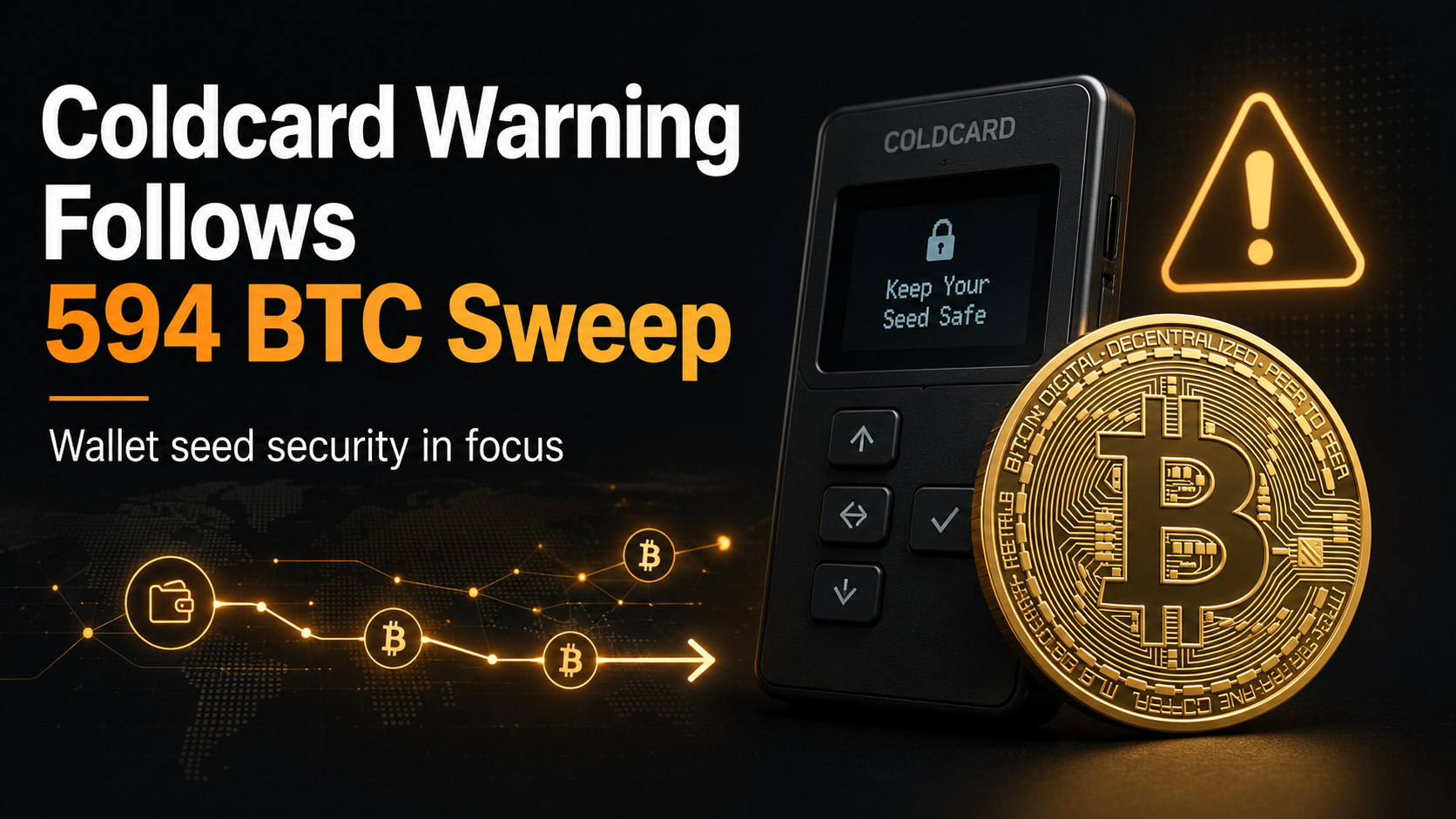
Coldcard Mk3 警告紧随 3800 万美元 Bitcoin 被扫荡事件,但原因仍未确认

Coldcard Mk3 警告紧随 3800 万美元 Bitcoin 被扫荡事件,但原因仍未确认

比特币硬件钱包制造商Coinkite已警告用户,Coldcard设备存在种子生成问题,影响从4.0.1版本起的所有Mk3固件版本。该警告是在安全研究人员调查一起涉及594.48 BTC(约合3,800万美元)的协同转移事件时发出的。然而,目前尚无公开的技术证据证实Coldcard的问题导致了这些转账。

Bitget 将退出日本:面向日本居民的服务将于 2026 年 12 月 31 日终止

Bitget 将退出日本:面向日本居民的服务将于 2026 年 12 月 31 日终止

Bitget 将于 2026 年 12 月 31 日终止对日本用户的服务。受影响的用户必须在截止日期前平仓并提取资产。

万事达完成对BVNK的收购,交易金额高达18亿美元——稳定币进入全球支付核心

万事达完成对BVNK的收购,交易金额高达18亿美元——稳定币进入全球支付核心

万事达于2026年8月3日完成了对稳定币基础设施提供商BVNK的收购,此前已于三月宣布该交易。

DEX对CEX现货交易量比率达24%,中心化交易所活动减弱

DEX对CEX现货交易量比率达24%,中心化交易所活动减弱

根据 The Block 的当前数据系列,2026年7月,去中心化交易所现货交易量与中心化交易所现货交易量之比达到24.14%。该数字并不意味着 DEX 控制了合并现货市场的24.14%:它意味着 DEX 交易量相当于数据集中包含的 CEX 交易量的24.14%。与此同时,DEX 现货交易量环比下降约26%,至约1307.7亿美元,为近两年来最低水平。

相关文章

查看更多
什么是稳定币?初学者的完整指南

什么是稳定币?初学者的完整指南

你是否对稳定币感到好奇,但发现加密货币的概念难以理解?你并不孤单。数字货币的世界可能很复杂,尤其对新手来说。这本全面的指南将以清晰、简单的术语拆解关于稳定币的所有知识。从了解稳定币是什么以及它们是如何运作的,到学习不同类型的稳定币以及如何安全使用它们,我们都为你准备好了。无论你是希望保护资产免受市场波动影响、进行国际汇款,还是单纯想扩展对数字货币的知识,这本指南将向你提供在稳定币领域自信导航所需的
XRP 会销毁代币吗?会,但原因和你想的不一样

XRP 会销毁代币吗?会,但原因和你想的不一样

如果你手上持有 XRP,或正考虑买入,大概都看过网上关于"XRP 销毁"的争论,也好奇这件事到底在吵什么。简短的答案是:没错,XRP 确实会销毁代币——每笔交易都会销毁极少量——但原因和多数人以为的并不一样。 本文将说明 XRP 销毁机制实际上如何运作、什么时候销毁多少、为什么销毁速度会逐年剧烈波动,以及这些数字是否该纳入你对 XRP 的价值判断。没有术语堆砌,也没有炒作——只有机制本身、附上日期
XRP 能涨到 1,000 美元吗?数学说不可能,原因就在这里

XRP 能涨到 1,000 美元吗?数学说不可能,原因就在这里

每一轮加密货币多头行情,都会让同一个问题重新浮出水面:XRP 有可能涨到 1,000 美元吗? 这是整个加密货币领域被搜索次数最多的价格目标之一,而简短的答案是:不可能——至少在 XRP 目前的供应量之下,完全不可能。 这篇指南会带你走完真正的数学运算,让你清楚看到原因。 我们会说明 1,000 美元的 XRP 会把它的市值推到什么水平、为什么即使银行全面采用也达不到那个价位,以及有哪一组极端条件

XRP 会取代 SWIFT 吗?深入解析 Ripple 对决银行巨头的 14% 赌注

XRP 会取代 SWIFT 吗?深入解析 Ripple 对决银行巨头的 14% 赌注

每当 XRP 登上头条,同样的争论就会再次浮现——加密货币真的有办法挑战全球银行体系的骨干吗? 数十年来,SWIFT 在全球跨境搬动了数万亿美元的资金,但它速度慢、费用高,而且正承受来自 XRP 这类区块链方案越来越大的压力。 本文撇开炒作,直接呈现真正的事实:现在究竟有谁在用 XRP 做跨境支付、XRP 在哪些环节取得优势,以及决定它能走多远的那一个关键因素。 Key Takeaways 不会—

注册MEXC账号
注册 & 获得高达10,000 USDT奖金

加入 MEXC 社区

通过我们的官方 Telegram 频道,实时获取最新上币、活动和动态。

25k+ 位成员

合约

BTC/USDT
ETH/USDT
GOLD(XAU)/USDT